

Whenever we attempt a thoughtful reflection, it is often useful to begin by examining the intellectual traditions that shaped the world we inherited. In this case, that means revisiting the voices of men whose ideas once carried unquestioned authority—voices that, unfortunately, still echo today in places where they should have long since faded.
Take Aristotle, for instance, who considered being a woman a natural disadvantage. Or Jean-Jacques Rousseau, who argued that a woman’s purpose was to obey and please. Immanuel Kant believed that an educated woman lost her charm. And we should not forget Pythagoras, who astonishingly claimed that the “good principle” created order, light, and man, while the “bad principle” produced chaos, darkness, and woman. These ideas may sound archaic, yet they continue to circulate in modern guises. One contemporary commentator, Jordan Peterson, is fond of invoking Pythagoras. I will not waste time on such discount imitations of old philosophies.
Silencing women in society, however, has never depended solely on crude philosophical arguments. More subtle strategies have often proved more effective: ridicule, the delegitimization of women’s voices, and the quiet exile of their emotions, empathy, and humanity from public life. Patriarchal power, as we know it, required precisely that—the suppression of the deeply human dimension of women. Yet there have always been women who refused that narrative. Many of them live among us, crossing our paths at street corners and in everyday life, anonymous yet steadfast in their resistance.
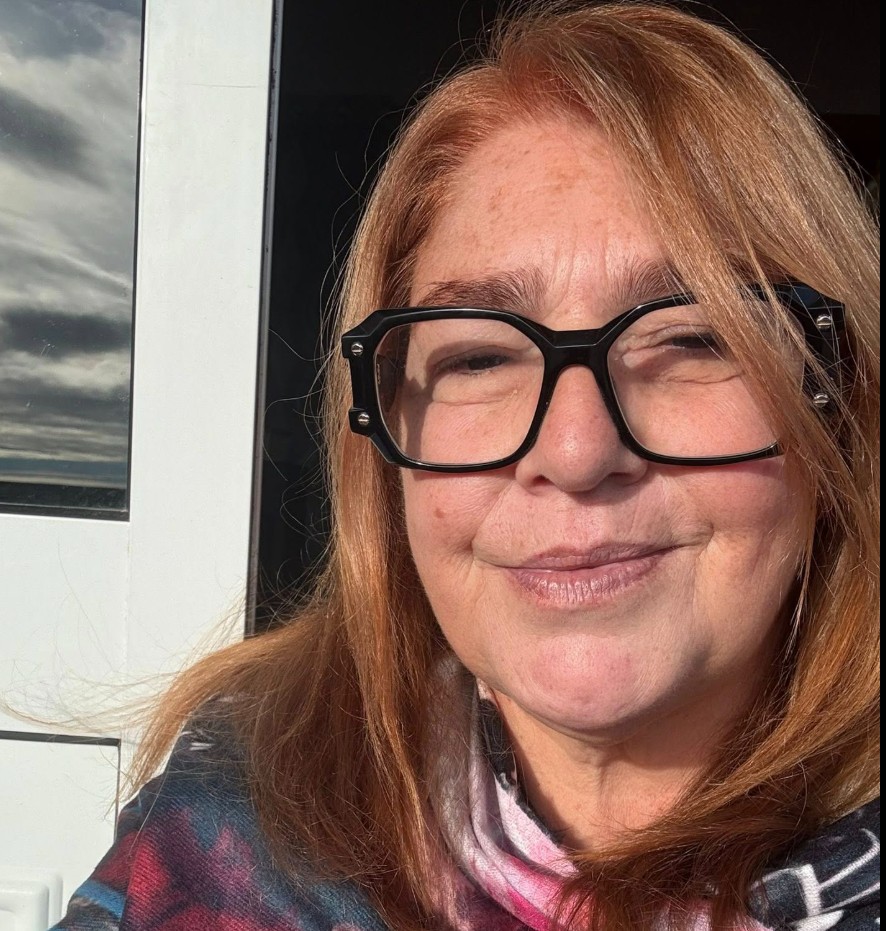
On the occasion of International Women’s Day, I want to speak about such women—especially those who have chosen the defense of animals as their mission, pursuing it with seriousness and integrity, without political ambition or personal gain. I speak of them through one person in particular: Sofia Ferreira.
Sofia has become a voice in the struggle for animal welfare—and, in many cases, the voice for those who remain silent out of fear of retaliation. She supports families who worry about losing their animals. She exposes cases of abuse, showing the courage to stand firm even when confronting entrenched authorities. Her path has been long and demanding. She coordinated the Aveiro chapter of the organization Animais de Rua, specializing in the humane Capture, Neuter, and Return (CNR) method as an ethical way to control animal populations.
In the Azores, she worked with Animais de Rua in São Miguel, and later organized a group on Terceira Island to implement the same humane method. Eventually she founded SER – Associação de Sensibilização, Esterilização e Resgate Animal, an organization dedicated to awareness, sterilization, and rescue. There, she achieved remarkable success: several identified colonies have reached 100 percent population control through ethical management.
But the reality she encountered demanded even more. Sofia found herself drawn into the direct rescue of animals, arranging veterinary care, and coordinating responsible adoptions. She has carried out this work tirelessly, often against strong headwinds and with little recognition.
And yet, Sofia, despite the obstacles, you never sought the spotlight. Instead, you quietly reaffirm the power of empathy and affection, refusing to diminish your humanity or retreat into silence. You reject reserved seats and convenient paths. You give your time—to animals and to people alike. You carry the sorrow that comes when a life cannot be saved. And then, somehow, you gather yourself again and move forward to care for those who still need help.
There remains a tendency in some circles to mock the cause of animal welfare. They forget the people who step forward when no one else does. They forget who helped create networks of shelter and support during crises—like the earthquake emergency in São Jorge, when families feared for the safety of their animals. I have not forgotten that it was you, Sofia, who helped build those lifelines.
For that persistence—often misunderstood, sometimes dismissed—I thank you.
You are a force of nature.
A free woman, unbound.
A woman whose independence and candor unsettle the old patriarchal habits of power—and the quiet complicity that sometimes sustains them.
Thank you, Sofia.
Date: March 8, 2026Author: Diniz Borges0 Comments— Edit
Amid the cascade of bad news that marked the beginning of this year, one announcement slipped by almost unnoticed. In January, the Regional Secretariat for Tourism quietly communicated its investment plans for 2026, including cultural promotion projects to showcase the Azores as a tourist destination.
The letter sent to cultural organizations bore the signature of the now-dismissed regional director. Yet anyone familiar with how power operates within the administration knows that, in a house governed by an iron lady, nothing leaves the building without passing through the office of Her Excellency—stamped, approved, and quietly authorized, even if later denied when convenient.
At the very moment when the Story Hour at the Angra Library became news—because all funding for museums and libraries across the region had been frozen—another drama was unfolding. In sports, associations and clubs that have done for the archipelago what the government rarely did – were being drained of support. As these mounting crises were debated, tourism simply withdrew from the field, discreetly and without explanation.
After five years of proudly waving the banner of tourism statistics, Secretary Berta Cabral quietly severed the rope that sustained many of the islands’ most significant cultural projects.
It must be said clearly: these programs are not subsidies in the pejorative sense often invoked by critics of the cultural sector. They are investments. Funding a theater festival, a music series, a film cycle, or a summer celebration is not indulging cultural dependency—it is building the very product that visitors come here to experience.
Our culture is among the Azores’ most powerful attractions: the marchas and bailinhos, the philharmonic bands and folk traditions, theater and cinema, visual arts and classical music. Those who attempt to divide or rank these expressions do not understand the archipelago. For any true Azorean, to speak of culture is to speak of everyone—everyone.
The cuts announced by Berta Cabral through Rosa Costa therefore represent more than a bureaucratic adjustment; they are a lethal blow to many projects planned for 2026. From what is already being heard in the streets of disappointment, the damage is substantial, and its consequences will be felt across the cultural landscape of the islands.
At this moment, clarity is required: cultural agents must organize. And they must do so more effectively than before. When the sports sector faced similar threats—reportedly triggered by pressure surrounding the Santa Clara SAD—it responded with confrontation and with a united public movement. The same can and should happen in culture and tourism.
Without cultural heritage and artistic identity, a vital part of the islands will sink into obscurity. This is the moment to protest. Demonstrations in front of the Secretary’s office. Letters, emails, and even smoke signals were addressed to the newly appointed regional director. Let it be said, loudly and unmistakably, that our culture is not a toy to be discarded—and that without it we risk becoming nothing more than obedient servants to an uncontrolled wave of gentrification.
Organize. Show those in power that without you they do not deserve to be reelected. It is time to dismantle the old notion of a “dependent culture” and remind those who govern that people should not fear their governments. Governments must work for their people.
I close with a question to the regional director, Carlos Farinha: Will you reconsider the decision to cancel these cultural supports under Regional Legislative Decree No. 18/2005/A of July 20—a framework that, over the past twenty years, according to official reports, has represented an investment with both direct and indirect economic returns for multiple sectors of the Azorean economy?
Alexandra Manes is from Flores Island but lives on Terceira Island in the Azores. She is a regular contributor to several Azorean newspapers, a political and cultural activist, and has served in the Azorean Parliament.
NOVIDADES will feature occasional opinion pieces from leading thinkers and writers in the Azores, providing the diaspora and those interested in the current state of the Azores with a sense of the significant perspectives on some of the archipelago’s issues.
Translated to English as a community outreach program from the Portuguese Beyond Borders Institute (PBBI) and the Modern and Classical Languages and Literatures Department (MCLL).
 Novidades - The Islands and the Diaspora