

The Regional Directorate for Health has released the latest monthly bulletin covering December, January, and February from the Azores’ Integrated Surgical Waiting List Management System (SIGICA). The data offer a snapshot of the pressure on the region’s public health system—and the slow, often fragile movement of its surgical queues.
According to the report, a total of 13,480 patients were waiting for surgery in February within the Azorean Regional Health Service. This represents a slight decrease of 0.3 percent compared with January, equivalent to 38 fewer patients on the waiting list.
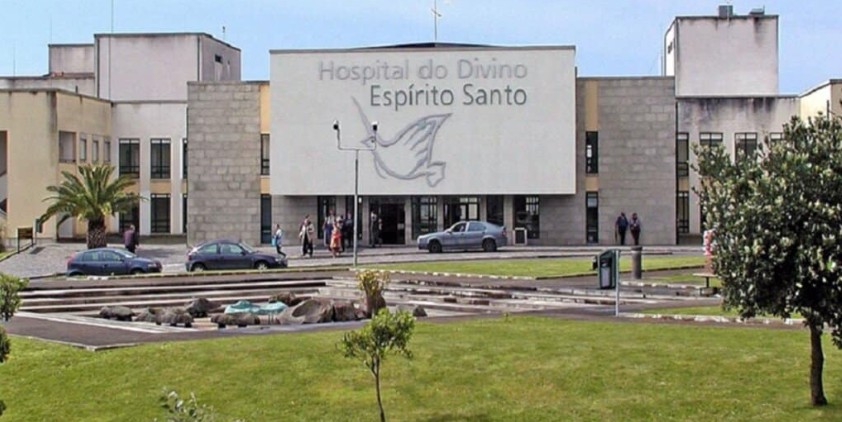
Breaking down the figures by hospital reveals a mixed picture. At Hospital do Divino Espírito Santo, the archipelago’s largest hospital in Ponta Delgada, 8,937 patients were awaiting surgery, compared with 8,935 in January—an increase of just two patients, effectively leaving the waiting list unchanged.
At the Hospital de Santo Espírito da Ilha Terceira, the number of patients waiting for surgery fell to 3,145, a reduction of 19 patients from the previous month, representing a 0.6 percent decrease.
The most significant improvement occurred at the Hospital da Horta, where 1,398 patients were on the waiting list in February, 21 fewer than in January, marking a 1.5 percent reduction, the largest decline among the three hospitals.
Despite a modest improvement in the waiting list, the number of surgeries performed across the regional health system declined in February. A total of 685 surgical procedures were performed, 61 fewer than in January, representing a 8.2 percent drop.
At the Hospital do Divino Espírito Santo, 337 surgeries were performed, 31 fewer than the previous month, a decrease of 8.4 percent.
At the Hospital de Santo Espírito da Ilha Terceira, 248 surgeries were carried out, 27 fewer than in January, a 9.8 percent decline.
Meanwhile, the Hospital da Horta recorded 100 surgeries, three fewer than the month before, corresponding to a 2.9 percent reduction.
The average waiting time for patients registered for surgery reached 488 days in February, slightly higher than the 487-day average recorded in January, underscoring the persistent structural pressures on the system.
Looking back at previous months helps place the current figures in context. In December 2025, the waiting list included 8,828 patients at Hospital do Divino Espírito Santo, 3,195 at Hospital de Santo Espírito da Ilha Terceira, and 1,442 at Hospital da Horta, totaling 13,465 patients across the regional health service. During that month, hospitals performed 525 surgeries—261 at HDES, 184 at HSEIT, and 80 at Hospital da Horta.
By January 2026, the number of patients awaiting surgery had risen to 13,518, including 8,935 at HDES, 3,164 at HSEIT, and 1,419 at Hospital da Horta. That month saw a significant increase in surgical activity, with 746 procedures performed—368 at HDES, 275 at HSEIT, and 103 at Hospital da Horta.
The February bulletin also notes an administrative issue at Hospital da Horta, where 39 surgical requests were identified as having registration errors in previous reports, a factor that could affect adjustments to the waiting list data.
Together, the numbers paint a familiar portrait of modern healthcare administration: modest improvements in waiting lists, fluctuating surgical output, and the constant effort to balance capacity with demand in a geographically dispersed island health system.
José Henrique Andrade, is a journalist for Correio dos Açores-Natalino Viveiros, director
Translated into English as a community outreach program by the Portuguese Beyond Borders Institute (PBBI) and the Modern and Classical Languages and Literatures Department (MCLL), in collaboration with Bruma Publication and ADMA (Azores-Diaspora Media Alliance) at California State University, Fresno. PBBI thanks Luso Financial for sponsoring NOVIDADES.

 Novidades - The Islands and the Diaspora