

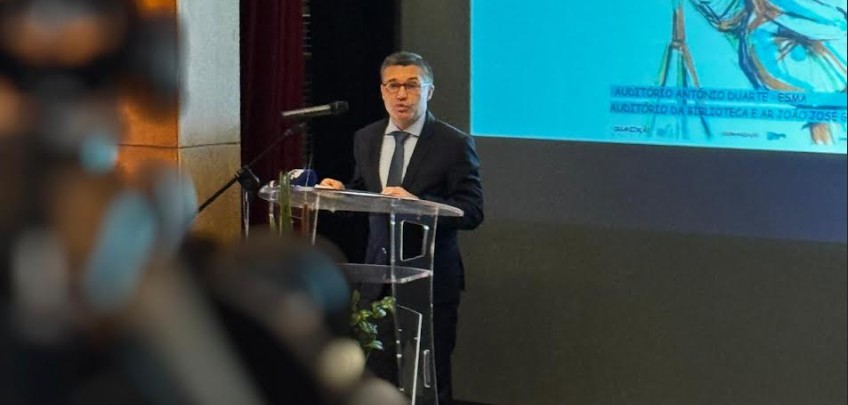
In a moment when democracies across the world are being tested by disinformation, digital noise, and the seductive pull of populism, a quiet but forceful reminder came from the Azores: the defense of democracy does not begin in parliaments or courts—it begins in classrooms.
Speaking at the opening of the XXX Philosophical Encounters—this year dedicated to the intersection of philosophy and education—Luís Garcia, President of the Azorean Parliament, placed education at the very center of the region’s democratic future. The event, held at the Escola Secundária Manuel de Arriaga, brought together students and educators in a setting that, as Garcia suggested, carries more long-term political significance than it might first appear.
“It is in the classroom,” he argued, “that the citizens who will defend democracy tomorrow—and carry forward our autonomous project—are formed.”
His remarks were not abstract. They spoke directly to the pressures of the present: a world saturated with information, where the line between truth and falsehood grows increasingly fragile. In such an environment, Garcia warned, the ability to think critically is no longer optional—it is essential. And that capacity, he insisted, is built first and foremost in schools.
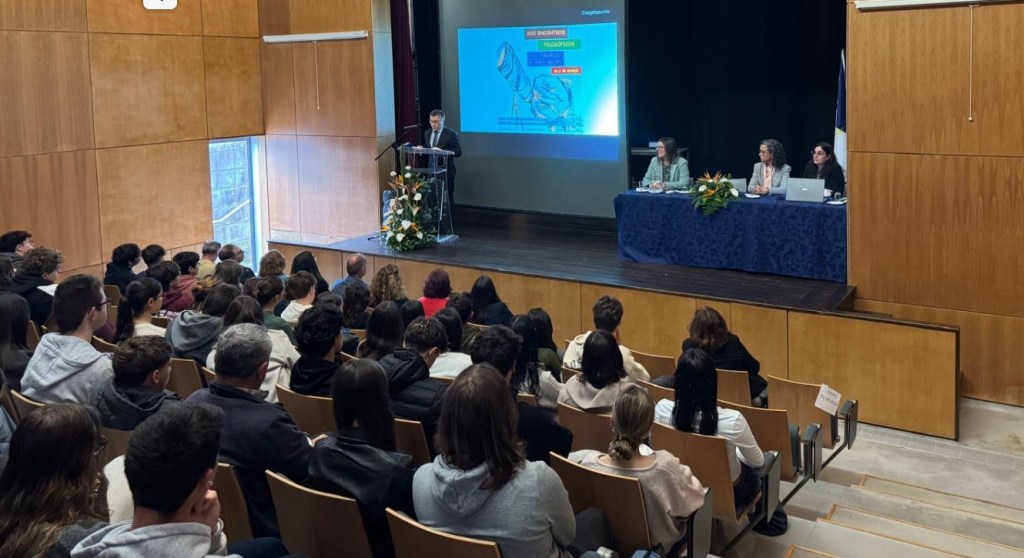
For the Azores, a region whose political identity is rooted in autonomy, the stakes are particularly high. A strong autonomy, Garcia emphasized, depends not only on institutions but on people—citizens who are informed, engaged, and capable of questioning what they are told. Without that civic foundation, autonomy risks becoming hollow, a structure without substance.
Addressing students directly, he turned to the often-unheralded architects of that foundation: teachers. “Before any profession exists,” he noted, “there is always a teacher.” It is within the classroom, he suggested, that habits of mind are formed—curiosity, skepticism, responsibility—long before they manifest in public life.
The Philosophical Encounters themselves, Garcia added, are part of that same ecosystem. They are spaces where thinking is not only encouraged but practiced—where debate, reflection, and inquiry are treated not as luxuries, but as necessities. “To educate for thinking,” he concluded, “may be the most powerful way to prepare the future.”
In an age of immediacy and distraction, the message carries a certain urgency: democracies are not sustained by noise, but by thought. And thought, still, begins in the quiet discipline of a classroom.
From Press Release
Translated into English as a community outreach program by the Portuguese Beyond Borders Institute (PBBI) and the Modern and Classical Languages and Literatures Department (MCLL), in collaboration with Bruma Publication and ADMA (Azores-Diaspora Media Alliance) at California State University, Fresno. PBBI thanks Luso Financial for sponsoring NOVIDADES.

 Novidades - The Islands and the Diaspora