

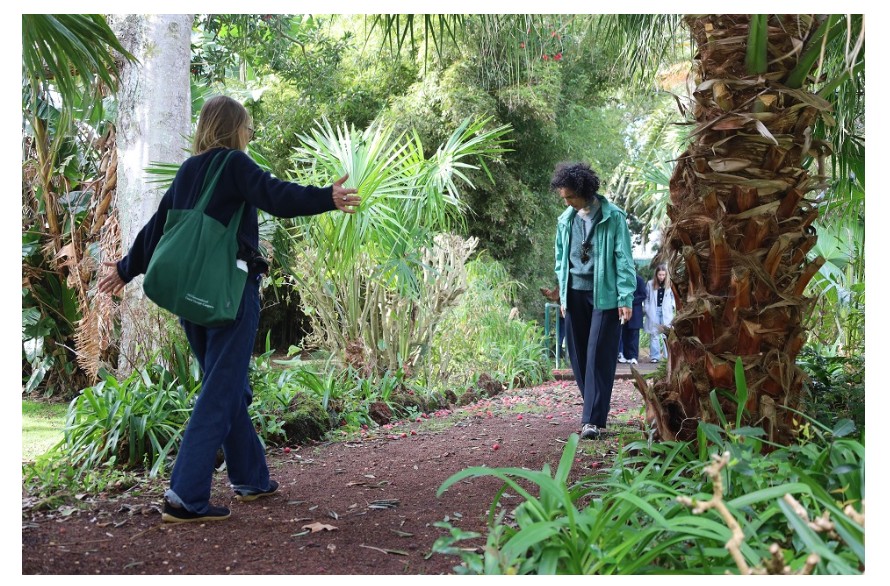
The University of the Azores is welcoming an unusual and quietly ambitious experiment this week—one that brings together science, landscape, and the fragile work of recovery. From March 16 to 20, the university’s campus in Ponta Delgada will host a delegation from the Hospital AZ Monica, as part of the Erasmus+ initiative. The visiting group includes neurologists and neuropsychologists accompanying 18 patients living with acquired brain injuries—individuals whose rehabilitation will unfold not only in clinical settings, but across the volcanic, green, and ocean-bound landscapes of São Miguel Island.
At the heart of the project is a deceptively simple idea: that nature itself may serve as a form of medicine. Developed within the university’s Social Work program, the initiative seeks to measure, with scientific rigor, the impact of immersion therapies on both psychological well-being and cognitive recovery. Participants will engage in practices such as forest bathing—known as Forest Mind—alongside ocean-based Blue Mind therapy and mindfulness techniques, all designed to reconnect the body and mind through sensory engagement with the environment.
The program is coordinated by Eduardo Marques, a scholar working at the intersection of clinical social work and environmental experience. His approach reflects a growing recognition that healing, particularly in cases of neurological trauma, may require more than traditional treatment—it may demand a reorientation toward place, rhythm, and presence. In this model, the landscape is not a backdrop but an active participant in recovery.
Yet the project’s implications extend beyond the therapeutic. It also positions the Azores as a potential hub for health and wellness tourism, where scientific innovation meets ecological authenticity. In a world increasingly defined by stress, dislocation, and chronic illness, the islands offer something rare: a setting where care can be both clinical and elemental, structured yet deeply human.
The week’s opening, set for March 16 at the university, reflects this blending of disciplines. A formal welcome will give way to a micro-concert of ambient relaxation by musician Neo One Eon, of the Lava Butterfly project, alongside poetry and mindfulness sessions in the university gardens. From there, the work moves outward—into forests, along coastlines, and across the island’s most emblematic sites—where patients and practitioners alike will test a quiet hypothesis: that healing may begin, quite literally, by stepping outside.
In the Azores, long defined by their distance, a new kind of proximity is being explored—not between nations, but between the human mind and the natural world it has too often forgotten.
In Diário da Lagoa, Clife Botelho — director.
Translated into English as a community outreach program by the Portuguese Beyond Borders Institute (PBBI) and the Modern and Classical Languages and Literatures Department (MCLL), in collaboration with Bruma Publication and ADMA (Azores-Diaspora Media Alliance) at California State University, Fresno. PBBI thanks Luso Financial for sponsoring NOVIDADES.
 Novidades - The Islands and the Diaspora