

Flores, Fresno, and the Quiet Architecture of Agricultural Leadership and Cultural Continuity
We do not leave the islands; we carry them—
in bread, in language, in the work of our hands
.
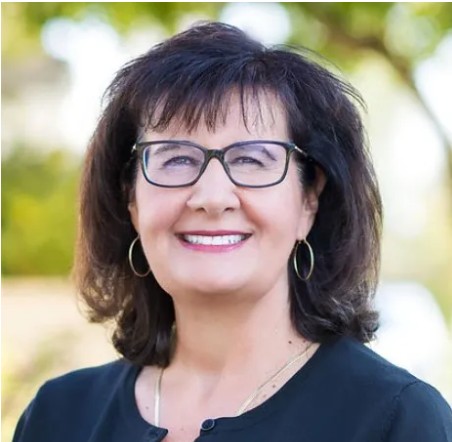
There are lives that unfold quietly, like the patient growth of a field—seeded in memory, sustained by labor, and harvested in the service of others. And then there are those rare lives that, while rooted in such quiet beginnings, come to weave entire communities together, binding past to future, island to continent, memory to institution. The life of Alcidia Freitas Gomes belongs to this latter tradition—a life not merely lived but cultivated.
She speaks, at first, in the language of beginnings: 4-H, that early apprenticeship in responsibility; Fresno State, where the soil of knowledge meets the discipline of work; an internship with the California Holstein Association, where cattle, land, and industry converge in the practical poetry of agriculture. From there, her path seems almost inevitable: director of promotions, then manager, then a return to Fresno State, not as a student but as a steward. Yet beneath this trajectory lies something deeper: a continuity of purpose, an ethic shaped long before the first professional title.
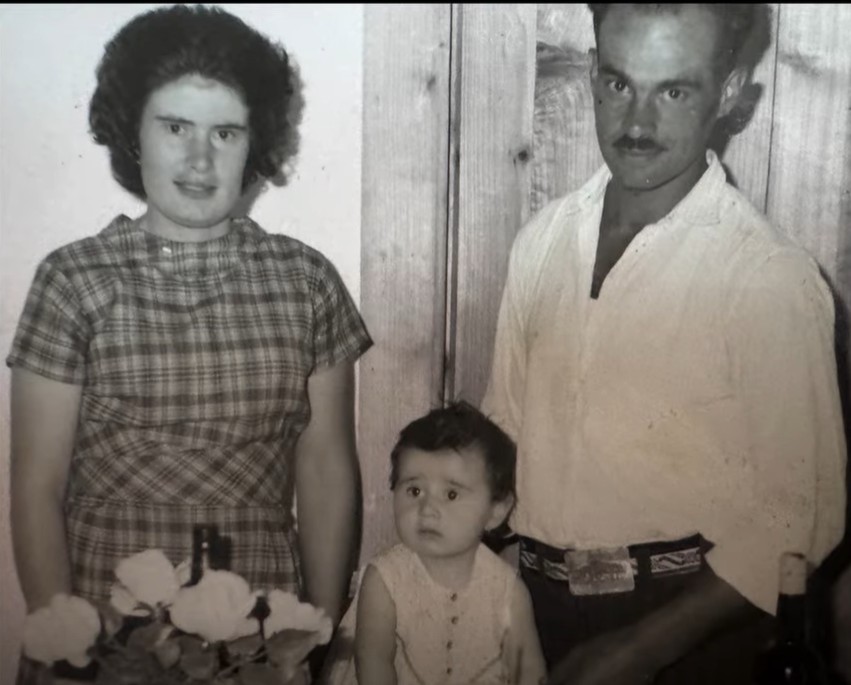
For Alcidia, the archive is not held in books alone, but in photographs of gatherings, of aunts and uncles, cousins and friends, assembled around tables where food and laughter dissolved the distances of everyday life. In recalling these moments, she gestures toward a truth often overlooked in the modern vocabulary of success: that community is not built in abstraction, but in repetition—in the act of coming together, repeatedly, until belonging becomes second nature. It is here, in these familial constellations, that her understanding of leadership takes root.
And yet, like all stories shaped by migration, her narrative carries another geography within it: the island of Flores. Remote, windswept, suspended in the Atlantic’s vast solitude, Flores is less a place than a sensibility—a way of seeing the world through the lens of resilience and humility. It is from this island that Alcidia draws a quiet strength, a grounding that resists the disorientations of the modern world. In her, Flores is not lost to distance; it is carried, like salt in the air, into every space she inhabits. It anchors her even as she moves through California’s institutional corridors, reminding her that identity is not relinquished in migration but rearticulated.
It is perhaps this dual consciousness—at once Azorean and American—that has made her such an instrumental figure in shaping Fresno State’s agricultural and educational landscape. Within the Ag One Foundation, she has not merely served; she has helped define its ethos, strengthening its mission to support agricultural education while ensuring that its work remains connected to the communities it serves. Agriculture, in her vision, is not only an industry—it is a cultural inheritance, a bridge between generations and geographies.
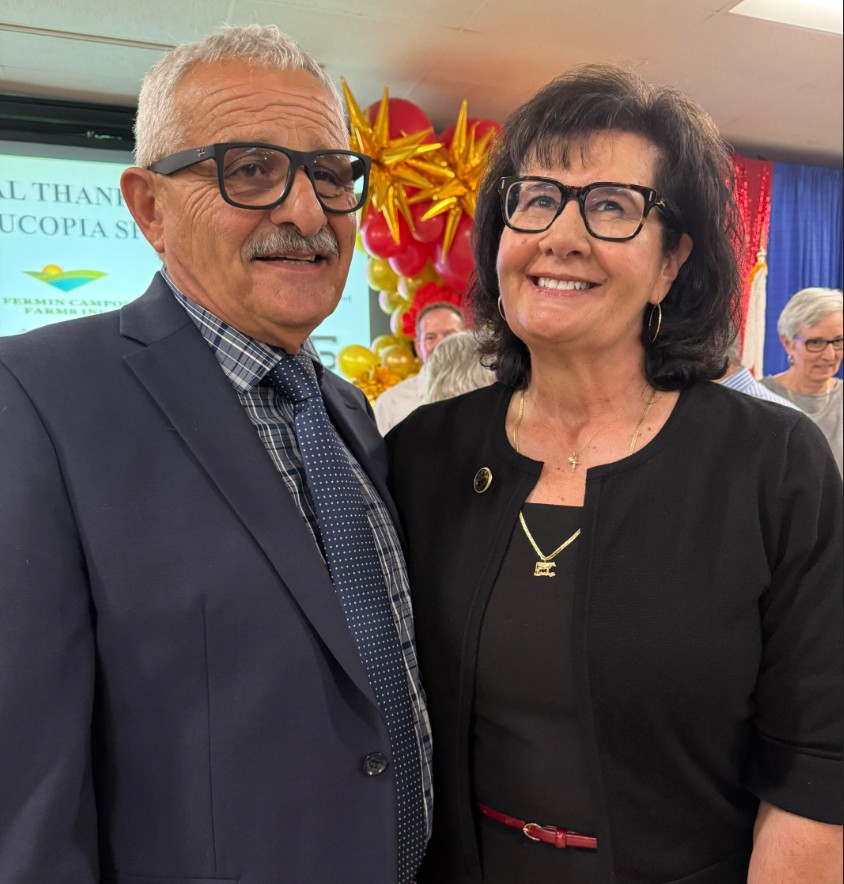
Her influence extends further still, into the very architecture of Fresno State’s agricultural programs, where she has been a quiet but decisive force in cultivating opportunity. The connection between Fresno State and the University of the Azores—an exchange program that allows students to move between these two worlds—is not simply an academic initiative. It is, in many ways, a reweaving of the Atlantic itself, a recognition that knowledge flows in both directions, that the islands and the diaspora are part of the same intellectual and cultural continuum. In fostering this exchange, Alcidia has helped ensure that the Azores are not relegated to memory but remain active participants in the shaping of future generations.
This same impulse—to connect, to grow, to foster, and to sustain—finds one of its most enduring and visionary expressions in her unwavering belief in the mission of the Portuguese Beyond Borders Institute at Fresno State. From its earliest conception, Alcidia Freitas Gomes did not simply support the Institute—she recognized in it a necessary future, a living architecture through which culture could move beyond nostalgia and become an active force of dialogue, scholarship, and community transformation. She walked beside its founders from the very beginning, lending not only her voice but her labor, her counsel, and her quiet conviction that such a space was essential for the generations to come.
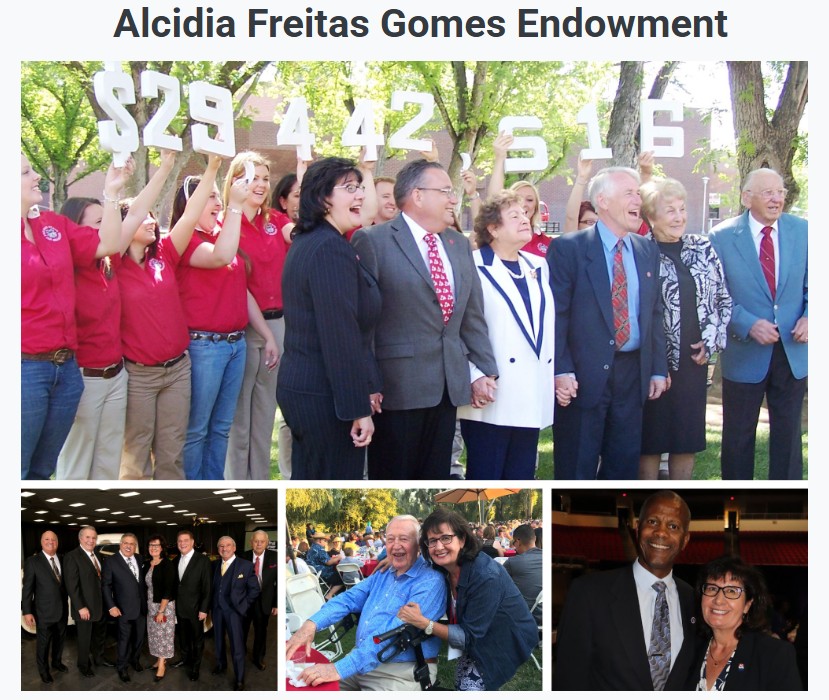
For Alcidia, the Institute is not an abstract idea; it is a promise—one that language, literature, and memory must remain central to the life of a people, especially in diaspora. She has stood firmly behind every venture it has undertaken, from its intellectual programming to its community outreach, understanding that each initiative is another thread binding the Azores to California, the past to the future. Her commitment, however, extends beyond presence; it is also profoundly structural. With foresight and determination, she has worked to help secure the Institute’s permanence, advocating for and contributing to the establishment of an endowment that will safeguard its mission long after the present moment has passed.
In this, Alcidia reveals the deeper measure of her vision: not only to build, but to ensure continuity; not only to believe, but to sustain. The Portuguese Beyond Borders Institute, in her eyes, is not merely an institution—it is a legacy in motion, one she has helped shape with care, with purpose, and with an enduring faith in the power of culture to cross all borders.
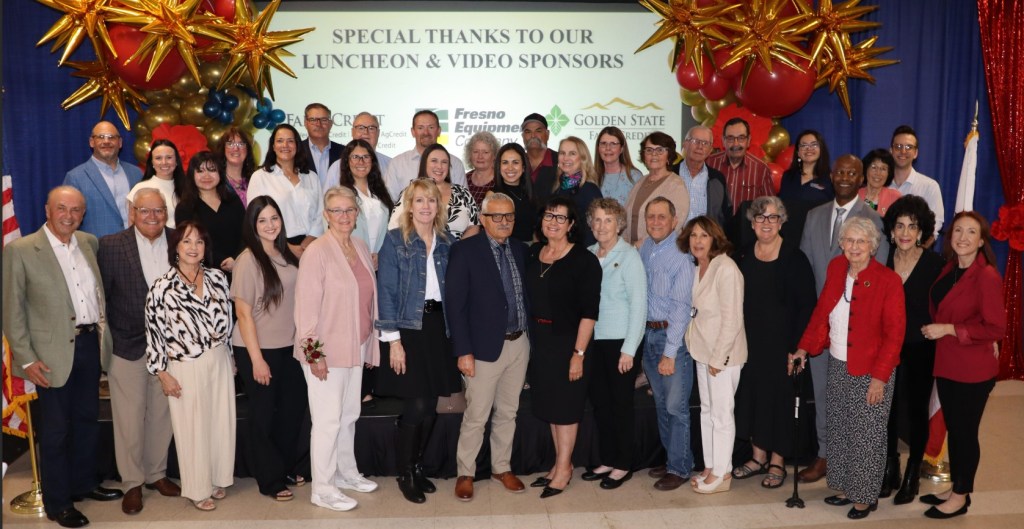
And yet, if one were to seek the essence of her contribution, one might return to a seemingly modest initiative: Common Threads. Conceived alongside women such as Soapy Tompkins and Cindy Myers, it began as an effort to recognize women in agriculture—those whose labor often remains unseen, whose contributions are woven into the fabric of community without ever being named. For over three decades, this program has honored women who lead not through proclamation, but through action—women who, like Alcidia herself, understand that the most enduring forms of influence are those exercised quietly, with grace and conviction.
In speaking of these women, she speaks, perhaps unknowingly, of her own philosophy. Leadership, in her view, is not an assertion of power, but an act of service. It is found in mentorship, with the encouragement of younger generations, in the creation of spaces where others may flourish. She sees in the rising number of women in agriculture not merely a demographic shift, but a transformation of the field itself—an infusion of new perspectives, new energies, new possibilities.
And always, she returns to the importance of involvement—to the necessity of giving back. Community, she reminds us, is not self-sustaining; it requires participation, commitment, and a willingness to invest one’s time and energy in something larger than oneself. It is this ethic that has made the Central Valley not just productive, but a vibrant place where agriculture and culture coexist, where diversity is not a challenge but a strength.
Fresno State, she says, holds a special place in her heart. It was there that she became the first in her family to pursue higher education, stepping into a space that would not only transform her life but also enable her to transform others’ lives. In this, her story echoes that of countless students who pass through its halls—each carrying the hopes of families, the weight of history, the promise of futures yet to be realized.
“Fresno State changes lives,” she affirms. But in Alcidia Freitas Gomes, we are reminded that institutions do not change lives on their own; they are changed—and made meaningful—by those who inhabit them with purpose.
Her life, then, may be read as a series of threads: the island and the valley, the family and the institution, the past and the future. Woven together, they form a tapestry that is at once personal and collective—a testament to what can be achieved when one remains grounded in origin while reaching toward possibility.
And somewhere, in that tapestry, one can still feel the presence of Flores—the distant island that continues to whisper its lessons across the ocean: that endurance is quiet, that belonging is built, and that the truest measure of a life lies not in what is claimed, but in what is given.
For in the end, what Alcidia Freitas Gomes has offered is not merely service, nor simply leadership, but something far more enduring: the quiet and patient architecture of continuity. A bridge not proclaimed, but walked. A culture not held in stillness, but carried forward—breath by breath, gesture by gesture—with a fidelity that resists time itself.
Her life reminds us that inheritance is not possession, but obligation—that we do not receive the island as a place, but as a calling. To carry it. To remake it. To ensure that it does not fade into memory, but persists as presence.
Few have done so with such grace, such constancy, such unspoken grandeur.
And so her legacy does not end—it continues, like the tide, returning again and again, shaping shores it may never claim, yet forever transforms.
Diniz Borges
https://www.facebook.com/reel/1501523551563757
 Novidades - The Islands and the Diaspora