

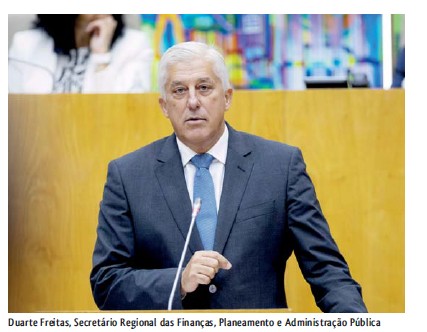
The Azores Regional Government announced plans to reduce the tax on petroleum and energy products (ISP) in an effort to cushion the impact of rising fuel costs on households and businesses, as global markets face renewed volatility driven by conflict in the Middle East.
Speaking before the Regional Legislative Assembly, Regional Secretary for Finance, Planning and Public Administration Duarte Freitas said the measure is expected to take effect in the next price update, likely in April. The goal, he noted, is to “contain the rise in fuel prices” and ease mounting cost-of-living pressures across the archipelago.
The government is also stepping up its monitoring of essential goods, reverting to monthly price tracking after a period of quarterly reviews, in order to respond more swiftly to market fluctuations. At the same time, officials signaled they are considering reactivating housing support programs, including Credithab, should interest rates place additional strain on families.
The policy shift follows the approval of a parliamentary proposal urging temporary tax relief on fuels during periods of sharp international price increases. The measure received broad support across parties, reflecting growing concern that higher energy costs will ripple through the regional economy—raising food prices, increasing transportation costs, and placing additional burdens on an island system heavily dependent on imports.
Opposition leaders, while supportive of intervention, called for greater clarity on the scale and timing of the tax reduction, warning that the economic effects could intensify in the coming months. Meanwhile, other parties stressed the urgency of broader measures to protect key sectors such as agriculture, fisheries, and services from the cascading effects of energy inflation.
The debate comes as regional officials present a mixed economic picture. Government-aligned lawmakers highlighted growth indicators in 2024, including increased tax revenues and public investment, alongside declining unemployment. However, opposition figures pointed to rising deficits and debt levels, arguing that fiscal imbalances could limit the government’s ability to respond effectively to emerging economic pressures.
As global uncertainty persists, the Azores now face a familiar challenge: balancing fiscal discipline with the urgent need to shield a geographically vulnerable economy from external shocks.
Based on a story in Correio dos Açores, Natlaino Viveiros-director
Translated into English as a community outreach program by the Portuguese Beyond Borders Institute (PBBI) and the Modern and Classical Languages and Literatures Department (MCLL), in collaboration with Bruma Publication and ADMA (Azores-Diaspora Media Alliance) at California State University, Fresno. PBBI thanks Luso Financial for sponsoring NOVIDADES.

 Novidades - The Islands and the Diaspora