

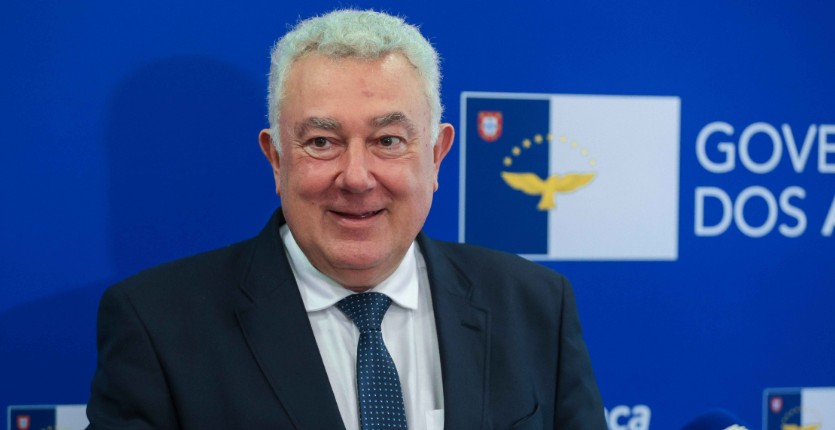
In the shifting landscape of European policy—where funding, cohesion, and strategic autonomy dominate debate—the Azores are making a case that is at once geographic and deeply human. As an outermost region of the European Union, the archipelago faces structural challenges that shape everything from economic development to public services. But it is also positioning itself as a laboratory for innovation, digital transformation, and transatlantic relevance.
In this wide-ranging conversation, the Vice-President of the Regional Government outlines both the constraints and ambitions of the Azores in a moment of global uncertainty.
Q: As Vice-President, you oversee external cooperation and Euro-Atlantic affairs. At a time when the European Union is debating funding, cohesion, and strategic autonomy, what specific demands are the Azores bringing to Brussels as an outermost region?
The Azores, like the other eight outermost regions of the European Union, benefit from a special legal status under Article 349 of the Treaty on the Functioning of the European Union. It is precisely on this basis that we present our claims.
We are speaking of the costs associated with our distance from major European markets, climatic challenges, and our limited scale, which make it harder to position our products competitively. Our geographic dispersion is another major factor—one that complicates the delivery of essential services such as healthcare.
These are not abstract concerns. The distance between Santa Maria and Corvo is nearly 620 kilometers—greater than the length of mainland Portugal from north to south. And unlike continental regions, we have no railways or highways connecting our territory. Our only links are by air and sea. These realities shape every discussion we bring to European forums.
Q: In the areas of science, innovation, and development, what kind of model do you want to build for the Azores?
We aim to create an integrated, open, and results-oriented ecosystem—one that brings together the University of the Azores, research and innovation centers, businesses, public administration, and civil society.
This is about more than producing knowledge. It is about transforming knowledge into economic and social value across all islands. To do that, we are aligning European funds, regional initiatives, and long-term strategic planning. We are also preparing a reform of the legal frameworks governing science in the Azores to ensure our system can respond to current and future needs.
Q: What still needs to be done to ensure that scientific research in the region has a stronger impact on the economy and private sector? Is there a disconnect between academia and business?
The University of the Azores already plays a significant role in the region’s economic and social fabric. The issue is not a lack of research—it is the lack of strong, systemic bridges between research and the business sector.
We need a shared mission among government, universities, and companies. We need stable mechanisms for knowledge transfer and greater critical mass in research and development, particularly in technology.
There are promising examples—projects that have already reached the market—, but they remain limited in scale and lack a structured model. We are now developing a multi-year funding plan to hire researchers and faculty, and reforming incentives to encourage collaboration between academia and industry.
In some cases, it may make sense to require partnerships between universities and companies, with clear market-oriented objectives. Future innovation funding under the Açores 2030 program will prioritize co-promotion and reward projects with solid business plans and ties to incubators and scientic hubs.
Q: How would you assess the region’s ability to retain scientific talent and prevent the outflow of highly qualified professionals?
We are not yet where we want to be. The limited availability of stable scientific careers and the prevalence of short-term project funding have pushed many graduates—especially those with advanced degrees—to leave the region.
That said, the situation is better than it was a decade ago. The University is renewing its faculty, increasing the number of PhDs, and integrating into international networks. At the same time, the region supports undergraduate and doctoral scholarships, funds research aligned with its smart specialization strategy, and co-finances European projects.
We are acting on three fronts: creating multi-year funding for academic hiring, reforming the legal framework for science, and introducing new incentives for business-led innovation tied to collaborative projects.
The goal is not to eliminate mobility—people should still go abroad—but to ensure that leaving is no longer the only viable option, and that staying or returning becomes an attractive choice.
Q: On digital transformation, how do you evaluate the modernization of public administration? Has it made life easier for citizens and businesses?
What we are witnessing is not simply digitization—it is a structural transformation. Digital connectivity allows the Azores to operate at the speed of light, effectively collapsing the distance that has historically defined us.
Through the AzoresCloud project, we have replaced a fragmented system of 129 technical rooms with centralized, secure data centers protected by a cybersecurity operations center. At the same time, the LINKA platform offers citizens a single digital interface to manage documents and processes without having to travel or duplicate information.
This transformation is supported by more than €20 million in investment in business digitalization and modernization projects across local and regional government. Schools are also part of this shift, with upgraded Wi-Fi networks across the system.
In short, we are using technology to reduce bureaucracy and create a more efficient, accessible public sector.
Q: Given the importance of submarine cables, mobile coverage, fiber optics, and 5G, how can you ensure digital cohesion across such a fragmented archipelago?
While telecommunications are not fully within our jurisdiction, we have been actively involved in national working groups related to both the CAM Ring and the Azores Ring projects.
The CAM Ring is more advanced and expected to be operational by 2027. The Azores Ring has faced delays but is now underway and should be completed by 2029. These projects will significantly increase capacity, performance, and redundancy, while also lowering costs.
Crucially, they are being designed to ensure equal access across all islands, so that no island is left behind in terms of connectivity.
On mobile coverage, the 5G auction required 90 percent population coverage in all parishes by the end of 2025. We are currently awaiting confirmation from the national regulator.
As for fiber optics, we have already extended coverage to long-neglected areas such as Topo in São Jorge and the northern part of Flores. We are now mapping remaining “white zones” to ensure universal access.
Q: Cybersecurity is now one of your direct responsibilities. Are the Azores prepared to protect critical infrastructure and citizen data against increasingly sophisticated threats?
We treat cybersecurity as a central responsibility, essential to our credibility and competitiveness. Today, the Azores are significantly more prepared and resilient.
Through the Cyber 360 initiative and our Security Operations Center, we monitor and respond to threats in real time, protecting critical services such as healthcare and energy. We have also integrated artificial intelligence into threat detection and network protection.
But technology alone is not enough. We are investing in training, having already worked with 160 institutions to prepare local governments and businesses for new European cybersecurity directives.
There is no such thing as zero risk. But through network segmentation, multi-factor authentication, and the elimination of outdated systems, we have so far avoided major incidents—and we intend to keep strengthening this framework.
Q: The Lajes Air Base remains a key part of the U.S.-Portugal defense agreement. What concrete returns should the Azores demand for their strategic importance?
The Lajes Base has been a cornerstone of Euro-Atlantic security for decades. While the U.S. presence has been reduced, its geostrategic importance has not diminished—if anything, current global tensions underscore its relevance.
The Azores are not merely spectators. We have representation in technical and labor commissions, as well as in the bilateral commission between Portugal and the United States. That said, we believe the region should have stronger representation.
The real issue is how to capitalize on that strategic importance. Over time, the Azores have lost certain benefits in successive agreements—losses not always felt at the national level.
We believe there are clear priorities: the Luso-American Development Foundation should have a stronger presence in the Azores; environmental remediation in Praia da Vitória must be completed; and the base itself should be repositioned as a hub for technology, digital investment, and ocean research.
We must also ensure labor stability for Portuguese workers, prioritize local businesses, and expand the civilian use of the base—transforming it into a platform for sustainable, equitable development.
Rui Leite Melo is a journalist for Diário dos Açores-Paulo Viveiros, director.
Translated into English as a community outreach program by the Portuguese Beyond Borders Institute (PBBI) and the Modern and Classical Languages and Literatures Department (MCLL), in collaboration with Bruma Publication and ADMA (Azores-Diaspora Media Alliance) at California State University, Fresno. PBBI thanks Luso Financial for sponsoring NOVIDADES.
 Novidades - The Islands and the Diaspora