

The parliamentary group of the Pessoas–Animais–Natureza (PAN) party in the Azores has formally questioned the Regional Government about the archipelago’s concrete contributions to Portugal’s Action Plan to Combat Ocean Acidification, underscoring the islands’ strategic importance within both national and European maritime policy.
PAN argues that any national plan must go beyond broad frameworks and incorporate measures tailored to the Azores’ unique oceanographic and environmental conditions. Ocean acidification, the party notes, is largely driven by rising atmospheric carbon dioxide levels linked to greenhouse gas emissions. As CO₂ dissolves into seawater, it lowers the ocean’s pH, threatening marine biodiversity and weakening the ocean’s capacity to absorb carbon—a process with far-reaching ecological and economic consequences.
The party also points to Portugal’s accession, in June 2024, to the International Alliance to Combat Ocean Acidification (OA Alliance), a move that commits the country to developing targeted public policies to address the crisis. In line with that commitment, a government order issued on February 3, 2025, established a working group tasked with drafting the national action plan, which underwent public consultation between January 16 and February 13, 2026.
In its inquiry, PAN emphasizes that the Azorean sea constitutes a central pillar of Portugal’s maritime dimension. The country’s Exclusive Economic Zone (EEZ)—more than half of which is associated with the archipelago—represents a significant portion of European waters, distinguished by high biodiversity and geostrategic relevance in the North Atlantic. Given this, the party contends that the national plan must reflect the region’s specific realities, including the creation of tailored indicators to monitor water chemistry, the identification of particularly vulnerable areas, and the establishment of measurable, time-bound targets.
In its response to the regional parliament, the Azorean Government stated that it had played an active role in drafting the plan, submitting both technical and strategic contributions through the designated working group. These proposals were delivered at the outset of the public consultation phase to ensure their integration into the plan’s final version.
According to the Regional Government, its recommendations focus on recognizing the strategic role of the Azorean sea, adapting measures to local oceanographic conditions, developing region-specific monitoring tools and indicators, and identifying areas most vulnerable to acidification. The administration also stressed the importance of aligning national ocean policies with regional strategies related to climate change, the blue economy, and maritime spatial planning.
Among the priorities highlighted are strengthening the scientific and territorial dimensions of the plan, promoting shared governance of Portugal’s maritime space, and adopting differentiated approaches for outermost regions such as the Azores—territories whose geographic isolation and ecological sensitivity demand tailored policy responses.
The Regional Government reaffirmed its commitment to actively participating in the design and implementation of national ocean policies while defending the Azores’ distinct interests within Portugal’s broader maritime framework. It also pledged to continue monitoring the development of the action plan, contributing to its execution and to the advancement of ocean protection and sustainability efforts.
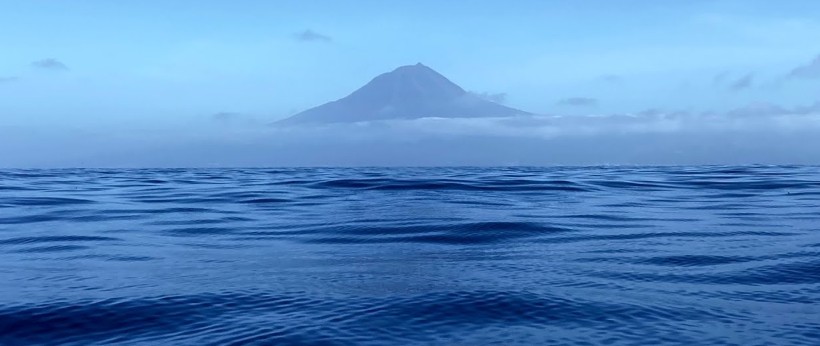
In the vast Atlantic that surrounds the islands, the stakes are both local and global: a changing chemistry that begins invisibly in the water but carries consequences for ecosystems, economies, and the fragile balance between land, sea, and the communities that depend on both.
In Diário dos Açores-Paulo Viveiros-director
Translated into English as a community outreach program by the Portuguese Beyond Borders Institute (PBBI) and the Modern and Classical Languages and Literatures Department (MCLL), in collaboration with Bruma Publication and ADMA (Azores-Diaspora Media Alliance) at California State University, Fresno. PBBI thanks Luso Financial for sponsoring NOVIDADES.

 Novidades - The Islands and the Diaspora