

It is no secret that I take a critical view of this government’s policies. That criticism sharpens—necessarily, insistently—when it comes to education and culture. Education is not just a political concern for me; it is my field, my vocation, the ground where professional knowledge and civic responsibility meet. And from that vantage point, what is unfolding is not merely disappointing—it is deeply troubling.
In recent years, there has been a quiet but striking surge in public petitions across the Azores. They are formally received, even welcomed, by the President of the Regional Legislative Assembly, and referred—almost ritualistically—to the Committee on Social Affairs. Yet they remain largely absent from broader public debate. These petitions are not trivial gestures. They are signals—urgent, persistent—of a void. In the absence of coherent strategy from the Regional Directorate for Culture and the Secretary herself, that void has not remained empty. Citizens have stepped in.
Consider the “Petition for the Restoration of the Varadouro Thermal Baths” and the call for the “Historical and Landscape Preservation of Porto Pim,” both on Faial. Or the “Urgent Defense of Quinta das Necessidades” on São Miguel. These are not isolated causes; they are part of a growing civic impulse to safeguard cultural heritage where institutions have failed to lead. Their visibility rarely extends beyond the islands themselves, carried mainly by local media and community engagement. And yes, there is something admirable—deeply democratic—about citizens assuming responsibility for their cultural inheritance. But let us be clear: this is not the flowering of civic evolution. It is a reaction to institutional absence. It is what happens when governance recedes.
The consequences of that absence are measurable. Cultural heritage in all its forms—built, movable, archaeological, whaling-related, intangible, and museological—is governed by legal frameworks established more than a decade ago. Yet here we are, in 2026, still waiting for the regulations that would make those frameworks operational. The record speaks for itself: the last new museum unit opened in 2019, with the Corvo Ecomuseum; the last rehabilitation project concluded in 2020, at the Francisco de Lacerda Museum. Since the heritage classifications of 2020–21, new designations have become scarce. Traditional performances—danças, bailinhos, and comédias—were added to Portugal’s National Inventory of Intangible Cultural Heritage in 2020. The Azores’ underwater cultural heritage earned UNESCO recognition in 2019 and the European Heritage Label in 2020. And yet, even long-standing traditions such as whaleboat regattas now struggle to sustain participation. These are not isolated facts; they form a pattern. And the pattern points to neglect.
What should be strategic, deliberative, and shared—crafted through dialogue among experts, policymakers, and the public—has instead been replaced by reactive, fragmented responses. Public positions emerge not from planning but from provocation: a sudden announcement, a moment of crisis, or the all-too-familiar silence of responsible authorities. In this inversion, structure gives way to improvisation, prevention to urgency, long-term vision to short-term reaction. What ought to be built with care is instead assembled in haste.
And yet, amid this landscape of omission, there are glimpses of possibility. One petition in particular stands out: the call for the creation of a National Museum of Nautical and Underwater Archaeology in the Azores. With more than 3,000 signatures, it transcends the divisions that often paralyze public life. It gestures toward a shared horizon, one capable of uniting islands, generations, and disciplines. Its working group includes former regional secretaries of culture, former directors of the cultural directorate, and experienced archaeologists—individuals with the expertise and institutional memory to give such a project substance. Conspicuously absent, however, are representatives from the current Secretariat and its present-day Directorate. That absence speaks volumes.
One hopes—perhaps against the evidence—that a political party with parliamentary representation will take up this petition, transforming it into a formal proposal that invites real debate. Not the procedural kind, not the kind that disappears into committee minutes, but a genuine, public reckoning. A reckoning that clarifies who truly claims stewardship over culture—and who, despite that claim, has quietly swept it aside, like dust beneath an Arraiolos rug.
Because what is most dangerous in public life is not always what is said, or even what is done. It is what goes unseen.
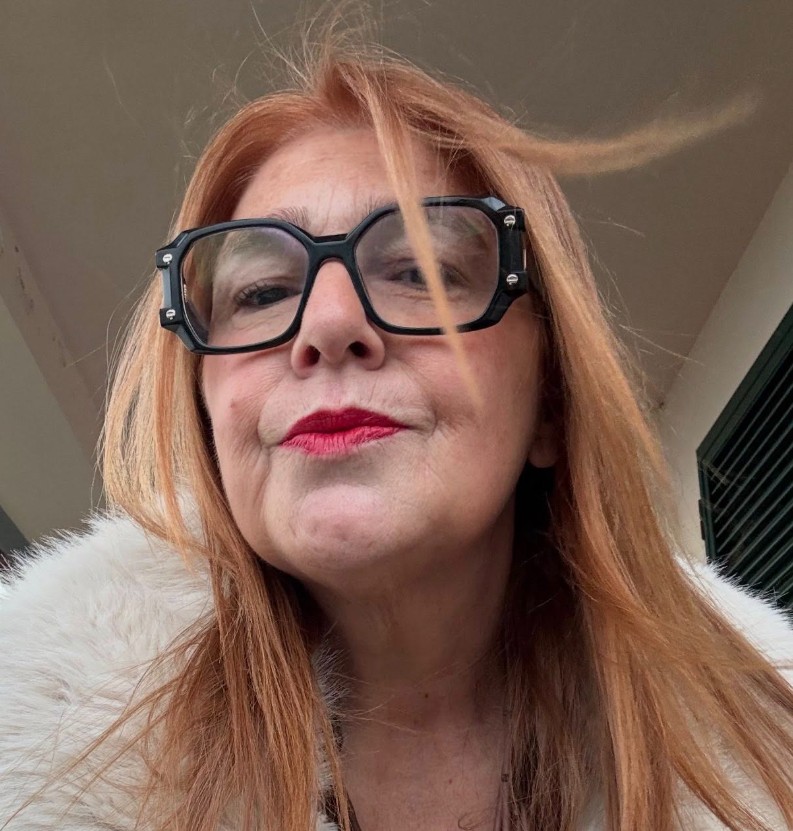
Alexandra Manes is from Flores Island but lives on Terceira Island in the Azores. She is a regular contributor to several Azorean newspapers, a political and cultural activist, and has served in the Azorean Parliament.
NOVIDADES will feature occasional opinion pieces from leading thinkers and writers in the Azores, providing the diaspora and those interested in the current state of the Azores with a sense of the significant perspectives on some of the archipelago’s issues.
Translated to English as a community outreach program from the Portuguese Beyond Borders Institute (PBBI) and the Modern and Classical Languages and Literatures Department (MCLL).
 Novidades - The Islands and the Diaspora