

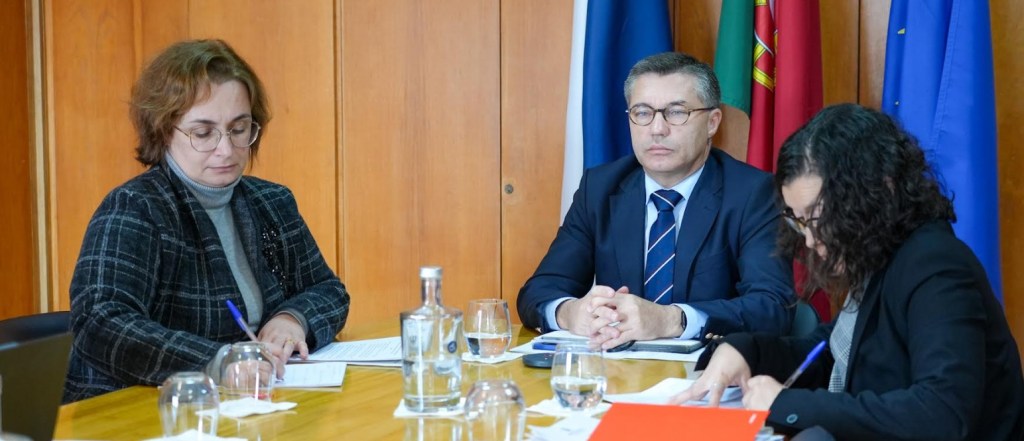
The President of the Legislative Assembly of the Autonomous Region of the Azores, Luís Garcia, on Monday underscored the urgent need to protect the “integrity of democracy in the digital environment,” as rapid technological change continues to reshape both societies and democratic institutions.
Speaking during a virtual meeting of the working group “e-Democracy in the Age of Artificial Intelligence,” part of the Conference of European Regional Legislative Assemblies (CALRE), Garcia framed the moment as one of profound transformation. The session, coordinated by the Azorean Parliament, brought together representatives from several European regional legislatures, including the Assembly of the Community of Madrid, the Parliament of La Rioja, the Parliament of the Wallonia-Brussels Federation, and the Flemish Parliament.
“We are living through a period of deep transformation,” Garcia said, noting that artificial intelligence, data governance, and cybersecurity are not only reshaping societies but also redefining how democratic institutions function. In this context, he argued, regional parliaments must move beyond simply adapting to technological change and instead take on a more active role in shaping its trajectory. “More than keeping pace with technological evolution, it is our responsibility to lead a thoughtful and responsible reflection on its impact,” he said.
Garcia emphasized the importance of coordinating responses across Europe, calling for regional parliaments to harmonize their approaches to emerging challenges while remaining attentive to the distinct realities of each territory. At the same time, he stressed the need to uphold the fundamental values of democracy in the face of innovation, insisting that the use of data and advanced technologies—particularly in sensitive areas such as artificial intelligence—must fully respect privacy, security, and citizens’ rights.
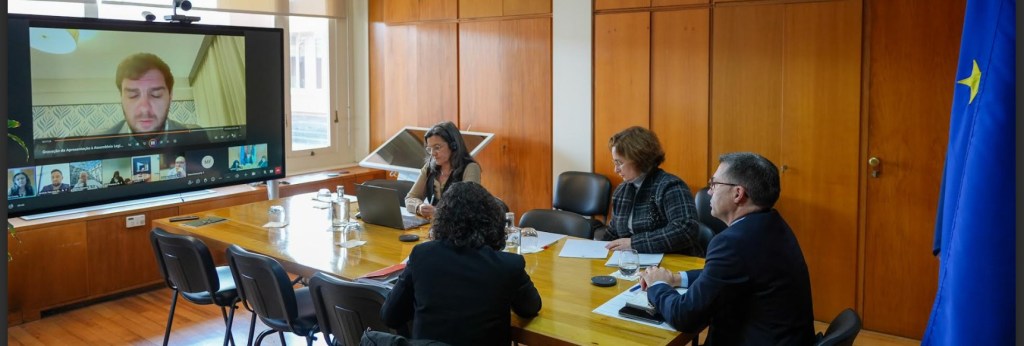
Among the most pressing concerns, Garcia pointed to the rise of disinformation, the manipulation of public opinion, and the erosion of institutional trust. These developments, he argued, make it “urgent to deepen the debate” on emerging technologies, data governance and sovereignty, and cybersecurity.
He also highlighted the importance of strengthening digital literacy, both among lawmakers and the broader public. “Only with greater digital literacy,” Garcia said, “can we reinforce security practices, protect digital rights, and consolidate trust in the digital public sphere.”
In closing, Garcia reaffirmed the Azorean Parliament’s commitment to the initiative, describing the working group as “a privileged space for the exchange of knowledge, the development of shared solutions, and the cultivation of a robust digital culture within legislative institutions.”
The session was further coordinated by Sandra Costa, Secretary-General of the Azorean Legislative Assembly, who oversaw the group’s technical and operational framework.
Monday’s meeting marked the formal launch of the working group, which aims to develop a joint strategy for e-democracy in the age of artificial intelligence—fostering interparliamentary cooperation and establishing best practices for the ethical, responsible, and secure use of digital technologies.
From ALRAA Press Release
Translated into English as a community outreach program by the Portuguese Beyond Borders Institute (PBBI) and the Modern and Classical Languages and Literatures Department (MCLL), in collaboration with Bruma Publication and ADMA (Azores-Diaspora Media Alliance) at California State University, Fresno. PBBI thanks Luso Financial for sponsoring NOVIDADES.

 Novidades - The Islands and the Diaspora