

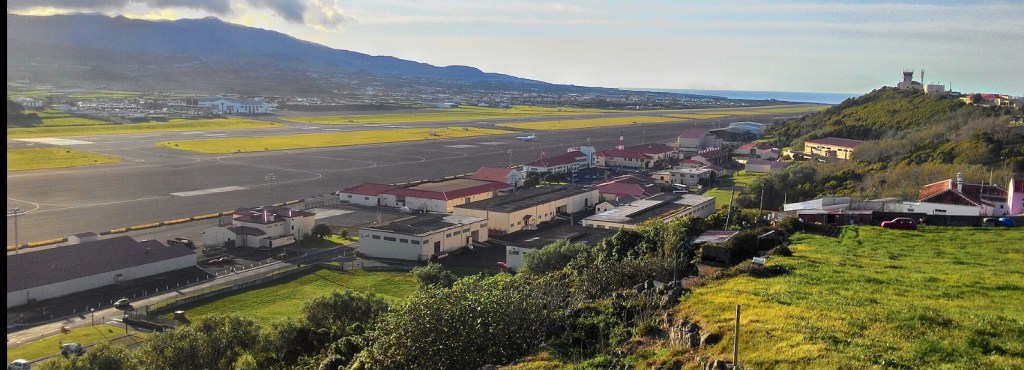
Admiral António Silva Ribeiro, former Chief of Staff of the Portuguese Navy, is calling for a “reformulation of Portuguese and allied naval strategy in the Azores” over the next decade, along with a significant reinforcement of capabilities at Lajes Air Base and the Port of Praia da Vitória.
“From an organizational standpoint, protecting a critical area requires clear chains of responsibility, civil-military integration, and the fusion of information in near real time. The seabed cannot remain a lawless expanse—it must become a governed domain, with defined rules, responsibilities, and capabilities,” he stated during a conference at the Naval Academy held in February.
The admiral proposes establishing an allied force in the Azores dedicated to protecting maritime and subsea infrastructure, to be based within the Azores Operational Command. “This force would have as its central mission the surveillance, protection, and, if necessary, rapid recovery of critical underwater infrastructure, as well as the monitoring of potential long-range threat vectors using the North Atlantic as a route,” he explained.
Silva Ribeiro further advocates for the creation of an interagency coordination cell in the Azores, integrating Portuguese authorities, representatives from the European Union and NATO, private submarine cable and energy operators, and, where appropriate, scientific and regulatory entities. This body would be responsible for data sharing, risk assessment, defining operational thresholds, and coordinating responses to hybrid incidents affecting the seabed and critical underwater infrastructure, while also incorporating intelligence on emerging strategic threats.
In his view, this mission could be entrusted to the Atlantic Centre, “which, despite having been established many years ago, has yet to fully assert itself.”
The admiral also emphasizes the need to standardize interoperability among unmanned systems, with reinforced cyber-resilience requirements and common data formats to enhance maritime and subsea situational awareness. He further proposes “institutionalizing the Azores as a maritime innovation laboratory for Portugal, NATO, and the European Union in the Atlantic,” fostering joint applied research programs between armed forces, universities, and industry—particularly in technologies for detecting new underwater threats, resilient energy systems, and deep-sea monitoring solutions.
Turning to infrastructure, Silva Ribeiro argues that the Azores must develop a “robust, redundant logistical network oriented toward long-duration surveillance and rapid response to incidents on the seabed.”
He calls for consolidating Lajes Air Base as an aeromaritime hub capable of refueling, crew rotation, and first-line maintenance for maritime patrol aircraft and aerial refueling platforms, with the capacity to support extended surveillance missions over submarine routes and potential cruise missile approach corridors.
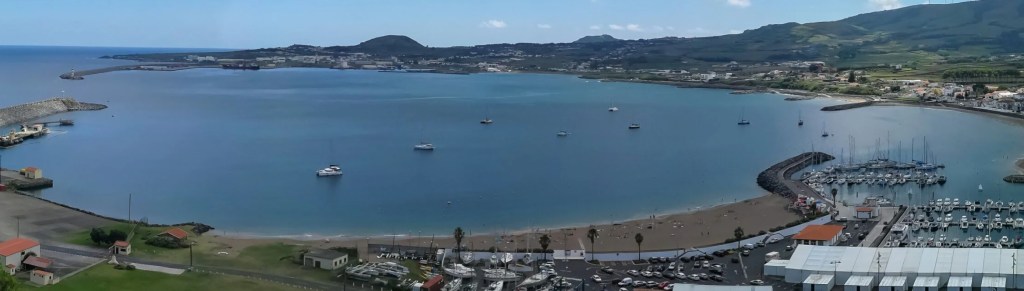
Likewise, he proposes strengthening the Port of Praia da Vitória as an advanced support base, equipped to refuel surface vessels and submarines, store munitions and spare parts, operate modular workshops, and host specialized facilities for unmanned underwater and remotely operated vehicles. The port should also maintain cable repair teams and pre-position critical stocks—ranging from naval fuels and sonobuoys to anti-submarine warfare equipment and mobile command modules—while establishing readiness agreements with civilian cable repair ships.
To ensure resilience, Silva Ribeiro recommends enhancing infrastructure through microgrids, redundant data routes via additional cables and military satellites, and inventory management systems capable of sustaining operations for at least 72 hours under degraded conditions.
Operationally, he suggests implementing a persistent sensor architecture combining fixed seabed networks with long-endurance autonomous underwater vehicles, drifting buoys, and high-frequency coastal radar.
He also argues that Portugal’s Vasco da Gama–class frigates should not be decommissioned upon the arrival of new vessels, but rather converted into true ocean patrol ships, noting that existing patrol vessels face “significant limitations in the harsh seas of the Azores” and lack helicopter capabilities.
Beyond maintaining a permanent anti-submarine warfare capability, Silva Ribeiro stresses the need for contingency planning for sabotage of submarine cables and other critical infrastructure. He further proposes a cycle of exercises focused on these emerging threats—covering anti-submarine and seabed warfare, protection and repair of critical infrastructure under stress or crisis, and search-and-rescue and humanitarian operations in the often unforgiving conditions of the North Atlantic.
In Diário Insular-José Lourenço-director.
Translated into English as a community outreach program by the Portuguese Beyond Borders Institute (PBBI) and the Modern and Classical Languages and Literatures Department (MCLL), in collaboration with Bruma Publication and ADMA (Azores-Diaspora Media Alliance) at California State University, Fresno. PBBI thanks Luso Financial for sponsoring NOVIDADES.

 Novidades - The Islands and the Diaspora