

Fifteen days ago, we warned of a “perfect storm.” Now the clouds have thickened, the winds have shifted, and the blow—heavy, unrelenting—is on its way.
Call it the downstream effect of Trump’s economic warfare, or simply the logic of a world once again tilting toward instability. Either way, the consequences are arriving on our shores. First, fuel prices—always the earliest tremor—will rise. Then, as night follows day, interest rates may climb, tightening the vise on families and businesses already stretched thin. For the Azores, geography is never neutral; it amplifies every crisis. Inflation here is not just a statistic—it is a lived condition, sharpened by distance, by insularity, by the cost of being surrounded by ocean.
We have seen this before. During the pandemic, and again in the 2022 crisis that followed Russia’s invasion of Ukraine, the pattern was cruelly familiar: construction jobs vanished by the thousands, families leaned on housing credit relief just to stay afloat, unemployment surged, and the price of basic food became, for many, quietly prohibitive. Memory, in this case, is not nostalgia—it is a warning.
And yet, experience has given us something rare in public life: a template. We know what worked. We know what softened the blow. There is no need for ideological invention or bureaucratic theatrics. The Regional Government has, for now, made prudent moves—intervening on fuel taxes, preparing housing credit support if interest rates rise, and increasing the frequency of monitoring food prices. These are not grand gestures; they are necessary ones.
But necessity is not enough.
Food dependency in the Azores was already a structural weakness before any new crisis loomed. Now, under the shadow of accelerating inflation, it becomes a fault line. The numbers tell a revealing story: while overall inflation hovered around 2%, food and non-alcoholic beverages consistently exceeded 5%, with restaurants and accommodation services climbing even higher. In other words, the essentials of daily life—what people eat, where they sleep—are precisely where pressure is most acute.
And pressure, left unchecked, becomes fracture.
If supply chains falter, if goods do not arrive or cannot circulate efficiently between islands, this storm will intensify. The long-promised cargo plane—once dismissed as a logistical luxury—has become a strategic necessity. So too does the elusive idea of a true regional market. For years, it has existed more in speeches than in practice. Meanwhile, islands struggle to distribute their own fish, their own meat, their own produce—a paradox bordering on the absurd.
To raise handling fees on fish exports in such a moment is not merely ill-timed; it borders on economic self-sabotage.
In crises like this, policy must be guided not only by fiscal discipline but by moral clarity. Families already living at the edge cannot absorb another shock. Targeted support for the most vulnerable is not charity—it is stability. And stability, in uncertain times, is the most valuable currency a government can offer.
Then there is the political landscape, which—if anything—appears even more unsettled.
No amount of late corrections can obscure what has become, unmistakably, an annus horribilis for the PSD in the Azores. The failed privatization of SATA, the inability to retain Ryanair, the cloud of judicial investigations poorly explained to the public, and the disoriented response to central government pressure—all of it has converged into a narrative of drift and dysfunction. Whatever political capital was once built on lower taxes or the Azores fare has largely evaporated. Voters, as they tend to do, have moved on. What remains is expectation—of change, of accountability, of a reshuffling that now feels less like a possibility and more like an inevitability.
And yet, even in the gravity of politics, there is room—perhaps even a need—for humor.
Because without it, the spectacle becomes unbearable.
The Azorean Socialists, sensing opportunity in the government’s missteps, have embraced a certain theatrical enthusiasm. Their latest move? Inviting former Finance Minister Fernando Medina—hardly a neutral figure in recent memory—to herald the coming of the “devil,” now recast as a potential regional financial bailout. There is, of course, a certain irony here. Medina himself once contributed, in his own modest way, to the Azorean economy by climbing Mount Pico in 2018 without authorization and earning a fine. A small infraction, perhaps, but in retrospect, one might call it an early installment on the bailout he now predicts.
Politics, at times, writes its own satire.
But satire does not shield us from reality. The storm is not metaphorical—it is material, measurable, and already underway. The question is no longer whether it will hit, but how prepared we are when it does.
We have been here before. We know the signs. We know the cost of hesitation.
Now we will learn, once again, whether we also know how to act.
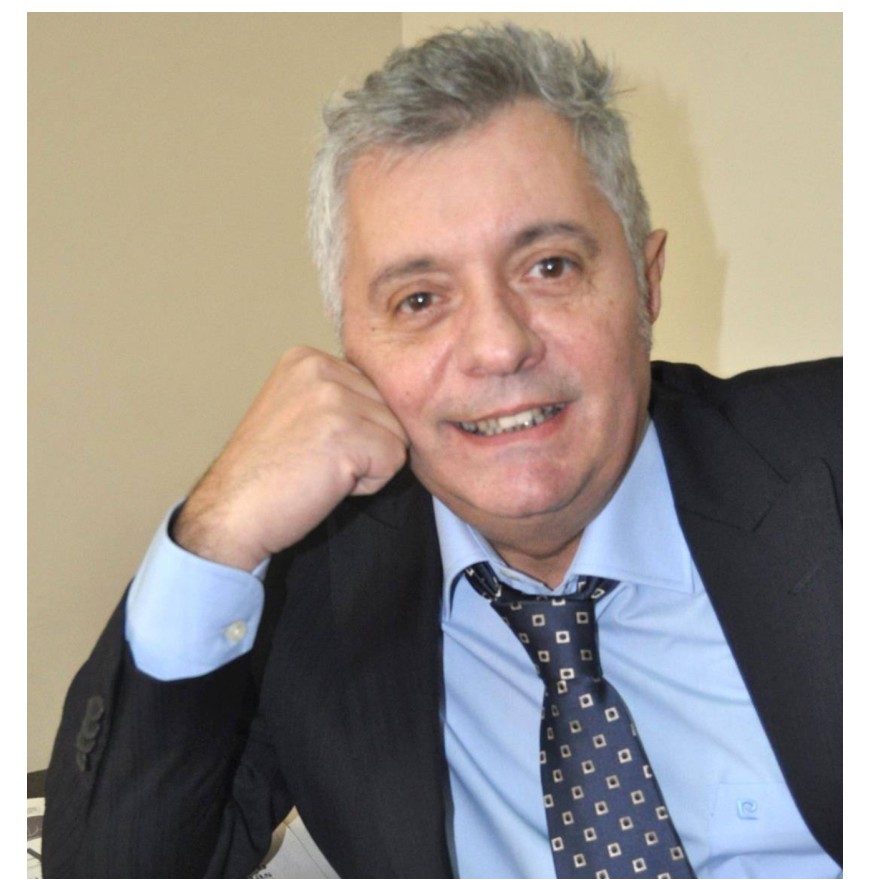
Osvaldo Cabral is an emeritus journalist with over 40 years of experience covering the Azores. He was the director of RTP-A (the public television station) and the Diário dos Açores newspaper. He is a regular columnist for many newspapers throughout the Azpres and the Diaspora.
NOVIDADES will feature occasional opinion pieces from various leading thinkers and writers in the Azores, providing the diaspora and those interested in the current state of the Azores with insight into the diverse opinions on some of the archipelago’s key issues.
Translated to English as a community outreach program from the Portuguese Beyond Borders Institute (PBBI) and the Modern and Classical Languages and Literatures Department (MCLL).
 Novidades - The Islands and the Diaspora