


“The Portuguese are the unknown people. We are lost in this vast country. Nobody knows we are here. To be Portuguese in America is to be a stone dropped in the middle of the ocean. It sinks beneath the waves and vanishes without a trace.” – Charles Reis Felix
For my mother, these words are not metaphor alone—they are memory, inheritance, and quiet truth. She was born on a small island set adrift in the Atlantic and carried, still a child, into the wide interior of a continent that did not yet know her name. Hers is a story that begins in volcanic earth and salt air and unfolds in the fertile, anonymous expanse of California’s Central Valley. It is a story of departure and continuity, of language lost and remade, of traditions carried not as relics, but as living gestures of identity.
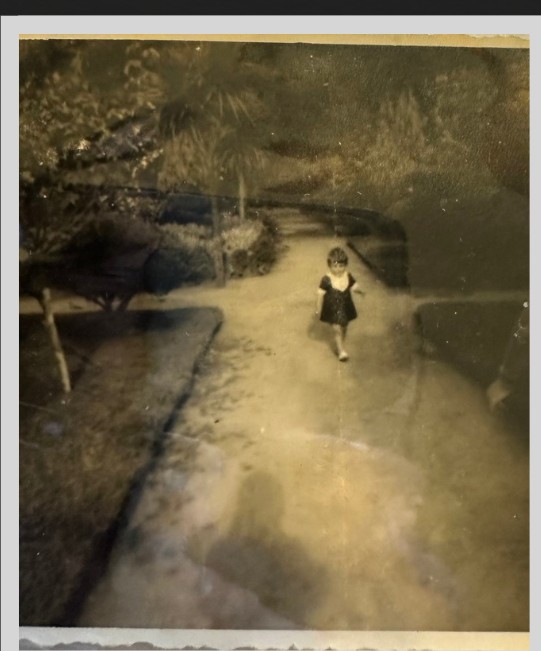
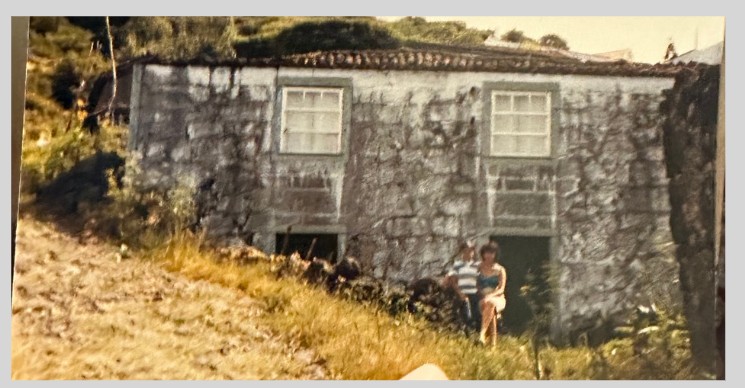
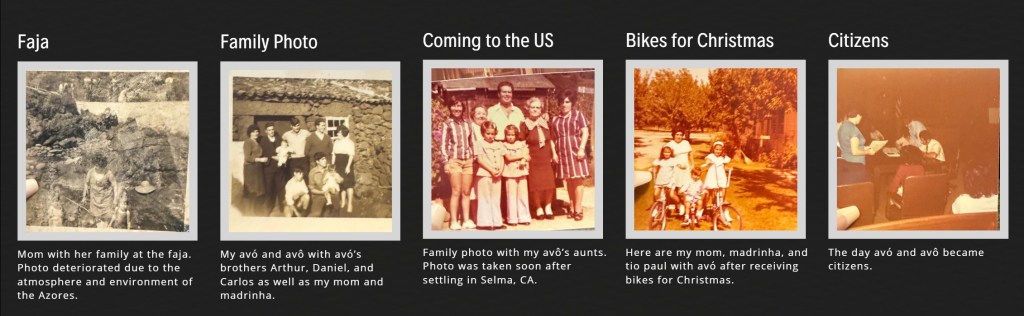
My mother, Maria Theresa Soares—named for Saint Teresa of Ávila—was born on September 17, 1967, in her family home in Manadas, on the island of São Jorge. Her earliest years were shaped by a landscape at once austere and luminous, where childhood unfolded close to the rhythms of land and sea. Memory, for her, is not abstract; it is textured, vivid, and often edged with a kind of innocent daring. She recalls, for instance, sitting atop the ledge of a bridge near her home, suspended high above the ground, unaware of danger, yet unforgettable in the fear it instilled in her mother—my avó—who remembers the moment still.
There are other stories, carried not only by my mother but confirmed through the voice of my grandmother, that illuminate the improvisational nature of childhood in those years. At three or four years old, alongside her sister, my mother once set a small fire in a pile of straw near the family barn. The alarm came not from within the household, but from a neighbor who arrived to report, with a mixture of concern and astonishment, that the children were attempting to extinguish the flames themselves—running back and forth with small tomato cans filled with water, as if urgency alone could compensate for scale.
Life in São Jorge at the time was marked not by deprivation as it might be understood today, but by a different economy of living—one rooted in necessity, ingenuity, and endurance. There was no indoor plumbing in the modern sense: baths were taken in a tub brought into the kitchen, the water heated patiently on the stove. The outhouse, built of stone, stood apart from the house, a quiet reminder of a different domestic architecture. Clothes were washed by hand in stone basins carved with grooves that served as washboards, and then hung to dry in the open air.
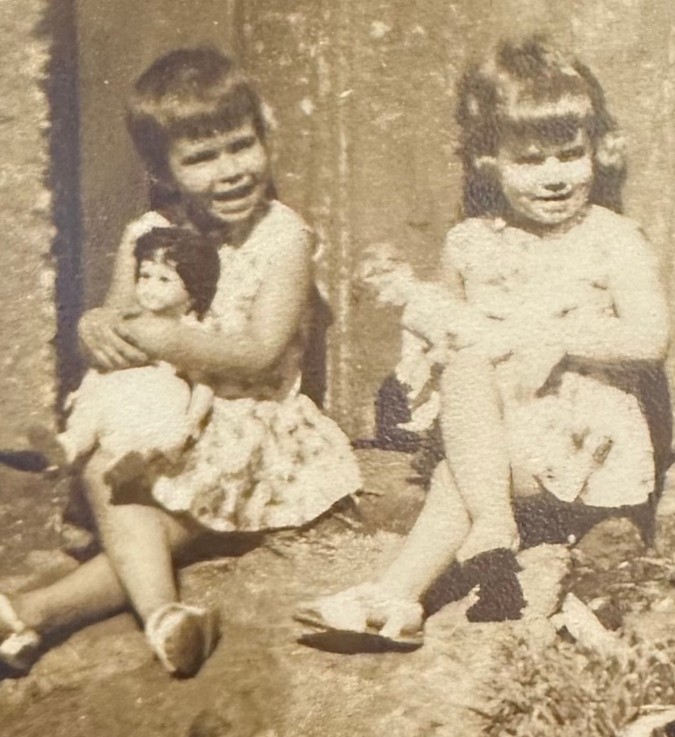
One story, in particular, lingers with quiet poignancy. My grandmother recalls my mother, no more than two or three years old, filling one of those stone basins with water, undressing, and stepping into it as though it were a place of delight. It was winter. The water was cold—undeniably, unforgivingly cold—and yet, in the unselfconscious way of children, she played there, immersed in a moment of pure, unmediated joy. It is an image that captures both the tenderness and the resilience of that world: a childhood shaped by scarcity, yet not diminished by it.
In June of 1974, that world was left behind. The Soares family departed São Jorge for Selma, California, drawn by the promise—so often repeated in immigrant histories—of a better life. They arrived without the language, without familiarity with the customs, and without the invisible cultural maps that guide belonging. What they carried instead were habits of work, family bonds, and a quiet determination to endure.
From that moment forward, my mother’s life becomes part of a broader narrative: the experience of growing up Portuguese in America, of negotiating identity in a space where one is both present and unseen. Her story invites questions that are at once personal and collective. What does it mean to carry the Azores within oneself while learning to navigate an American landscape? Which traditions endure, and which are transformed? How does one measure belonging—through language, memory, or community?
This oral history seeks to trace those contours. It moves from her childhood in São Jorge to her upbringing in California’s Valley, from the intimate textures of family life to the broader question of what it means to live as part of a Portuguese-American community. It asks what she is most proud of, whether her heritage shaped the course of her life, and how she understands her identity today. It asks, too, whether she has returned to the islands of her birth, and what it means to return—not only physically, but imaginatively—to a place that continues to live within her.
In telling her story, something resists disappearance. The stone, once dropped into the ocean, does not vanish entirely. It settles, yes—but it also remains, part of a submerged landscape that, though unseen, continues to shape the tides above it.
 Novidades - The Islands and the Diaspora