

“At Flores, in the Azores, Sir Richard Grenville lay”—so begins The Revenge: A Ballad of the Fleet, by Alfred Lord Tennyson. The poem recounts the famed battle of 1591, fought off the island of Flores, where the galleon Revenge, standing alone, faced down a vast Spanish fleet and, after a long and unequal struggle, was finally lost to the sea.
Tennyson, poet laureate of Victorian England, does more than narrate a battle—he elevates it. In those lines, he renders stoic courage against overwhelming odds, transforming not only the men but the vessel itself into something mythic. The Revenge, once commanded by the legendary Sir Francis Drake, becomes less a ship than a symbol. For decades, the poem was required reading in English schools, quietly shaping a British imagination in which the Azores appeared as a distant yet charged stage of endurance and fate.
It is no coincidence, then, that this poetic prelude finds its echo today in civic life. A petition now before the Regional Parliament proposes the creation of a National Museum of Nautical and Underwater Archaeology in the Azores. At its heart, the initiative seeks to do in institutional form what Tennyson once did in verse: to recognize the archipelago’s place in the larger narrative of the world. Few regions anywhere contain such a concentration of historic shipwrecks, or have played such a sustained and significant role in the archaeological efforts to study them. The sea around the Azores is not merely water—it is an archive, a submerged record of maritime expansion and the restless circulation of the Atlantic world.
At the same time, news has emerged from Ribeira Grande of plans to revive an earlier project: an Azores Aviation Museum, to rise from the ruins of the historic Campo de Santana—locally remembered as the “aerovacas.” If the ocean holds the past in its depths, the sky carries it in another register. The Azores have long stood at a crossroads of aviation history: from the earliest transatlantic crossings to operations during both World Wars, from the storied clippers of Pan American World Airways to the founding of SATA Air Açores. Add to this the strategic importance of Santa Maria Airport and the archipelago’s emerging ambitions in the aerospace sector, and one begins to see the full weight of its geostrategic position—poised between continents, histories, and futures.
Yet museums are more than repositories of objects. In the best tradition of the American essay—where reflection becomes a form of civic inquiry—they are places where a people learns to narrate itself. They are workshops of identity, where memory is shaped into meaning, and knowledge into shared inheritance. They do not merely preserve; they interpret, connect, and animate.
And still, in the Azores, culture and the preservation of collective memory have too often been treated as secondary concerns—if not quietly neglected altogether. The result is not a dramatic loss, but a gradual fading: the past eroding at the edges, worn down by time and by the absence of sustained intention.
What is missing, ultimately, is a durable commitment to knowledge, to memory, to the full recognition of what the islands have been across centuries. As the six-hundredth anniversary of settlement approaches, the moment calls for clarity. To invest in museums, in cultural programming, in historical research is not an indulgence. It is an act of affirmation. It is a way of saying that the past is not a burden, but a foundation.
For history, contrary to what we sometimes assume, is not a decorative gesture reserved for anniversaries and ceremonies. It is the invisible mortar that holds a people together. Properly supported, museums deepen the sense of belonging and serve as essential instruments of cultural, social, and even economic expression.
In an archipelagic territory like the Azores—where distance is both a condition and a metaphor—to preserve and interpret history is to assert presence. It is to claim a place in the world. It is to turn geography into narrative, and memory into horizon.
To value memory is not a cost. It is, in the clearest sense, an investment in the future.
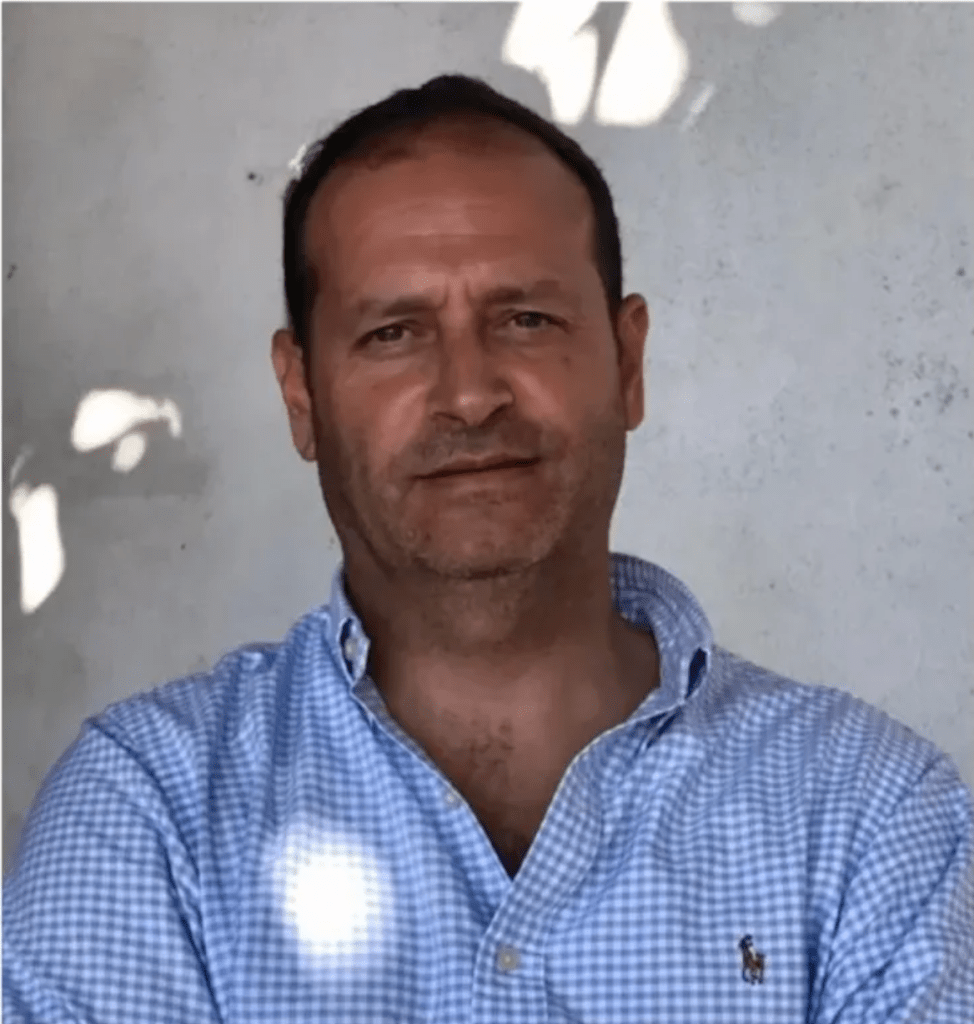
Pedro Arruda is a regular contributor to Azorean newspapers. We are thankful that he agreed to have his op-ed translated and available to our readers.
NOVIDADES will feature occasional opinion pieces from leading thinkers and writers in the Azores, providing the diaspora and those interested in the current state of the Azores with a sense of the significant perspectives on some of the archipelago’s issues.
Translated to English as a community outreach program from the Portuguese Beyond Borders Institute (PBBI) and the Modern and Classical Languages and Literatures Department (MCLL).
You can follow his writings in Portuguese online on: https://azoreansplendor.blogspot.com/
 Novidades - The Islands and the Diaspora