


Throughout 2026, the Azores and Madeira will mark half a century of what many islanders still describe as a partial autonomy—granted, some would say, reluctantly, from the seat of power at Terreiro do Paço.
For generations, those who inhabit these Atlantic islands have framed autonomy not as a concession, but as a long-standing claim—born of distance, neglect and the persistent sense that Lisbon governed the islands from afar, if it governed them at all. Even today, critics argue that the current system remains constrained, shaped by a political culture in which decisions taken in São Bento Palace often appear to resist, rather than deepen, the rights secured by Azoreans and Madeirans. What is presented in the capital as prudence is, in the islands, often perceived as ignorance—political, social and geographic.
At the root of this tension lies something older than any statute: a deficit of trust. Portugal is, by scale and economy, a small country, and its centralizing instinct has long extended across the ocean. The relationship between the mainland and its islands carries the imprint of centuries of colonial administration, where authority flowed in one direction and suspicion in the other. That inheritance lingers. For some, the distance between Lisbon and the islands is not merely geographic—it is institutional, even emotional.
The language has changed. What was once called the “overseas” is now termed “autonomous regions.” But the practice of governance often feels unchanged—remote, delayed, filtered through layers of bureaucracy. The old saying holds: out of sight, out of mind.
And yet, in these fifty years of self-government, much has undeniably been achieved. Infrastructures have been built, connectivity improved, living conditions transformed. In many respects, more was accomplished in half a century than in the five centuries that preceded it. These gains, islanders argue, were driven not by distant administrations, but by local governments that understood, intimately, the realities of life in the Atlantic.
What remains unresolved are the political dimensions of autonomy—those that require not roads or ports, but confidence. A modern state, especially one that governs territories separated by ocean, is expected to embrace decentralization rooted in mutual trust: shared revenues, shared authority, a recognition that proximity is not the same as control. Where such trust exists, decentralization strengthens unity rather than threatens it.
But symbols matter, and structures matter more. The continued presence of the so-called “Representative of the Republic”—a position without equivalent across mainland Portugal—stands, for many, as a reminder of oversight rather than partnership. It signals that distance requires surveillance. That autonomy, however proclaimed, remains conditional.
Other tensions persist: the limited presence of islanders in military leadership within the islands themselves; the absence, at times, of regional symbols—such as the autonomous flag—alongside the national flag in state buildings; delays in updating regional finance laws; and recurring debates in Lisbon over mobility policies that, to islanders, reveal a lack of understanding of insular realities.
These are not minor grievances. They are the accumulated weight of a relationship in which the islands often feel positioned as petitioners—waiting, asking, negotiating from the margins.
The question of financial autonomy lies at the center of this debate. If revenues from international agreements or European Union funds were fully and fairly allocated to regional governments, the impact would be transformative. Instead, mechanisms of control—perceived as lingering vestiges of a colonial logic—continue to shape the fiscal landscape, deepening frustration and, at times, resentment.
And yet, the story of autonomy is not one of failure, but of unfinished work.
Over fifty years, paths became roads, and roads became networks. The physical map of the islands changed. What remains is to redraw the political map—to align institutions with the realities already lived by those who govern and are governed across the Atlantic.
The next fifty years will belong to a new generation of political leaders. Whether they will meet the expectations of the people they serve remains an open question.
Lisbon would do well to remember that its own history is not confined to the mainland. Once, the Portuguese capital itself was, briefly, in the Azores—in Angra do Heroísmo, a city that earned its name through resistance and endurance.
The islands, then, require no lessons in what it means to be Portuguese.
What they ask for is something simpler, and far more difficult: to be trusted.
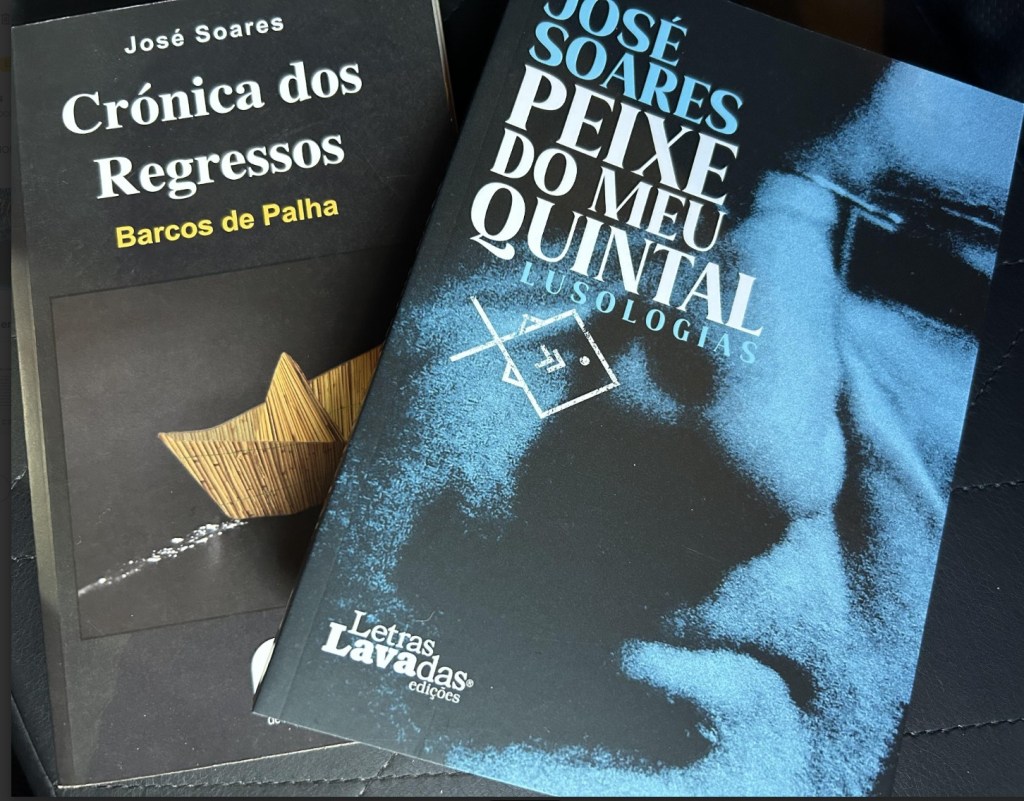
Fish from My Backyard is the regular column that José Soares writes for Azorean newspapers and the title of his most recent book.
NOVIDADES will feature occasional opinion pieces from leading thinkers and writers in the Azores, providing the diaspora and those interested in the current state of the Azores with a sense of the significant perspectives on some of the archipelago’s issues.
Translated to English as a community outreach program from the Portuguese Beyond Borders Institute (PBBI) and the Modern and Classical Languages and Literatures Department (MCLL).
 Novidades - The Islands and the Diaspora