


One year after launching ride-hailing services in the Azores, Bolt is positioning itself not merely as a newcomer, but as a long-term actor in the region’s evolving mobility landscape. In an interview marking the anniversary of its operations, the company’s Portugal director, Mário de Morais, offered a measured yet confident assessment: the experiment, he suggests, is working—and expanding.
Granted a non-exclusive concession to operate TVDE (ride-hailing) services, Bolt remains, for now, the only platform of its kind in the archipelago. Yet Morais is quick to frame the market not as closed, but as open terrain—one that others are free to enter, though none have yet done so.
The numbers, while still modest in global terms, signal traction. In its first year, Bolt vehicles have logged roughly 500,000 kilometers across São Miguel and Terceira—an indicator not only of usage, but of integration into daily life. More striking, perhaps, is the user profile: while tourism provided the initial impetus, more than half of riders are local residents, a shift that underscores the platform’s embedding in the social and economic rhythms of the islands.
Seasonality, however, remains a defining force. During peak summer months, tourists accounted for up to 60 percent of rides; by December, that figure had inverted, with residents making up 75 percent of users. Such fluctuations reveal both the opportunities and vulnerabilities of a service tied to an economy still deeply influenced by tourism cycles.
With approximately 40 licensed drivers currently operating—most concentrated on São Miguel—Bolt faces what Morais describes as a paradox of success: demand is outpacing supply. Riders frequently encounter unavailable drivers, a sign of strong uptake but also a constraint on growth. The company now seeks to expand both geographically and structurally, eyeing islands such as Faial and Pico as the next frontiers.
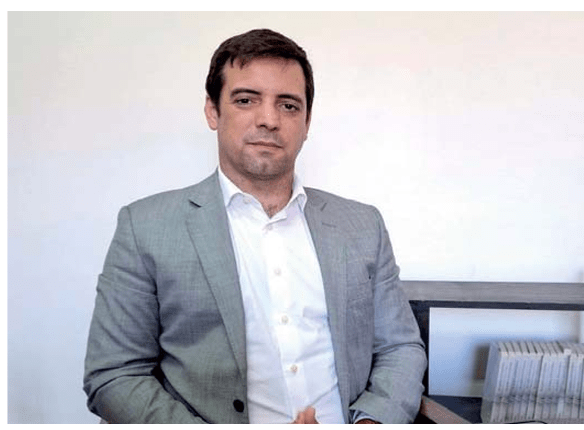
Yet expansion is not merely a question of demand. It is also a matter of infrastructure—and here, the tone shifts. Morais points to a critical bottleneck in electric mobility, noting the limited availability of public charging stations in São Miguel. While this has not yet curtailed growth, he warns that it may soon become a structural impediment. The future of TVDE services in the Azores, as elsewhere, is inseparable from the broader transition to sustainable transport, a transition that, in the region, remains uneven.
Training and workforce development present another layer of complexity. While interest among potential drivers appears robust, the certification process—though praised for its rigor—can be lengthy enough to discourage entry. In response, Bolt is exploring partnerships with regional authorities to reopen training programs, aiming to convert latent interest into active participation.
Despite these challenges, the company’s outlook remains unequivocally optimistic. Morais speaks not of tentative presence but of permanence: a strategy to extend coverage across the entire Portuguese territory, including its most remote islands. The Azores, in this vision, are not peripheral but integral—a testing ground for how digital mobility platforms can adapt to insular geographies and hybrid economies.
If the first year has been one of insertion and calibration, the next promises consolidation and reach. Between the volcanic roads of São Miguel and the windswept landscapes of Pico yet to come, Bolt’s trajectory in the Azores is less about speed than about alignment—with local needs, infrastructural realities, and the slow but steady reconfiguration of movement in an island world.
Translated into English as a community outreach program by the Portuguese Beyond Borders Institute (PBBI) and the Modern and Classical Languages and Literatures Department (MCLL), in collaboration with Bruma Publication and ADMA (Azores-Diaspora Media Alliance) at California State University, Fresno. PBBI thanks Luso Financial for sponsoring NOVIDADES.
Based on an interview by Rui Leite Melo for the newspaper Diário dos Açores, Paulo Viveiros-direcor.

 Novidades - The Islands and the Diaspora