

The Regional Government of the Azores is doubling down on a comprehensive approach to youth well-being—one that recognizes that healthy living today extends beyond diet and exercise to include balanced digital habits.
Speaking at an event in Ponta Delgada, Mónica Seidi underscored the urgency of addressing the digital dimension of health. “Promoting healthy lifestyles also means promoting balanced digital behaviors,” she said, emphasizing the need for stronger digital literacy, online well-being, and active family engagement.
The initiative, organized jointly by regional departments overseeing health, social services, education, culture, and sport, marked a notable shift in strategy. For the first time, sport has been formally integrated into the Regional Calendar for the Prevention and Promotion of Healthy Lifestyles—an effort officials described as a key evolution in public health policy.
Sofia Ribeiro, the Regional Secretary for Education, Culture, and Sport, highlighted the central role of physical activity in shaping healthier generations. “Sport and physical activity are, by their very nature, powerful drivers of healthy lifestyles,” she said, pointing to expanded investments and programs aimed at reaching broader segments of the population—especially younger age groups.
Officials stressed that the strategy relies on coordinated action across institutions, including schools, health services, law enforcement, and prevention teams. The goal: equip young people with the tools to make informed, responsible choices in both their physical and digital lives.
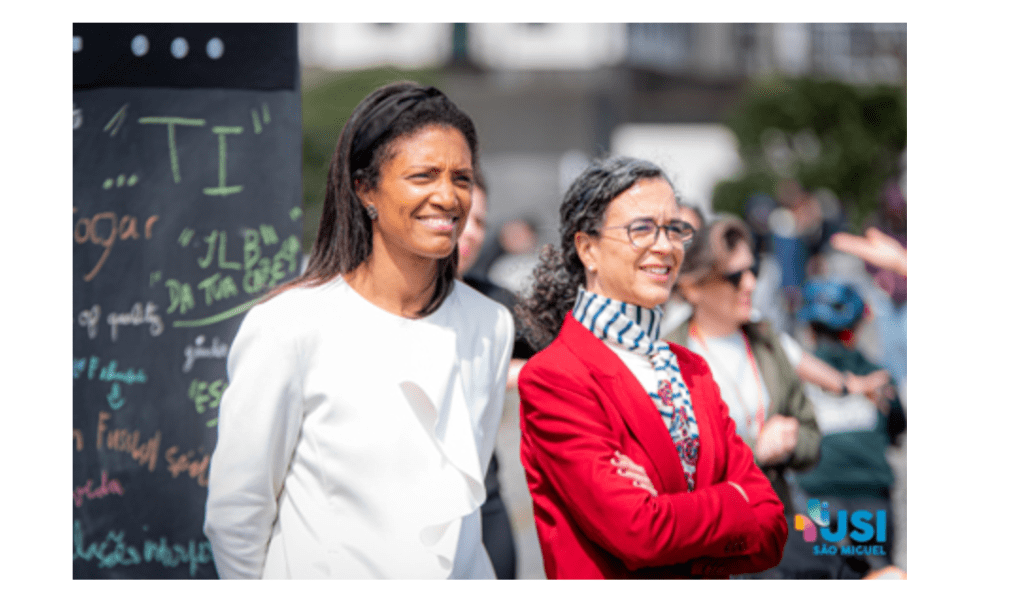
The day’s programming reflected that integrated vision. Activities included a cycling circuit, a zumba class, a road safety awareness session, and the creation of a public mural featuring messages about healthy living—an effort to blend physical engagement with community expression.
The regional government reiterated that safeguarding the well-being of Azoreans is a shared responsibility, requiring sustained collaboration among public institutions, families, and civil society. In an era increasingly defined by screens, officials made clear that the path to healthier futures lies in striking the right balance between the digital and the physical.
In Correio dos Açores, Natalino Viveiros-director
Translated into English as a community outreach program by the Portuguese Beyond Borders Institute (PBBI) and the Modern and Classical Languages and Literatures Department (MCLL), in collaboration with Bruma Publication and ADMA (Azores-Diaspora Media Alliance) at California State University, Fresno. PBBI thanks Luso Financial for sponsoring NOVIDADES.

 Novidades - The Islands and the Diaspora