


A reading of absence, markets, and memory—through the reporting of Diário Insular
In the Atlantic, distance is never merely geography—it is destiny negotiated daily. And when a runway falls silent, the echo is not only logistical; it is economic, cultural, and, ultimately, existential. The recent withdrawal of Ryanair from the Azores has triggered precisely such an echo—one now reverberating across the fragile architecture of the region’s tourism economy.
In a sustained and revealing interview published by Diário Insular—a publication that continues to distinguish itself through its commitment to in-depth, ongoing conversations about the region’s future—the analysis is articulated by Marcos Couto, president of the Chamber of Commerce and Industry of Angra do Heroísmo and a seasoned entrepreneur with direct experience in the region’s economic realities. His perspective carries both institutional authority and the pragmatic clarity of someone who navigates markets not in theory, but in practice.
At first glance, the numbers suggest a familiar narrative: a low-cost carrier exits, capacity drops, prices rise. But this reading, Couto argues, is dangerously reductive. The real issue lies in the convergence of two forces: the end of Ryanair’s operations and a projected reduction of more than 32,000 seats in the summer 2026 schedule of SATA Air Açores. This dual contraction, cumulative rather than isolated, threatens to constrict supply in a way that inevitably pressures fares upward. It is not that Ryanair alone lowered prices; it is that its presence expanded capacity. Its absence, therefore, exposes the mechanics of scarcity.
The illusion that now circulates—that Ryanair’s departure singularly explains rising prices—becomes, in this light, a convenient myth. Markets do not operate on nostalgia. They respond to volume. And in the Azores, volume is shrinking.
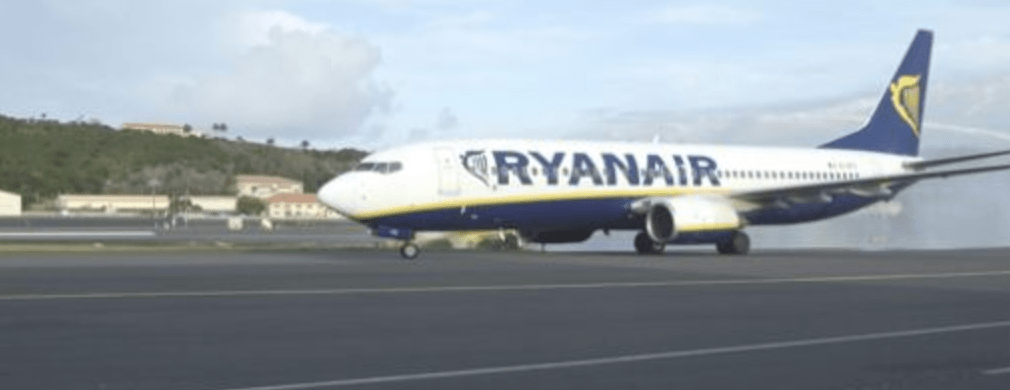
Yet Couto’s analysis goes further, unsettling another easy assumption: that tourism decline follows directly from Ryanair’s exit. The data suggests otherwise. Tourism figures continued to grow even after the airline had already reduced its operations by 75% in 2023. The downturn only begins to register in late 2025—at a time when Ryanair was still present. The implication is stark: the crisis is not conjunctural, but structural.
At its center lies a quieter failure—one less visible than an empty runway but far more consequential: the underinvestment in destination promotion. The regional tourism body, Visit Azores, reportedly executed only about 40% of its allocated budget. In an industry defined by visibility, this is not a technical shortfall; it is an existential one. Tourism, as Couto underscores, is a fiercely competitive marketplace in which absence quickly becomes oblivion. Those who disappear are forgotten.
The coming summer, by contrast, offers a deceptive calm. Early indicators suggest “reasonable” numbers, with peak months holding steady. But beneath this apparent stability lies a subtle erosion: the high season is compressing—arriving later, departing sooner. Seasonality, long the archipelago’s structural challenge, is not being resolved; it is intensifying.
And beyond the islands, the world shifts. International instability, economic uncertainty, and national headwinds converge to create an environment in which peripheral destinations—however exceptional—must compete harder for attention. The Azores cannot afford strategic missteps.
What, then, is to be done?
Couto calls first for institutional clarity: the urgent appointment of a new leadership team at Visit Azores, one grounded in expertise and equipped with the financial resources necessary to reposition the destination. Strategy, here, is not optional. It is survival.
On the aviation front, the expectation is that TAP Air Portugal and SATA will move to occupy at least part of the vacuum left behind. But the notion that another low-cost carrier will seamlessly replace Ryanair is treated with skepticism. The gap is not merely one of routes, but of market logic.
More profoundly, Couto challenges a foundational assumption of Azorean tourism policy: the belief in the viability of year-round, point-to-point routes sustained solely by the destination’s own demand. This, he suggests, has been a strategic miscalculation. The Azores, while capable of attracting direct traffic in peak season, lack the volume to sustain such routes in winter months. The result is predictable: persistent seasonality, masked as inevitability.
The alternative proposed is both pragmatic and visionary—reimagining the Azores not as an endpoint, but as a node within a broader network of travel. A place of connection, of complementarity. Early efforts, such as initiatives led by the Chamber of Commerce of Angra do Heroísmo in collaboration with Porto and airline partners, signal the contours of that shift.
What emerges from this interview—carefully curated and elevated by Diário Insular—is not a narrative of decline, but of decision. The Azores stand at a threshold where myth must give way to analysis, and where analysis must lead to action.
Because in the end, the question is not whether planes will return.
It is whether the islands will know how to call them back.
Translated into English as a community outreach program by the Portuguese Beyond Borders Institute (PBBI) and the Modern and Classical Languages and Literatures Department (MCLL), in collaboration with Bruma Publication and ADMA (Azores-Diaspora Media Alliance) at California State University, Fresno. PBBI thanks Luso Financial for sponsoring NOVIDADES.

 Novidades - The Islands and the Diaspora