

Portugal’s electricity generation from renewable sources increased slightly over the 12-month period ending in February 2026, but the Azores continue to account for only a marginal share of the national total, according to the February 2026 edition of Renewables Fast Statistics released by the Direção-Geral de Energia e Geologia (DGEG).
The report analyzes a rolling year from March 2025 through February 2026. During that period, total renewable energy production in Portugal reached 45,553 gigawatt-hours (GWh), a 1.2% increase from the 45,005 GWh recorded in the previous 12-month cycle ending in February 2025.
In the Azores, however, renewable electricity generation totaled 315 GWh over the same period—slightly above the 314 GWh recorded a year earlier, but still below the 319 GWh registered in the 12 months ending February 2024. As a result, the archipelago accounted for less than 1% of Portugal’s total renewable output.
The figures point to near stagnation in Azorean renewable production, in contrast to modest growth nationwide.
On mainland Portugal, renewable generation reached 44,888 GWh in the same period, while Madeira produced 350 GWh—also surpassing the Azores.
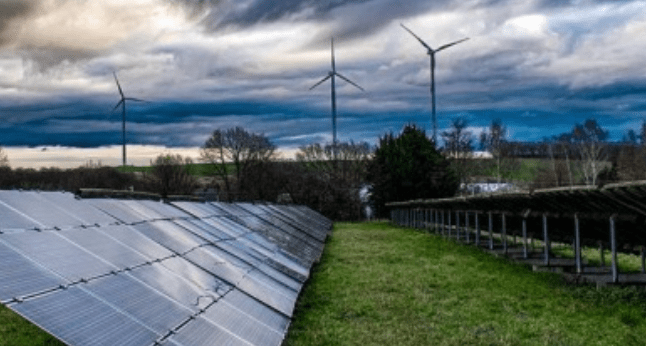
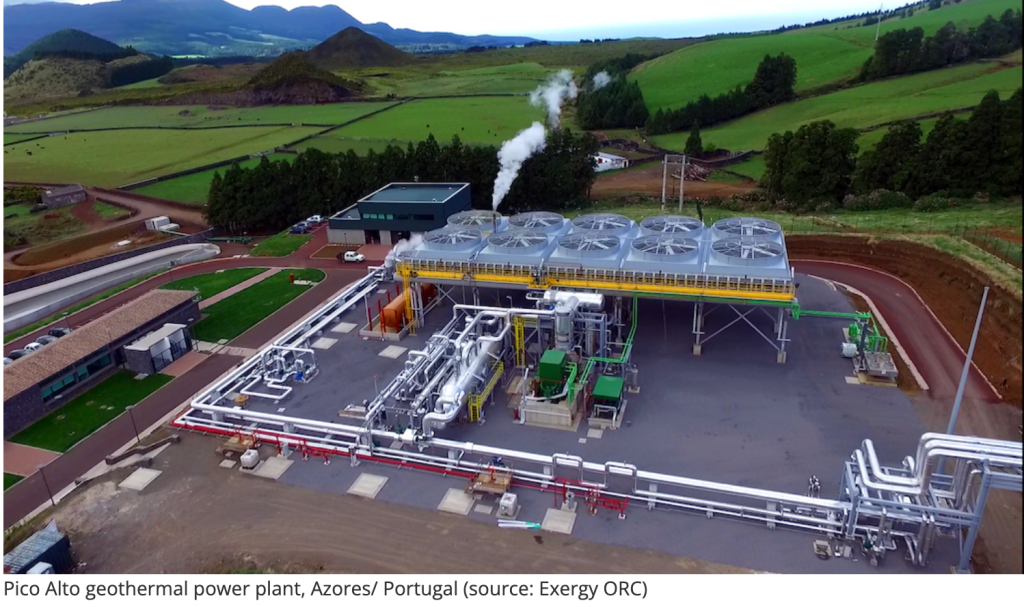
By technology, the Azores generated 70 GWh from wind, 37 GWh from hydropower, 12 GWh from biomass, and 8 GWh from solar energy between March 2025 and February 2026. Geothermal energy—long a defining feature of the region’s energy mix—continues to play a central role. According to DGEG, geothermal sources accounted for roughly 22% of electricity consumption in the Autonomous Region of the Azores in 2024.
Installed renewable capacity in the Azores stood at 94 megawatts (MW) as of February 2026, unchanged from the previous year. Of that total, 35 MW came from wind, 11 MW from solar, 8 MW from hydropower, 4 MW from biomass, and approximately 34 MW from geothermal energy.
The data underscores the relatively modest and slow-growing renewable infrastructure in the Azores, despite geothermal energy’s strategic importance to the region.
Nationally, renewable sources accounted for an estimated 63.4% of electricity generation in February 2026, based on the methodology of the European Union’s Renewable Energy Directive. In the Azores, however, the picture remains one of limited contribution in absolute terms, albeit with distinct characteristics shaped by the region’s geography.
Unlike mainland Portugal, the Azores operate as a collection of isolated island power systems, with no interconnection between the grids of the various islands. This structural reality limits economies of scale, reduces system flexibility, and constrains the full exploitation of certain renewable energy sources.
In Diário dos Açores-Paulo Viveiros, director
Translated into English as a community outreach program by the Portuguese Beyond Borders Institute (PBBI) and the Modern and Classical Languages and Literatures Department (MCLL), in collaboration with Bruma Publication and ADMA (Azores-Diaspora Media Alliance) at California State University, Fresno. PBBI thanks Luso Financial for sponsoring NOVIDADES.

 Novidades - The Islands and the Diaspora