

U.S. Secretary of State Marco Rubio on Tuesday thanked Portugal’s Foreign Minister, Paulo Rangel, for what he described as the country’s “close economic and defense cooperation,” according to a statement from the U.S. State Department, which underscored the continued strength of bilateral ties.
Rubio—who also serves as national security adviser to Donald Trump—and Rangel reaffirmed their shared commitment to transatlantic security, the statement said. Portugal’s Foreign Ministry added, in a post on X, that the two officials also discussed the situation in the Middle East, emphasizing the strategic importance of the transatlantic relationship as well as ongoing cooperation in economic and defense matters.
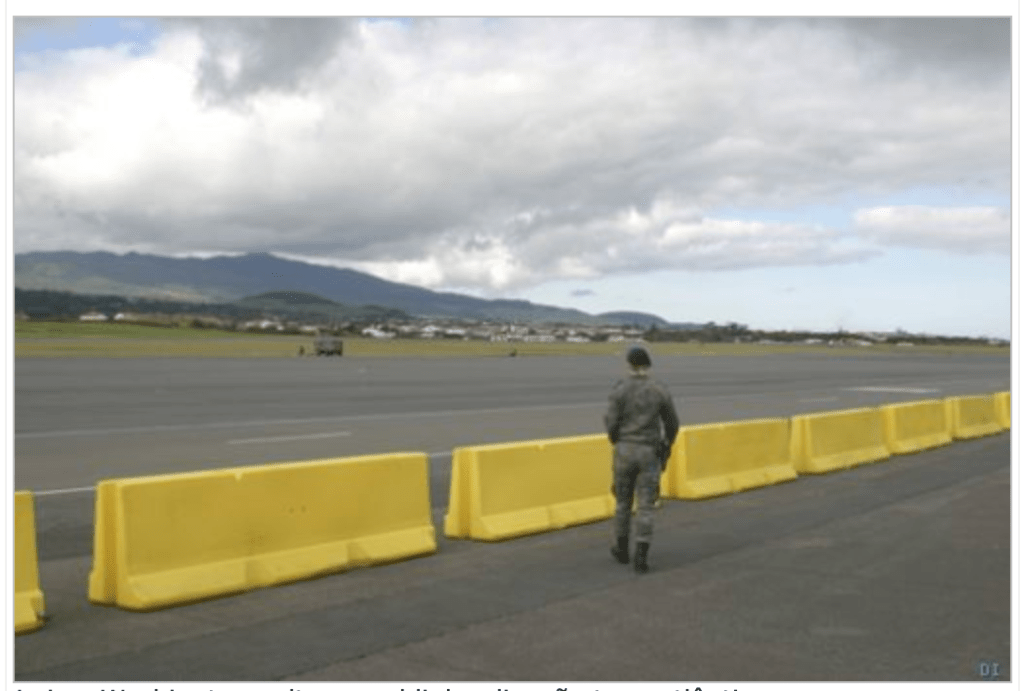
At the center of Washington’s expression of gratitude is the use of Lajes Air Base, which since late February has been integrated into U.S. military operations related to Iran, particularly through the deployment of aerial refueling aircraft.
Portugal’s government has maintained that its authorization for the use of the base is “conditional.” Officials say the facility may only be used in response to an attack, within a framework of defense or retaliation, and that any action must be necessary, proportionate, and strictly limited to military targets.
Spain, by contrast, has taken a different stance—one publicly criticized by Rubio. In an interview with Al Jazeera, he pointed to what he described as inconsistencies within NATO. “We have countries like Spain, a NATO member we are committed to defend, that denies us the use of its airspace and even boasts about it,” Rubio said. “If NATO exists only for us to defend Europe when it is attacked, while they deny us access to their bases when we need them, that’s not a very good agreement.”
Speaking in Portugal’s parliament, Rangel insisted that the agreed conditions for the use of Lajes are being respected. “Portugal has not been, is not, and will not be involved in this operation,” he said, stressing that any use of the base follows existing agreements that allow for conditional authorization outside NATO or multilateral frameworks.
Meanwhile, members of the Socialist Party (PS) pressed the foreign minister for clarification regarding the reported transit through Lajes of MQ-9 Reaper aircraft—commonly known as armed drones. The opposition is calling on the government to ensure that any U.S. use of Portuguese military infrastructure fully complies with international law.
In Diário Insular, José Lourenço-director
Translated into English as a community outreach program by the Portuguese Beyond Borders Institute (PBBI) and the Modern and Classical Languages and Literatures Department (MCLL), in collaboration with Bruma Publication and ADMA (Azores-Diaspora Media Alliance) at California State University, Fresno. PBBI thanks Luso Financial for sponsoring NOVIDADES.

 Novidades - The Islands and the Diaspora