

The 2025 Annual Internal Security Report—Portugal’s Relatório Anual de Segurança Interna—arrives like a document written in two hands. One traces a story of decline, of numbers falling, of a region seemingly safer. The other, more discreet but no less urgent, sketches the outlines of a new and shifting terrain—one where crime travels not by sea or air, but through invisible corridors of code.
In the Azores, where geography once defined both isolation and protection, the report signals a transformation. The trafficking of new psychoactive substances has found a new vessel: the digital realm. No longer confined to ports or hidden compartments, these substances now move through encrypted messages, across the dark web, and arrive quietly through ordinary postal routes. The Atlantic, once the great mediator of distance, has been replaced by networks that collapse space entirely. In this new cartography, remoteness offers no refuge.
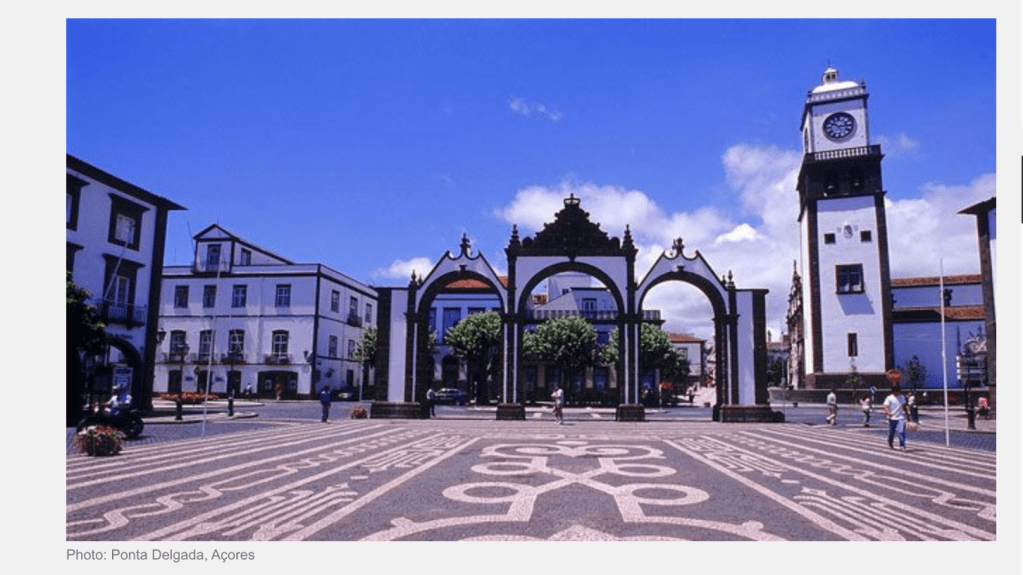
And yet, the numbers tell a different, almost reassuring story. In 2025, recorded crime in the Azores fell to 8,759 cases—a drop of 846 from the previous year, the most significant decrease in the country. From Ponta Delgada to Angra do Heroísmo, from the quiet edges of Corvo to the more populous municipalities, the figures distribute themselves like a map of lived experience—uneven, human, marked by density and silence alike.
But beneath the arithmetic lies a more fragile reality. The report, drawing on data from the Polícia Judiciária, suggests that serious crimes—such as intentional homicide—remain tied to deeper social fractures: vulnerability, limited educational access, and the enduring presence of substance abuse. These are not crimes of abstraction, but of proximity, of lives lived at the margins.
Elsewhere, the roads tell their own story. Accidents rose slightly to 3,910, with fatalities holding steady at five lives lost. Yet the increase in serious injuries—up 23.8 percent—introduces a quiet тревor into the data, a reminder that safety is not merely the absence of death, but the presence of harm that lingers.
And then, perhaps the most human line in the report: 49 individuals born in the Azores were deported from abroad—28 from Canada and 21 from the United States, with smaller numbers from France and the United Kingdom. These are not just statistics. They are stories interrupted, journeys reversed, lives caught between belonging and displacement—echoes of an older migration narrative now returning in unexpected form.
Still, the report gestures toward a future not entirely defined by its concerns. Preparations are underway for new Victim Support Offices across the islands, and infrastructure for criminal investigation is being renewed—signs of a system attempting to respond, to adapt, to care.
The Azores, long imagined as a geography of distance, now stand at the intersection of two worlds: one grounded in community, landscape, and memory; the other diffuse, digital, and borderless. Between them lies a quiet question—how to preserve the integrity of a place when its challenges no longer arrive from the horizon, but from within the unseen.
Adapted from a news article written by José Henrique Andrade in Correio dos Açores, directed by Natalino Viveiros.
 Novidades - The Islands and the Diaspora