

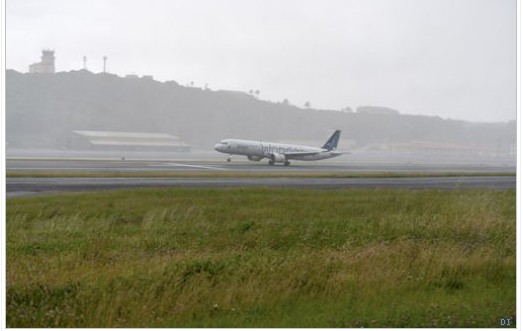
Proposals from the Legislative Assemblies of the Azores and Madeira to revise Portugal’s social mobility subsidy were rejected Tuesday in the parliamentary Committee on Infrastructure and Mobility.
The measures were voted down by lawmakers from the Social Democratic Party (PSD), Socialist Party (PS), and Chega. In contrast, Liberal Initiative (IL), Juntos pelo Povo (JPP), and PSD deputy Vânia Jesus—elected in Madeira—voted in favor. Deputies elected from the Azores do not sit on the committee.
According to Miguel Santos (PSD), president of the Committee on Infrastructure, Mobility and Housing, more than 30 votes were held in a process conducted article by article.
Separate proposals from the Socialist Party and Chega to amend the mobility subsidy framework had already been approved in committee and are expected to go before the full parliament on Friday.
The Socialist initiative seeks to roll back restrictions introduced by the current national government. These include a €600 cap on eligible airfare costs, a requirement that applicants have no outstanding tax or social security debts, and the obligation to present receipts immediately for reimbursement.
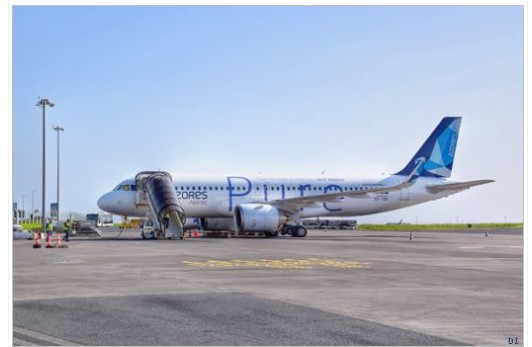
Chega also introduced what it described as “concrete proposals to correct structural problems” in the subsidy system. In an opinion piece, Ana Martins, a Chega deputy elected from the Azores, said the goal is to “eliminate administrative barriers, correct system distortions, and ensure that the principle of territorial continuity is finally respected.”
“What has now been achieved in committee is only a first step toward correcting a system that for years has penalized island residents,” Martins said, adding that the outcome shows that “when there are deputies willing to truly defend the autonomous regions, it is possible to confront centralism and begin changing policies that once seemed untouchable.”
Although Chega’s main bill was rejected, several of its amendments were approved and incorporated into the final text. These include removing the requirement for applicants to have no outstanding tax or social security debts, eliminating reduced caps on one-way fares, and ending the overall maximum reimbursement limit.
A new model for the mobility subsidy took effect in early January and has faced significant criticism.
Francisco César, a Socialist deputy and party leader in the Azores, said the changes represent “an important step in correcting mistakes that should never have been made.” He argued that the current government “made life more difficult for people, with a confusing platform, unjustified requirements, and rules that did not reflect the reality of the Azores.”
In Diário Insular – José Lourenço-director
Translated into English as a community outreach program by the Portuguese Beyond Borders Institute (PBBI) and the Modern and Classical Languages and Literatures Department (MCLL), in collaboration with Bruma Publication and ADMA (Azores-Diaspora Media Alliance) at California State University, Fresno. PBBI thanks Luso Financial for sponsoring NOVIDADES.

 Novidades - The Islands and the Diaspora