

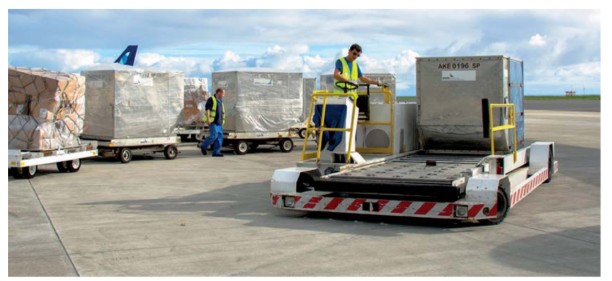
Ground handling operations at SATA Air Açores are facing mounting financial pressure, with sharply rising costs, persistent losses, and growing uncertainty as the Azores Regional Government moves toward full privatization of the sector.
According to official data released in response to a parliamentary inquiry, total handling costs nearly doubled over five years—from €19.4 million in 2021 to €35.3 million in 2025, an increase of more than 80%. The surge is evident across all islands, particularly at major hubs like Ponta Delgada and Terceira, reflecting the resource-intensive nature of ground operations, including aircraft support, passenger services, and cargo handling.
At the same time, the operation remains structurally unprofitable. Losses have worsened steadily, rising from €3.45 million in 2021 to over €6.25 million in 2025. Despite some accounting limitations—namely the internal pricing of services provided within the SATA group—the sector has shown a consistent inability to generate positive results.
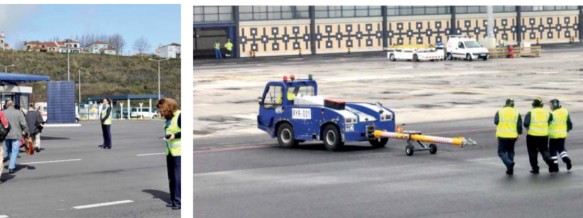
The workforce currently stands at 667 employees across the archipelago, with nearly half based on São Miguel Island. The labor-heavy nature of the sector underscores its strategic importance—but also its vulnerability amid restructuring.
That restructuring is now underway. The Regional Government plans to fully separate and privatize the handling unit as part of broader reforms required under European regulations tied to the restructuring of the SATA Group. The transition to a standalone, privately operated entity is expected to begin in 2026, though officials acknowledge that the financial impact and long-term viability of the move remain unclear.
While authorities say workers’ rights will be protected, they also admit that privatization carries operational risks that must still be assessed and mitigated.
In a region where air travel is not a luxury but a lifeline, the stakes are high. Ground handling remains a critical pillar of the Azores’ fragmented and highly dependent air transport system. Yet the latest figures paint a stark picture: rising costs, deepening losses, uneven investment—and an uncertain future as privatization looms.
In Diário dos Açores – Paulo Vivieiros, director
Translated into English as a community outreach program by the Portuguese Beyond Borders Institute (PBBI) and the Modern and Classical Languages and Literatures Department (MCLL), in collaboration with Bruma Publication and ADMA (Azores-Diaspora Media Alliance) at California State University, Fresno. PBBI thanks Luso Financial for sponsoring NOVIDADES.

 Novidades - The Islands and the Diaspora