

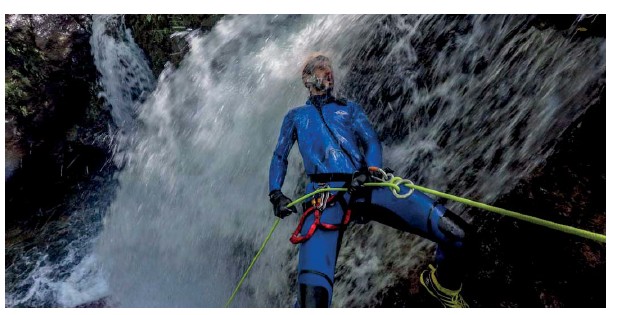
In the crystalline waters off São Miguel, where dolphins once swam so close that their sounds echoed beneath the surface, a group of visitors experienced something rare—an intimacy with nature that felt almost sacred. For the guides of Azorean Active Blueberry, it was more than a tour; it was a moment that lingered, forging bonds so enduring that, years later, many of those visitors remain in contact.
It is this alchemy—between landscape, experience, and human connection—that has defined the rise of adventure tourism in the Azores over the past decade. But as a recent interview in Correio dos Açores reveals, that success now stands at a crossroads.
Founded in 2014 by Paulo Pacheco, Azorean Active Blueberry emerged from a simple but visionary premise: to professionalize and specialize adventure tourism on São Miguel, particularly in canyoning and coasteering. At the time, such activities were niche, catering to small groups of experienced adventurers. Today, that world has changed dramatically. What was once exclusive has become accessible—families with young children, first-time adventurers, and travelers seeking to “step outside their comfort zones” now dominate the market.
Growth, however, has come at a cost.
According to the Blueberry team, the most visible transformation is the sheer increase in visitors—especially during peak season—and the rapid proliferation of tourism companies. In just three years, the number of canyoning operators on São Miguel has doubled, now reaching twelve. This expansion, while economically beneficial, has exposed a deeper vulnerability: a lack of regulation.
“The absence of control,” they note, “has led to the saturation of the very الأماكن that define us.” In other words, the success of Azorean tourism risks eroding the fragile ecological and experiential balance that made it successful in the first place.
The warning is clear—and urgent. Without limits on capacity and a coherent strategy for sustainability, the islands may face a paradox: the more they are visited, the less they can offer.
Seasonality compounds the challenge. Harsh and increasingly unpredictable winters, combined with insufficient regional planning, have made the off-season particularly difficult for companies that rely on steady demand to maintain trained staff and operational readiness. The result is a structural imbalance—overcrowded summers and economically fragile winters.
Yet amid these concerns, there remains a profound sense of purpose.
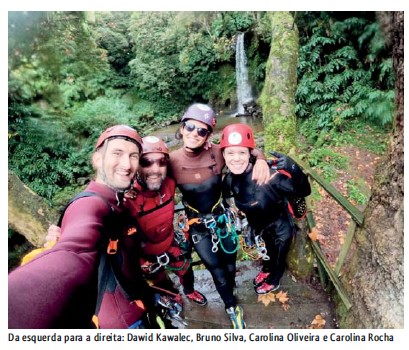
For companies like Blueberry, sustainability is not a slogan but a daily practice: defined routes to minimize environmental impact, meticulous equipment maintenance to reduce waste, and an awareness that “nature is our office—and without it, we are nothing.” It is a philosophy rooted in respect, one that echoes a broader cultural understanding in the Azores: that the land and sea are not commodities, but inheritances.
Looking ahead, the company’s ambitions are measured, even cautious. Growth, yes—but conscious growth. New products are being developed, including offerings for the local market, and a continued commitment to safety, professionalism, and memorable experiences remains central.
Their message to the local community is equally telling: rediscover your own island. Participate. Explore. Engage. In a tourism economy often driven by external demand, this call for internal connection is both refreshing and necessary.
What emerges from this conversation is not merely an industry report, but a reflection on identity. Tourism in the Azores is no longer just about attracting visitors; it is about negotiating the terms of presence—how many, how often, and at what cost.
For the Azores, the future of tourism will depend on a delicate equilibrium: between openness and preservation, growth and restraint, experience and responsibility.
And somewhere, perhaps just beneath the surface, the dolphins are still swimming—waiting to see which path we choose.
By Novidades, based on an interview by Diogo Simões Pires, jounalist for Correio dos Açores-Natalino Viveiros-director.
Translated into English as a community outreach program by the Portuguese Beyond Borders Institute (PBBI) and the Modern and Classical Languages and Literatures Department (MCLL), in collaboration with Bruma Publication and ADMA (Azores-Diaspora Media Alliance) at California State University, Fresno. PBBI thanks Luso Financial for sponsoring NOVIDADES.
 Novidades - The Islands and the Diaspora