

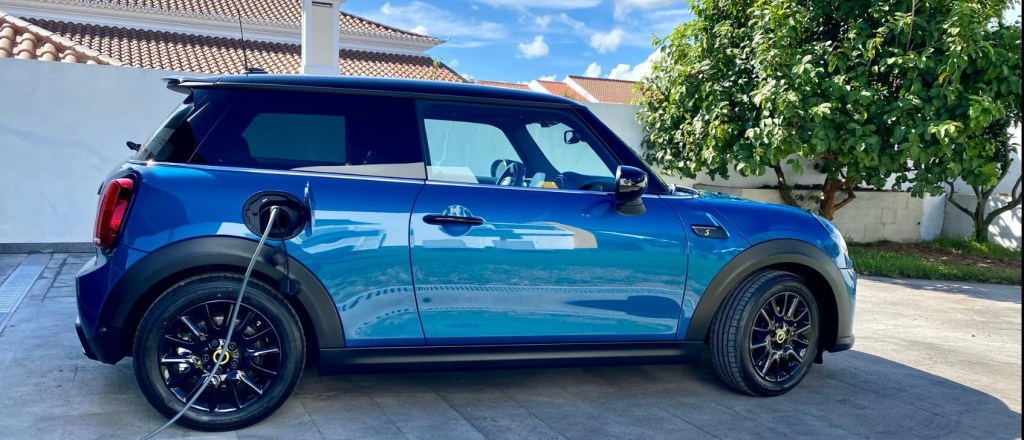
The Azores are fast becoming a proving ground for the future of electric mobility. At a final event hosted by the Regional Civil Engineering Laboratory (LREC), leaders and experts gathered to showcase the results of the European EV4EU project—an ambitious initiative exploring how electric vehicles can be fully integrated into modern energy systems.
Funded by the EU’s Horizon Europe program and led by the INESC-ID, EV4EU aims to rethink the role of electric vehicles—not just as consumers of energy, but as active participants in the grid. Through Vehicle-to-Everything (V2X) technology, cars can store and return energy, helping stabilize power systems and maximize the use of renewable sources.
For the Azores, this transformation carries particular weight. As Electricidade dos Açores (EDA) President Paulo André emphasized, the region’s isolated island grids and growing reliance on renewable energy make it both a challenge and an opportunity. “This is not a future trend,” he noted. “It is already a reality.” Nearly 47% of new vehicles sold in the region are now electric, with an estimated 6,000 EVs already on the road.
That rapid adoption, however, brings complexity. Island systems must contend with limited grid capacity, fluctuating renewable production, and concentrated demand peaks. Yet EV4EU’s real-world pilot in São Miguel—spanning homes, service buildings, and the EDA campus—demonstrated that smart charging and energy management can significantly improve grid efficiency and renewable integration.
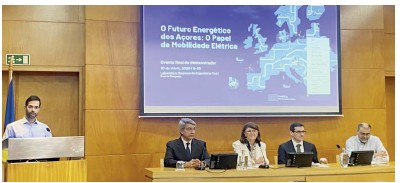
Researchers and industry leaders also highlighted the importance of keeping users at the center of this transition. Flexibility in charging, clear communication, and reliable system integration are critical to building trust. At the same time, experts stressed that access to electric mobility must be broadened. As project coordinator Hugo Morais put it, the technology cannot remain limited to those who can afford expensive cars or solar panels—it must be democratized.
Regional Secretary for Tourism, Mobility and Infrastructure Berta Cabral underscored the broader significance of the initiative. Electric mobility, she argued, is not only environmentally necessary but economically viable—capable of strengthening energy independence while positioning the Azores as a leader in innovation.
Beyond mobility, the region is also advancing renewable energy through programs like Solenerge, aimed at expanding solar installations for self-consumption. But officials warned that approved projects must now move swiftly toward implementation to meet deadlines and deliver real impact.
In the end, EV4EU has shown that the Azores are more than a remote archipelago—they are a “natural laboratory” for Europe’s energy future. Here, on islands shaped by volcanic force and Atlantic winds, the next chapter of sustainable mobility is already being written.
From a story written by journalist José Henrique Andrade in Correios dos Açores-Natalino Viveiros, director.
Translated into English as a community outreach program by the Portuguese Beyond Borders Institute (PBBI) and the Modern and Classical Languages and Literatures Department (MCLL), in collaboration with Bruma Publication and ADMA (Azores-Diaspora Media Alliance) at California State University, Fresno. PBBI thanks Luso Financial for sponsoring NOVIDADES.

 Novidades - The Islands and the Diaspora