

In the lush valley of Furnas Valley, April arrives not merely as a season but as a quiet revelation. The roads that wind toward Furnas and Ribeira Quente are now lined with azaleas in full bloom—bursts of color that seem to breathe alongside the volcanic earth. Their delicate beauty is joined by the rich presence of rhododendrons and the final, lingering camellias of the season, composing a landscape that feels almost ceremonial in itself. This year, the balance of rain and sun has been especially kind to the azaleas, whose fragile nature depends on just such a harmony—too much of either, and their brilliance fades.
But this Sunday, April 12, the valley gathers not only in admiration of nature, but in devotion. The Procissão dos Enfermos—the Procession of the Sick—returns, one of the most deeply rooted religious traditions in Furnas. First inspired by the parish’s early spiritual guide, Padre José Jacinto Botelho, the procession remains a powerful expression of communal faith, humility, and care for the most vulnerable. It is a ritual in which belief moves through the streets, carried not only in prayer but also in presence.
The paths along which the procession travels are adorned with intricate carpets of flowers—ephemeral works of art that transform the village into a living tapestry. These floral designs, crafted with devotion and patience, have long drawn crowds to the valley, merging aesthetic beauty with spiritual intention. They are as much an offering as they are a spectacle.
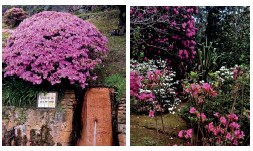
Yet within this beauty lies a quiet tension. For those who call Furnas home and who hold the First Sunday close to the heart, there is a growing reflection on the cost of such adornment. The azaleas that flourish along roadsides and pathways—so essential to the landscape’s identity—are often gathered to decorate the streets. And while the gesture is rooted in tradition, it raises a question: should what is already perfect in place be removed for the sake of display?
There is another path, some suggest—one that honors both devotion and preservation. The use of flowers gathered from sustainable sources, or even crafted alternatives made from treated wood shavings, offers a way to maintain the visual richness of the procession without diminishing the natural beauty that defines the valley. It is not a rejection of tradition, but a reimagining—one that allows faith to evolve alongside ecological care.
In Furnas, where steam rises from the earth, and flowers bloom against a volcanic horizon, the sacred and the natural have always been intertwined. On this First Sunday, as the procession moves gently through streets lined with color and memory, the valley invites not only reverence, but reflection—on how best to honor both the rituals we inherit and the landscapes that sustain them.
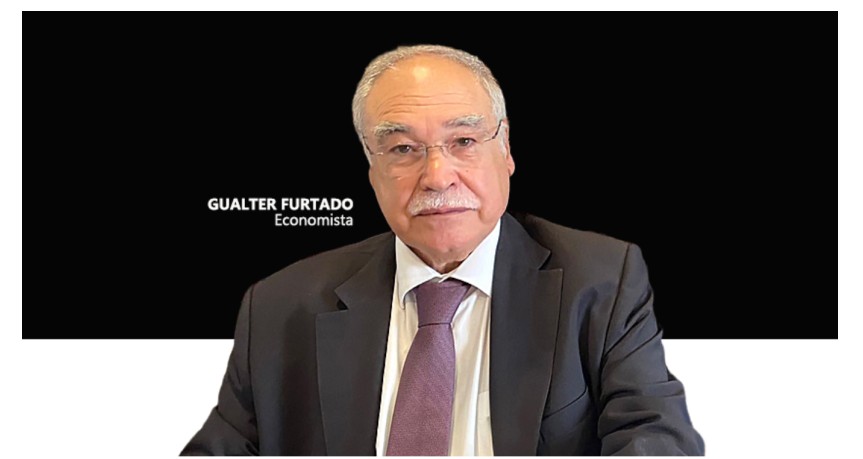
Guater Furtado, is an Advisory Member of the Order of Economists
Translated into English as a community outreach program by the Portuguese Beyond Borders Institute (PBBI) and the Modern and Classical Languages and Literatures Department (MCLL), in collaboration with Bruma Publication and ADMA (Azores-Diaspora Media Alliance) at California State University, Fresno. PBBI thanks Luso Financial for sponsoring NOVIDADES.

 Novidades - The Islands and the Diaspora