

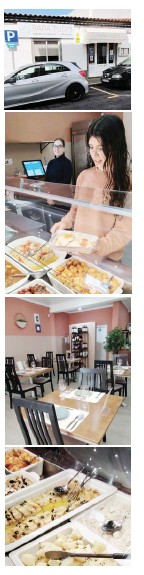
In the gentle rhythms of island life—where memory lingers in the cadence of recipes and the land still speaks through what is placed upon the table—there emerges, from time to time, a space that is more than a restaurant. It becomes, instead, a gesture of continuity. Such is the case with Papa Tudo, a newly opened establishment in Lagoa, where the language of food returns to its most essential form: nourishment, identity, and belonging.
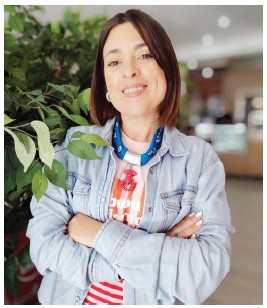
Located in the parish of Nossa Senhora do Rosário, the restaurant inhabits a site already marked by culinary memory—the former home of “A Traineira.” Yet what now animates the space is not merely a revival, but a reimagining. Conceived by entrepreneur Analisa Furtado, Papa Tudo is born from a simple yet profound premise: that in an age of acceleration and abstraction, there remains a deep, almost instinctive desire for food that feels familiar, honest, and rooted in place.
This is not gastronomy as spectacle, but as inheritance.
Drawing upon the established reputation of Q’énosso, a catering brand known across the islands, the new venture extends its philosophy into the daily lives of the community. Here, takeaway is not an afterthought but a central pillar—an acknowledgment of contemporary rhythms, where time is scarce but the appetite for authenticity remains intact.
The menu reads less like a curated offering and more like a living archive. Whole roasted pork leg, alcatra in the Terceira style, baked encharéu, and richly layered seafood stews evoke a culinary grammar shaped by generations. Fridays bring the humble yet beloved chicharro, while Saturdays carry the quiet dignity of octopus dishes prepared with care. These are not merely meals; they are acts of cultural transmission.
As Furtado herself reflects, the concept arose organically from the demands of the community—a recurring request from clients who, having encountered the flavors of Q’énosso at events, sought to bring them into their homes. The creation of Papa Tudo thus answers a local need: a place where one might access food that is not only convenient, but meaningful.
In this sense, the restaurant participates in a broader narrative unfolding across the Azores—a quiet but significant revalorization of the local. Ingredients are not merely sourced; they are affirmed. Recipes are not reinvented for novelty; they are sustained for continuity. The result is a culinary experience that resists the homogenizing tendencies of global food culture and instead insists on the specificity of place.
Yet beyond its gastronomic dimension, Papa Tudo also signals something equally vital: the persistence of entrepreneurial spirit within smaller municipalities. Employing eight people and already generating a loyal clientele, the restaurant contributes to the economic and social vitality of Lagoa. Its early success—particularly during moments of communal significance such as Easter—suggests that it has already begun to inscribe itself into the lived experiences of local families.
There is, too, a deeper layer to this story—one that speaks to intergenerational continuity. The project is rooted in the shared vision of Analisa Furtado and her father, Carlos Furtado, embodying a familial ethos that places value on people, products, and place. In this, Papa Tudo becomes not only a business, but a continuation of a lineage—of knowledge passed down, adapted, and made relevant once more.
Looking ahead, the promise of a second venture in Lagoa suggests that this is only the beginning. It is a testament to a municipality that, in Furtado’s words, welcomes and encourages local enterprise, fostering an environment where innovation and tradition can coexist.
In the end, what Papa Tudo offers is deceptively simple: food that tastes like memory, served in a space that feels like recognition. And perhaps, in a world increasingly defined by the ephemeral, that is no small achievement.
Adapted from a story by journalist Marcos Sousa in Correio dos Açores-Natalino Viveiros, director.
Translated into English as a community outreach program by the Portuguese Beyond Borders Institute (PBBI) and the Modern and Classical Languages and Literatures Department (MCLL), in collaboration with Bruma Publication and ADMA (Azores-Diaspora Media Alliance) at California State University, Fresno. PBBI thanks Luso Financial for sponsoring NOVIDADES.
 Novidades - The Islands and the Diaspora