

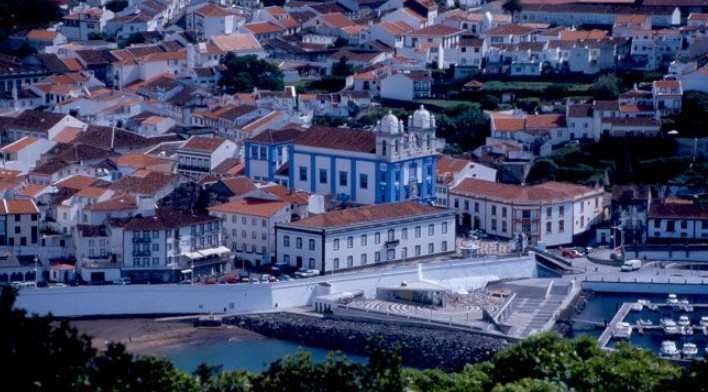
Angra do Heroísmo delivered a striking economic paradox in March: it was the municipality with the highest number of insolvencies while simultaneously leading in the creation of new businesses.
Across Portugal, insolvency filings surged sharply. In March alone, the number of companies declared insolvent rose 54% year over year, reaching a total of 435—an increase of 152 compared to March 2025. On a cumulative basis, insolvencies climbed more than 39%, totaling 1,207 cases so far this year, up from 868 in the same period last year.
A closer look at the data shows a broad-based increase. Insolvency declarations filed by companies themselves rose more than 25% compared to 2025, representing 72 additional cases. Meanwhile, filings initiated by third parties jumped 45% year over year, adding 105 more actions. Altogether, insolvency-related proceedings in the first quarter of 2026 increased by more than 51%, a net rise of 177 cases.
Closures under approved insolvency plans also climbed significantly, rising more than 74% in the first quarter compared to 2025, with 23 additional plans approved. In total, 654 companies were formally declared insolvent and closed in the first three months of the year—139 more than in the same period last year, marking a 27% increase.
Geographically, the highest number of insolvencies was recorded in Porto and Lisbon, with 289 and 272 cases respectively. Both districts saw substantial increases, with insolvencies rising 39% in Porto and 33% in Lisbon. The steepest percentage increases were recorded in Madeira (+389%), Santarém (+96%), Viana do Castelo (+88%), Évora and Bragança (both around +71%), and Viseu (+69%).
Despite the overall upward trend, some districts posted declines in insolvencies. These included Castelo Branco (-43%), Vila Real (-40%), Angra do Heroísmo (-25%), and Coimbra (-4.5%).
By sector, the sharpest increases in insolvencies were recorded in telecommunications (+200%), hospitality and food services (+102%), wholesale trade (+67%), construction and public works (+67%), and transportation (+53%). The only sector to post a decline was extractive industries, down 67% compared to 2025.
At the same time, business formation showed signs of slowing. March closed with 4,550 new companies established, down from 4,909 a year earlier—a 7% decline, or 359 fewer businesses. Year-to-date, 14,688 new companies have been created in 2026, a drop of 6% (906 fewer) compared to the same period in 2025.
The district of Lisbon led in new company formation with 4,515 incorporations (-2% year over year), followed by Porto with 2,618 (-1%). The steepest declines were seen in Horta (-32%), Madeira (-27%), Évora (-19%), and Portalegre and Viseu (both around -16%).
Notably, only two districts recorded growth in new business creation during the first quarter: Angra do Heroísmo (+8%) and Vila Real (+5%).
Sectoral data on new company formation revealed significant declines in electricity, gas, and water (-40%), agriculture, hunting, and fishing (-39%), telecommunications (-29%), and retail trade (-20%). Construction and public works, along with other service sectors, were the only areas to post gains in new business creation.
Together, the figures paint a complex economic picture—one in which contraction and renewal unfold simultaneously, with regions like Angra do Heroísmo standing at the center of that tension.
In Atlântico Expresso, Natalino Viveiros — director.
Translated into English as a community outreach program by the Portuguese Beyond Borders Institute (PBBI) and the Modern and Classical Languages and Literatures Department (MCLL), in collaboration with Bruma Publication and ADMA (Azores-Diaspora Media Alliance) at California State University, Fresno. PBBI thanks Luso Financial for sponsoring NOVIDADES.

 Novidades - The Islands and the Diaspora