

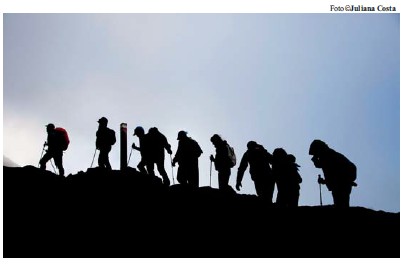
On a wind-swept morning in the Azores, where volcanic ridgelines dissolve into mist and the Atlantic stretches without apology, tourism is not just an industry—it is a conversation. For one small company based on the island of Faial, that conversation has been unfolding, deliberately and thoughtfully, for ten years.
Founded in 2016, Our Island began with little more than conviction and an unconventional idea: that guiding visitors through the Azores should mean more than showing them the sights. It should mean interpreting them—translating landscape into story, and experience into understanding. “We wanted to be guides in the fullest sense of the word,” says co-founder Luís Bicudo, recalling the company’s early days and its mission to share what makes the islands singular.
The origin story is as much about place as it is about people. Bicudo, who came from a background in culture and the arts, discovered his calling while working with American pre-med students on observational programs that combined education with immersion in the islands of Faial and Pico. It was there, between hikes and conversations, that the idea took root: tourism could be intimate, intellectual, and grounded in authenticity.
What followed was a leap of faith. With no vehicles, no storefront, and little experience in the tourism sector, the founders built a company from scratch—investing instead in licenses, insurance, and a website. That lack of conventional experience, Bicudo suggests, became a strength. It allowed them to question prevailing models of tourism and create something distinctly their own.
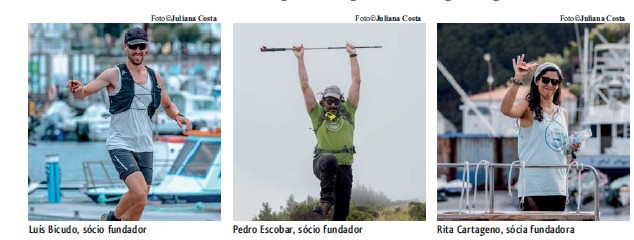
Today, Our Island operates in a niche that has quietly become one of the most sought-after in global travel: private, small-scale, experience-driven tourism. Their offerings range from hiking and trail running to cultural tours and multi-island itineraries, often spanning Faial, Pico, and beyond. But the emphasis is always the same—depth over volume, connection over convenience.
This approach has resonated with a particular kind of traveler. Their clientele is largely international—especially from the United States and Northern Europe—and tends to consist of experienced, curious individuals seeking more than a checklist destination. They are hikers, runners, families, and small groups who value immersion and meaning over mass-market itineraries.
Yet the story of the past decade is not one of uninterrupted growth. It is, rather, a narrative shaped by fragility—economic, geographic, and human. The Azores, after all, remain a remote archipelago with a small population and a seasonal economy. Tourism revenues are concentrated in a few months each year, requiring constant financial discipline. Then came the pandemic, which halted global travel overnight and forced the company, like so many others, into a period of uncertainty and reinvention.
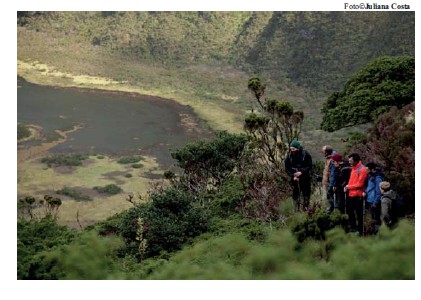
If anything, those challenges clarified their purpose. Emerging from the pandemic, Our Island doubled down on its commitment to sustainability—not just environmental, but economic and social. The goal was never rapid expansion, but balance: fair wages, manageable workloads, and a business model that allows time for family, culture, and life beyond work.
That philosophy now sits at the center of a broader conversation about tourism in the Azores. Over the past decade, visitor numbers have risen significantly, bringing both opportunity and risk. Bicudo points to growing concerns about environmental pressure, underinvestment in natural resource management, and a shortage of skilled labor. Without careful planning, he warns, the very qualities that draw visitors to the islands could be compromised.
And yet, there is also promise. The Azores have quietly emerged as a destination for active tourism—trail running, hiking, and outdoor exploration—helping to redefine how the islands are experienced. Our Island was among the first to develop running-based travel programs, even collaborating with international partners to bring specialized groups to the region.
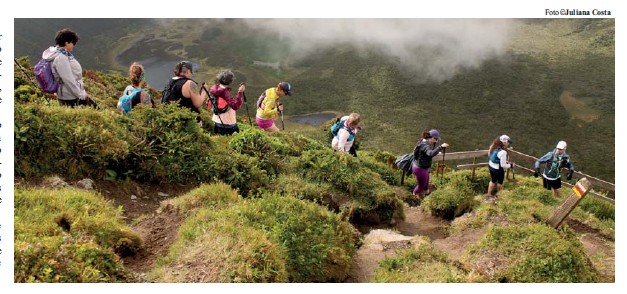
Equally important is the evolving role of the guide. In an era of digital maps and self-guided travel, the human element remains irreplaceable. Guides do more than lead—they contextualize. They explain how the lush green landscapes visitors admire are often the result of centuries of human intervention, from cattle pastures to introduced tree species. They speak of sustainability not as abstraction, but as lived reality.
For many visitors, it is this storytelling—the personal, the historical, the intimate—that transforms a trip into something lasting.
As Our Island marks its tenth anniversary, the celebration has extended beyond the business itself. Community events, including coastal cleanups and charity initiatives, reflect a broader commitment to the islands and the people who call them home. It is a reminder that tourism, at its best, can be reciprocal: not just something extracted from a place, but something that gives back.
Looking ahead, the company’s ambitions remain measured. There are no plans for mass expansion, only for careful growth—strengthening their team, refining their offerings, and deepening their engagement with environmental and cultural initiatives.
In a world increasingly defined by speed and scale, the Azores offer something different: slowness, distance, and reflection. And in that landscape, companies like Our Island are carving out a model of tourism that feels, if not entirely new, then urgently necessary.
At the edge of the Atlantic, the lesson is simple but profound: to travel well is not just to see a place, but to understand it—and, perhaps, to leave it better than you found it.
Adapted from a Story in Atlântico Expresso newspaper by journalist Diogo Simões Pires, Natalino Viveiros-director
Translated into English as a community outreach program by the Portuguese Beyond Borders Institute (PBBI) and the Modern and Classical Languages and Literatures Department (MCLL), in collaboration with Bruma Publication and ADMA (Azores-Diaspora Media Alliance) at California State University, Fresno. PBBI thanks Luso Financial for sponsoring NOVIDADES.
 Novidades - The Islands and the Diaspora