

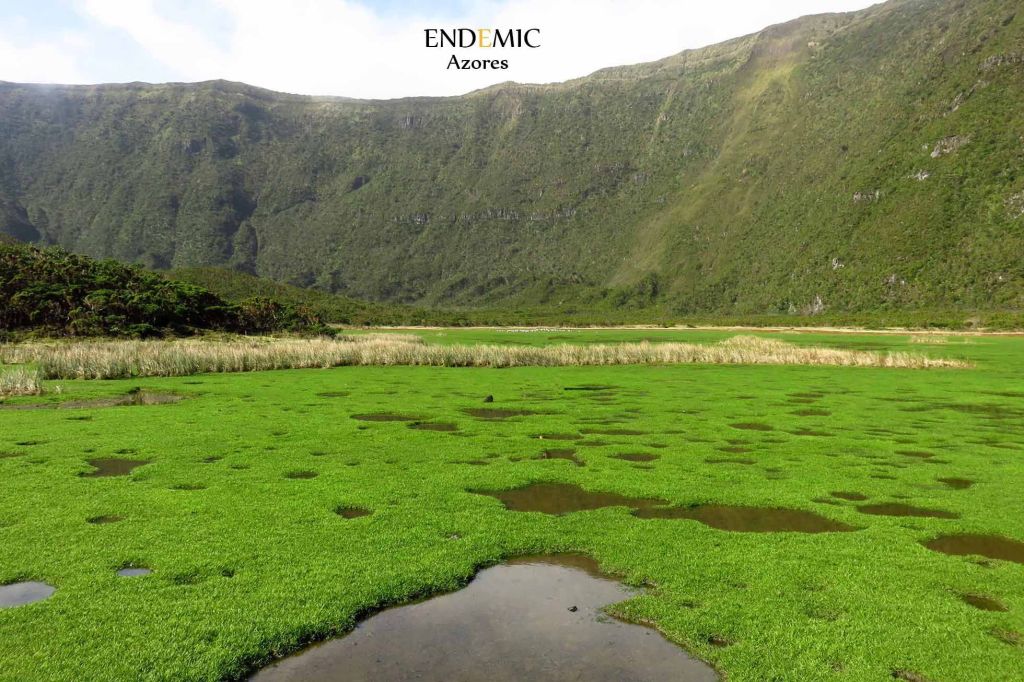
If the Azores don’t have wetlands, they won’t be able to survive climate change, according to the Executive Director of the Portuguese Society for the Study of Birds (SPEA), Domingos Leitão.
On World Wetlands Day, celebrated today, the Executive Director warns of the increased risk of flooding and the dangers of rising sea levels.
Faced with the hardships of winter, Domingos Leitão says it is “imperative to protect and restore rivers and their banks, as well as high-altitude wetlands such as peat bogs, which provide protection against floods and torrents”.
“In winter, when torrential rains fall, peat bogs capture and store thousands of liters of water, preventing it from running downhill in torrents and causing landslides and floods. Instead, this water slowly seeps into the soil, reaching the water tables and allowing the streams to always have water in summer,” explains Domingos Leitão.
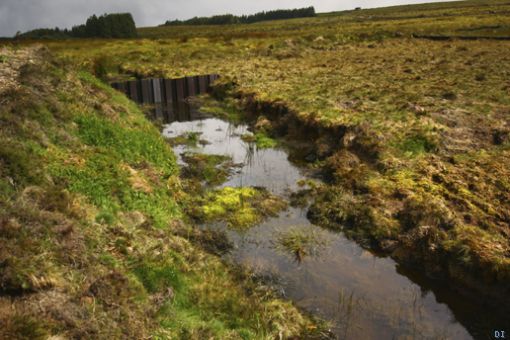
He highlights the active restoration of 75 acres of peat bogs on the Graminhais Plateau in São Miguel, carried out by the SPEA. In addition, he says that without wetlands in the region, the Azores will not be able to withstand the rise in sea levels caused by climate change.
These sites serve as a barrier against flooding and destroying these natural systems to replace them with concrete constructions would be “doubly damaging”, as they prevent water from being absorbed.
“In Portugal, many wetlands are supposed to be protected by law. But tourism and urban development projects continue to emerge that threaten important habitats. We need to do more to protect the integrity of these wetlands, which are our protection against the rising sea, and prevent this from happening in the Azores archipelago,” says Domingos Leitão.”
Without these natural systems, millions of people would be left without a livelihood.
The rivers, estuaries and lagoons are home to many varieties of fish, shellfish and crustaceans which, in turn, are the livelihood for those who work in this area and a very important resource for the country.
ENDING THE NEED FOR WATER
Domingos Leitão argues that “projects that significantly increase water consumption are projects that cannot go ahead nowadays”. SPEA’s Executive Director says it is “deeply irresponsible” to have projects such as intensive avocado or blueberry plantations, which require millions of liters of water a year, in the south of Portugal. The solution is to reduce the pressure on these ecosystems.
“It’s in the hands of all of us, from our choices as consumers to our active participation as citizens, either individually or by joining or supporting environmental associations,” says Domingos Leitão.
in Diário Insular-José Lourenço-director
Translated to English as a community outreach program from the Portuguese Beyond Borders Institute (PBBI) and the Modern and Classical Languages and Cultures Department (MCLL) as part of Bruma Publication and ADMA (Azores-Diaspora Media Alliance) at California State University, Fresno–PBBI thanks the sponsorship of the Luso-American Development Foundation from Lisbon, Portugal (FLAD)
 Novidades - The Islands and the Diaspora