


How was the process of collecting and “organizing” these 50 conversations?
There are 50, but there could and should be 50,000. This half-century of notable emigrants does not exclude countless less-noticed Azoreans but contributes to the projection and affirmation of Azoreanity worldwide. They are all symbolically considered in this collective tribute, in the form of a book, which recognizes and values the capacity of the Azorean people wherever they are. In this case, we have selected half a hundred Azorean emigrants with fascinating life journeys – 35 men and 15 women, aged between 32 and 86, who were born on the nine islands of the Azores and made a name for themselves outside Portugal in areas such as Education, Culture, Economics, Politics or Diplomacy -, Politics or Diplomacy -. We conducted biographical interviews with them every week in 2023, as part of the “Conversas da Diáspora” initiative, through the social networks of the Regional Directorate for Communities, thanks to the collaboration of its communications team coordinated by Davide Lopes. If each interview was worthwhile in its own right, the 50 interviews as a whole were even more representative, which is why the Azorean publisher Letras Lavadas decided to bring them together in a book of almost 600 pages, thus recording for future reference, individual stories from our collective history. This book, “Conversas da Diáspora – 50 açorianos pelo mundo”, has now been presented in six Azorean cities (Ponta Delgada, Ribeira Grande, Lagoa, Horta, Angra do Heroísmo and Praia da Vitória) over six consecutive days (from February 26 to March 2), together with another, “Transatlântico II – Açorianidade& Interculturalidade,” which we published last January.

What don’t we know about Azoreans around the world?
We all know that Azorean emigrants are primarily found in North America – in the United States, from New England to California; in Canada, especially in Ontario and Quebec; or in Bermuda – and that there have been countless Azorean descendants throughout Brazil over the last 400 years, from Maranhão to Rio Grande do Sul. What we don’t all know is that Azoreans are also making a name for themselves far beyond the traditional destinations of our emigration, as this book demonstrates, for example, with the Terceira mayor Eduardo Borba da Silva in Norway, the Faial scientist Jácome Armas in Denmark, the Georgian archbishop D. José Avelino Bettencourt in Portugal. José Avelino Bettencourt in Cameroon, Faial consultant Luís Mesquita de Melo in Vietnam, Mariense ambassador Manuela Bairos in East Timor, Micaelense businessman Tiago Domingues in the Ivory Coast or Corsican associationist Mary Alsheikh in Saudi Arabia. In fact, Azoreans are everywhere and, in general, make a name for themselves wherever they are, with their capacity for work and our cultural identity.
Strengthening ties
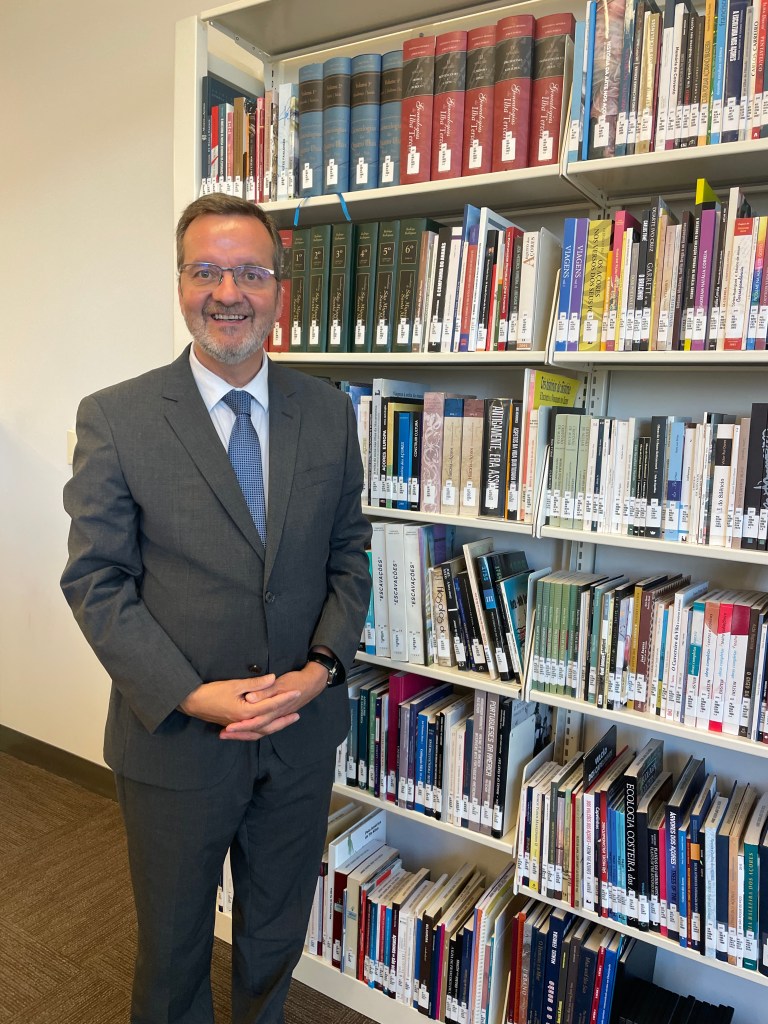
“The territorial challenge must recognize that, although Azoreans are especially concentrated in the traditional destinations of our emigration, we are beginning to see a much greater dispersion, even with other professional motivations, to different and distant geographies in Europe, Africa and Asia. The sectoral challenge recognizes that emigration has a cultural basis and a social motivation, but adds that it can and should also have an economic interest”.
What is it that connects all these personalities?
Although they come from the different islands of the Azores and are part of different Diaspora communities with very different life histories and current occupations, all these personalities generally have two aspects in common. On the one hand, the problematic initial experience of emigration, having to leave their homeland for a different country with a different culture and, above all, in most cases, a different language, starting out with very demanding and unprofitable jobs until they managed to create the conditions for their family’s well-being and for their careers to flourish. On the other hand, regardless of whether they emigrated 10, 30, or 50 years ago, they all miss their homeland, remember the sea, and want to return to their island for regular visits or a seasonal or even permanent return. After all, as the writer Daniel de Sá once said, “leaving the island is the worst way to stay on it,” or, as the emigrant António Tabico confirmed, “We leave the island, but the island doesn’t leave us.”
Who can we find from Terceira?
Of the 50 biographical interviews with notable emigrants from the nine islands, nine were conducted with personalities born on Terceira: Al Pinheiro, who was mayor of his hometown of Gilroy, California; Diniz Borges, who is director of the Portuguese BeyondBordersInstitute at California State University; Eduardo Borba da Silva, who was a municipal deputy and executive councilor of Tromso, the most important municipality in northern Norway; Francisco Cota Fagundes, who is a full professor at the University of Massachusetts; Idalina Gonçalves, who is a member of the Luso-Brazilian Academy of Letters in Rio de Janeiro; Isidro Menezes, who was mayor of his hometown of Artesia in California; Nellie Pedro, who hosts the most popular Portuguese television show in Canada and Bermuda; Sara Freitas, a theater actress in Rio de Janeiro; and Victor Santos, founder of the Friends of Terceira Community Center in Rhode Island.
How can ties between the region and the emigrant community be strengthened at an institutional level?
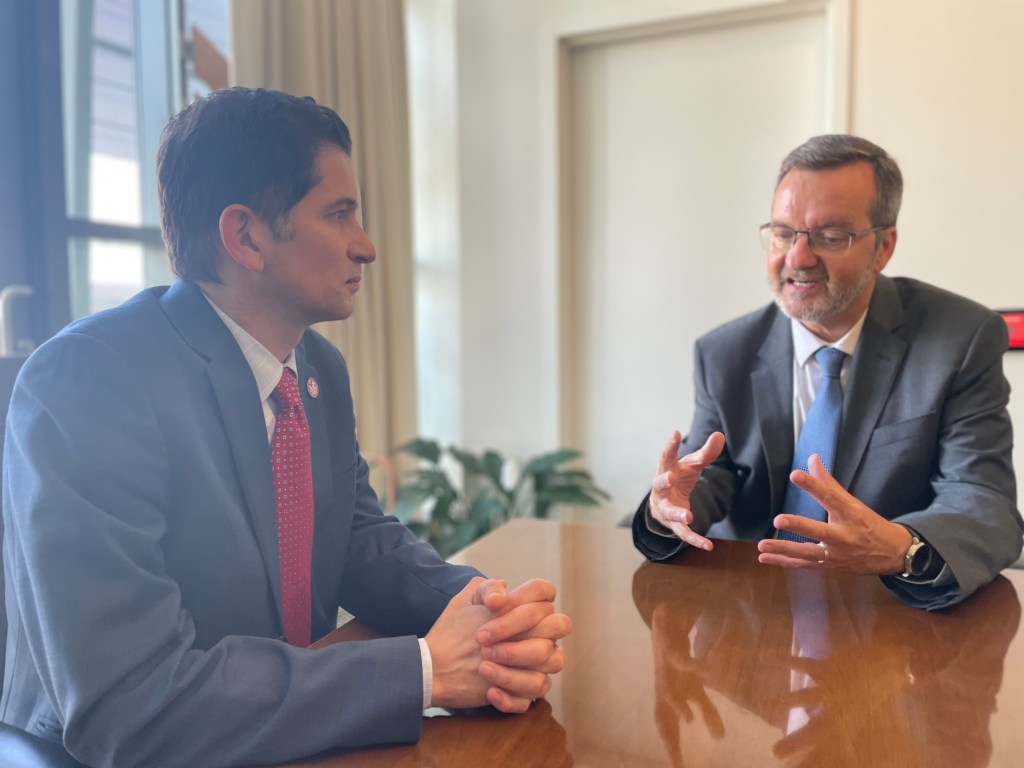
The relationship between the Azores and its Diaspora faces three new challenges: territorial, sectoral, and generational. The territorial challenge must recognize that, although Azoreans are mainly concentrated in the traditional destinations of our emigration, we are beginning to see a much greater dispersion, even with other professional motivations, to different and distant geographies in Europe, Africa, and Asia. The sectoral challenge recognizes that emigration has a cultural basis and a social motivation. Still, it adds that it can and should also have an economic interest, boosting tourist demand and encouraging direct investment. The generational challenge, without belittling the emigrants stillborn in the Azores, must reach their children and grandchildren, who were born in the host countries, so that they maintain the umbilical cord to the land of their parents and grandparents without losing their identity references and their command of the Portuguese language. These are the strategic principles for strengthening ties between the Region and the Communities, which will then be translated into concrete and consequent initiatives, such as, for example, facilitating accessibility, namely through the possible extension of the Azores Tariff to our emigrants, as advocated by the Governance Agenda that was voted for by the Azoreans in the February 4th elections. In addition, for the first time in almost half a century of political autonomy, a regional secretariat has been created expressly dedicated to the Communities, thus demonstrating an unprecedented organic commitment to valuing migration in the Azores.
in Diário Insular-José Lourenço, director
Translated to English as a community outreach program from the Portuguese Beyond Borders Institute (PBBI) and the Modern and Classical Languages and Cultures Department (MCLL) as part of Bruma Publication and ADMA (Azores-Diaspora Media Alliance) at California State University, Fresno–PBBI thanks the sponsorship of the Luso-American Development Foundation from Lisbon, Portugal (FLAD)

 Novidades - The Islands and the Diaspora