

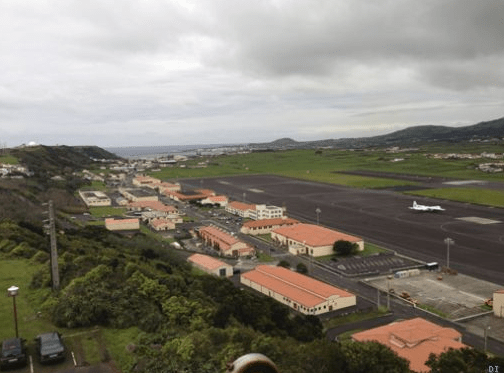
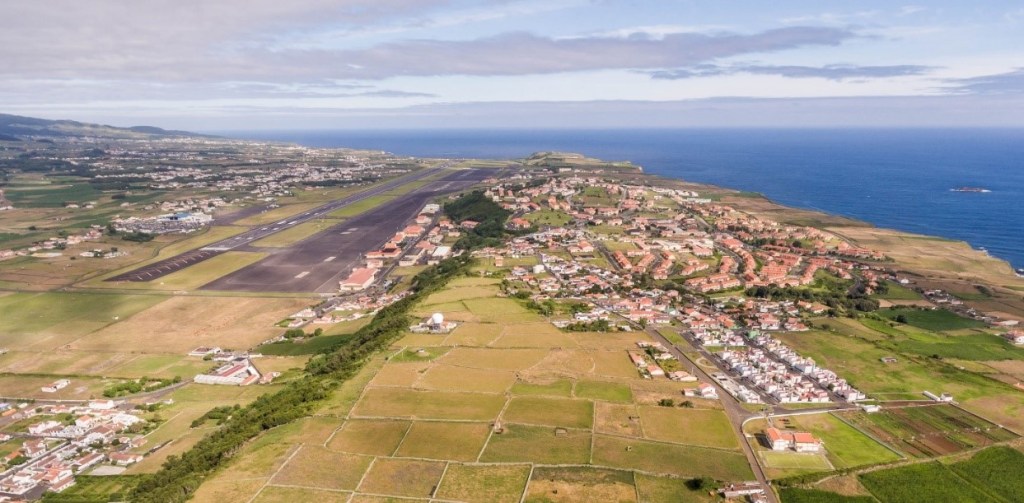
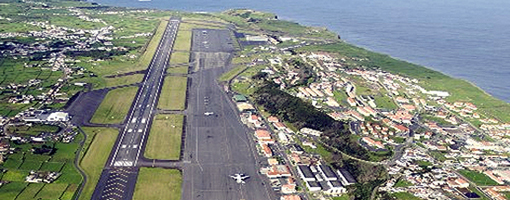
A transportable nuclear microreactor, which is still being developed by a company contracted by the United States Department of Defense (DOD), may supply Lajes Base.
An April 2022 article in the military newspaper Military Times listed the Lajes Base as one of the candidate bases to receive the microreactor, which should be transportable by land, sea, or air.
According to the “Military Times”, in a 2018 US army report, Lajes Base appears among the “potential candidates where the microreactor could be installed”, alongside other bases in places like Greenland, Cuba, Puerto Rico, Afghanistan, Kuwait or Alaska.
Several years of waiting
However, the transportable nuclear microreactor will still take several years to operate.
In 2019, the US Department of Defense launched “Project Pele,” which aimed to develop a fourth-generation nuclear microreactor to provide energy to support remote and austere environments.
The initial goal was to build a 40-ton reactor that could be transported in three to four 20-foot containers and, once installed, provide between one and five megawatts of power, operating at full power, for three years before refueling.
In 2022, the DOD signed a contract worth 280 million dollars with BWXT Advanced Technologies, which is developing one of the projects at a plant in Lynchburg, Virginia.
According to Power magazine, in August 2023, in a webinar organized by the American Nuclear Society, the company’s president, Joseph Miller, said he expected to deliver the microreactor in 2025 to the Idaho National Laboratory but pointed out that a minimum testing period of three years would be required.
Jeff Waksman, who leads “Project Skin”, said that BWTX was finalizing the design of the transportable nuclear microreactor and was preparing to obtain final approval from the regulator, the Department of Defense.
“If everything goes according to plan, at the beginning of 2025, we will have sent the reactor to the Idaho National Laboratory, where it will be fueled. It will then be sent to the desert, to a site we have selected for initial testing,” he said.
“After we operate the reactor, we will demonstrate the disassembly of this transportable reactor by putting it on a truck, driving it around a bit, reassembling it and turning it back on,” he added.
Reducing fossil fuels
Project Pele aims to provide energy in remote locations and combat dependence on fossil fuels.
“Our dependence on long, vulnerable fossil fuel lines is a huge problem from a military point of view, so having energy that doesn’t require refueling for days, months or even years would be a huge advantage for us,” explained JeffWaksman.
The US Department of Defense uses approximately 30 terawatt hours of electricity annually and more than 10 million gallons of fuel daily, and it expects to increase these figures in the coming years.
in Diário Insular-José Lourenço-director
Translated to English as a community outreach program from the Portuguese Beyond Borders Institute (PBBI) and the Modern and Classical Languages and Cultures Department (MCLL) as part of Bruma Publication and ADMA (Azores-Diaspora Media Alliance) at California State University, Fresno, PBBI thanks Luso Financial for sponsoring NOVIDADES.

 Novidades - The Islands and the Diaspora