

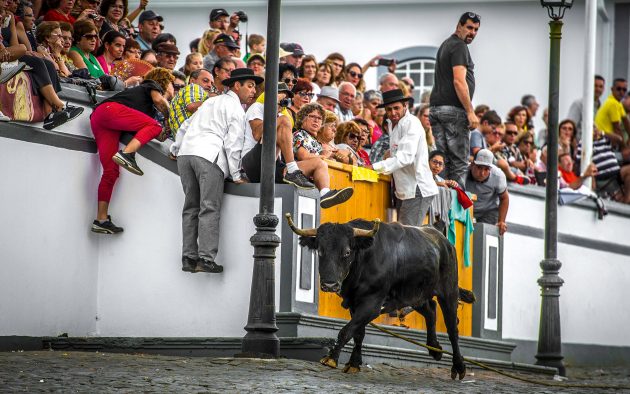
Direct trauma from the animal is the leading cause of injuries at bullfights in the Azores, according to a study carried out by a group of doctors from Terceira Island and Lisbon.
In addition, there was a predominance of closed trauma, and the most affected areas were the neck and head.
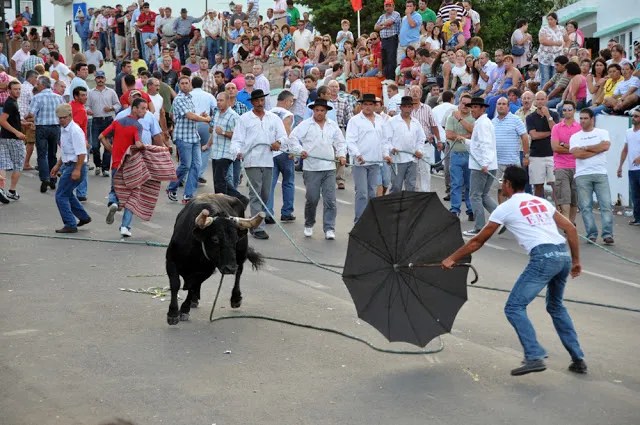
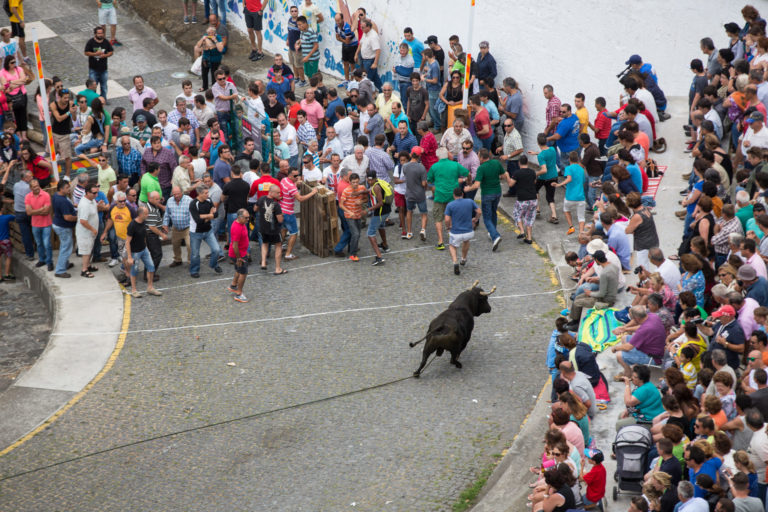
The article “Trauma Associated with Bullfights by Rope in the Azores: A Cross-Sectional Study” aimed to “characterize the traumatic bullfighting injuries that occurred during bullfights by rope in the Azores in terms of the cause of the incident, the mechanism of trauma, the anatomical area most affected and the severity of the injuries”.
The data was collected between May 1, 2018, and October 31, 2019, including patients who progressively came to the emergency department (ER) of the Hospital de Santo Espírito da Ilha Terceira (HSEIT).
The patients come from the three Azorean islands; this hospital covers Terceira, São Jorge, and Graciosa.
The statistics include those who were admitted to the emergency department due to “traumatic injuries sustained in bullfights by direct trauma to the animal, or falls while escaping from the animal or handling the rope. Patients who went to the HSEIT ER because of injuries sustained in bullfights or calf fights, or bullfighting injuries outside the festive context under study (bullfighting by rope) were excluded,” says the study.
RESULTS
Between 2018 and 2019, the study recorded 56 patients admitted to the HSEIT ER for injuries sustained in bullfights.
Of these 56 people, 37 presented direct impact with the animal as the cause of the trauma, and the remaining 19 pointed to falls when escaping from the animal and handling the rope as the reason.
Closed trauma occurred in 100% of the cases recorded.
The sum of the statistics totaled 80 injuries in the 56 patients.
The head and neck were the most affected areas, with injuries recorded in 27 patients.
In addition, 19 people suffered injuries to the lower limbs, 16 to the chest, and 15 to the upper limbs.
Of the total, 22 patients showed injuries in more than one anatomical area.
The study claims to exclude external injuries and other trauma to the extremities.
Taking this into account, a predominance of orthopedic injuries was aimed for, and 22 bone fractures were diagnosed.
Wound closure was performed on 16 patients; 12 required wound disinfection/debridement and other dressing care; 10 patients underwent symptomatic therapy, and 11 fracture reductions and/or immobilizations were performed in the trauma room.
Five patients received no treatment in the emergency department, and six underwent emergency surgery in the operating room.
Regarding injury severity, the study found that “the median ISS was four on hospital admission and 10.5 in patients who required hospitalization”.
Ten patients were hospitalized for an average of seven days.
Another four patients were admitted to the General Surgery department, four to the Orthopedics and Traumatology department, one to the Neurology department, and one patient was transferred to the Neurosurgery department of another local hospital.
There were no deaths among the patients admitted to the HSEIT.
This study was approved by the Hospital Ethics Committee by the Declaration of Helsinki.
The data presented was collected by a team of general surgery interns, general surgeons, and orthopedic surgeons from the HSEIT who observed the patients on admission to the ER.
In Diário Insular-José Lourenço-director
Translated to English as a community outreach program from the Portuguese Beyond Borders Institute (PBBI) and the Modern and Classical Languages and Cultures Department (MCLL) as part of Bruma Publication and ADMA (Azores-Diaspora Media Alliance) at California State University, Fresno, PBBI thanks Luso Financial for sponsoring NOVIDADES.
 Novidades - The Islands and the Diaspora