

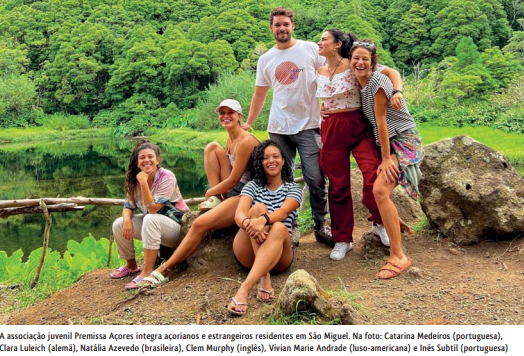
Mapping Flores – Artistic Trails, a project created by the youth association Premissa Açores, is an interactive trail designed to preserve the cultural and artistic heritage of the island of Flores. The 3 km route around Lajes das Flores includes ‘Art Treasure Boxes’ with QR codes that give access to stories and multimedia content inspired by the memories and traditions of the local community. In this interview, the project’s coordinator, Clara Luleich, explains that the idea came about after a visit to Flores in 2023 when she realized that the island’s cultural history was inaccessible to its visitors. In addition, the young German, who has lived in São Miguel for four years, noticed a great distance between the local and foreign communities and explains that creating a link between these two groups through art and the island’s collective memory was one of her greatest motivations. The group is already preparing a second edition and wants to continue taking ‘Mapping’ to other islands in the archipelago.
Correio dos Açores – What is the concept behind “Mapping”? How did the idea come about, and what motivated you to develop this project?
Clara Luleich (Mapping Flores project coordinator) – The ‘Mapping Flores – Percursos Artísticos’ project is an initiative of Premissa Açores, a youth association based in Ponta Delgada. Our association organizes community projects, mainly on São Miguel and other islands. Mapping consisted of creating an immersive art trail centered on the cultural heritage of the island of Flores. It combines geocaching, art installations, community workshops, and storytelling, offering a platform for artistic expression and promoting community pride and cohesion. The project also seeks to showcase Flores’ diverse cultural influences, providing visitors an interactive way to connect with the island’s history.
The idea came from my own experience, from the fact that I felt there was a lack of accessible means of reaching out to the local community in such an isolated place. I realized that Flores has a lot to offer—many stories, traditions, and wisdom—and I wanted to create something that would bring this wealth to light for visitors and residents.
Why did you choose the island of Flores for this project?
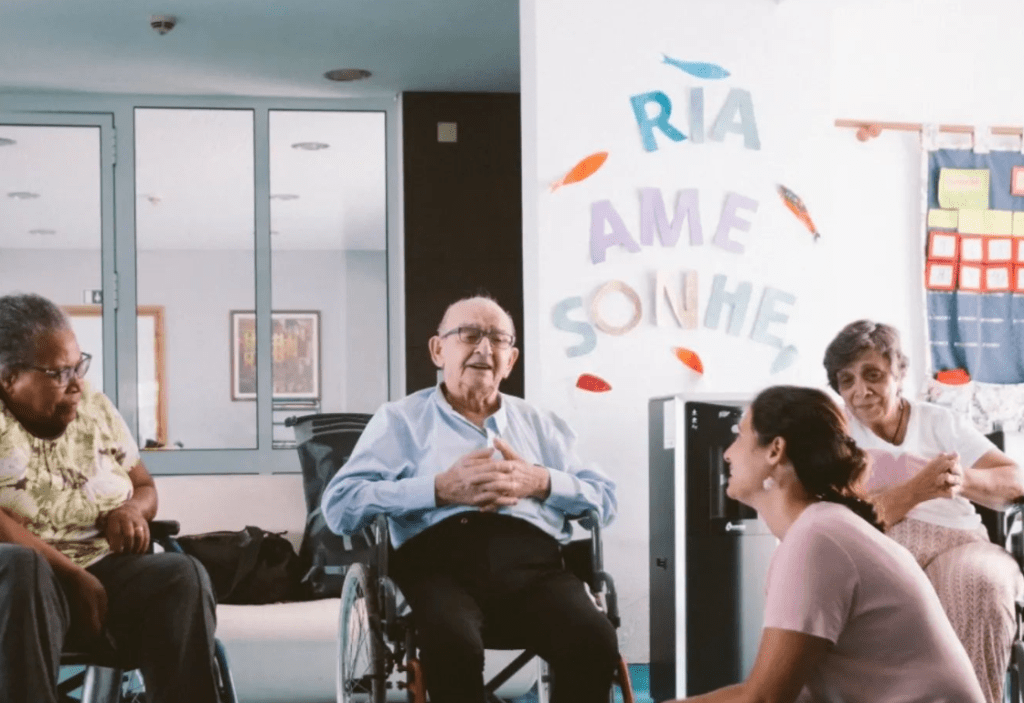
I chose Flores to develop ‘Mapping’ because, during a visit in 2023, I worked on a project linking visual arts and dance and had the opportunity to meet an incredible local community. I felt inspired by these people and wanted to collaborate more. At the same time, I noticed a big gap between the local community and the foreign community. This motivated me to create a project to bring these groups closer together, ensuring everyone—newcomers or long-time residents—felt represented and included.
How did the team responsible for the project come about? Can you tell us a bit about yourself and the group, the diversity of nationalities and professional backgrounds, and how the members were selected?
The team was formed in a very unconventional way. Instead of creating the project first and only then looking for people to fill the necessary roles, I started with a group of friends whose skills and interests I had always admired. Although most of us had never worked together, I trusted them and knew they were excellent in their fields. My aim was to design a project aligned with their talents and passions so that they felt represented.
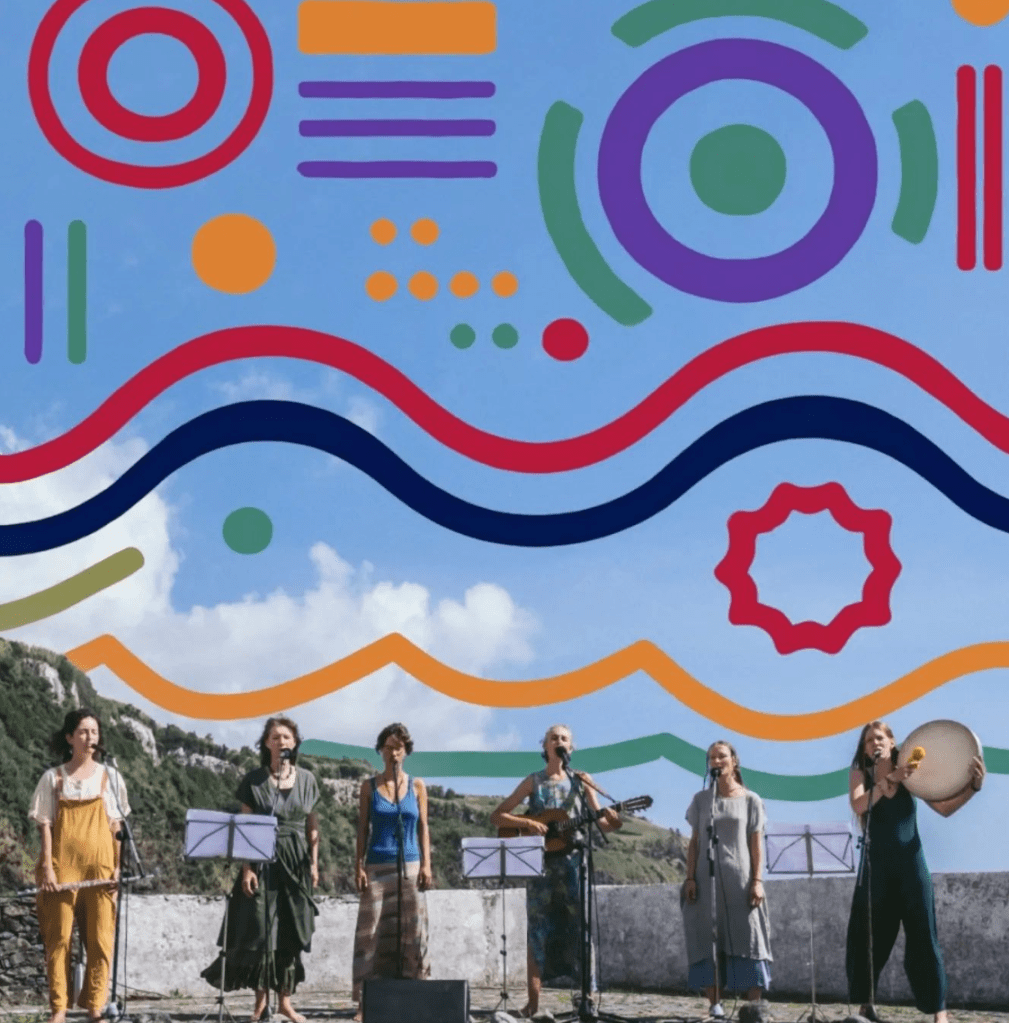
The team’s core comprises six members aged between 27 and 38, from various nationalities and professional backgrounds, including Portugal (mainland and Azores), the United States, Brazil, England, and Germany. Each member brought unique skills, and this diversity of knowledge directly influenced the project’s structure, which resulted in a growth and dynamism that I hadn’t expected. In addition to the core team, we collaborated with three artists, a local guide from Flores, a sound artist, and a workshop curator from Terceira, who also shaped our dynamic. All this resulted in one of the most rewarding collaborations I’ve ever experienced.
How did you perceive the local community and the atmosphere you found in Flores?
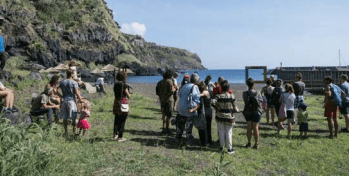
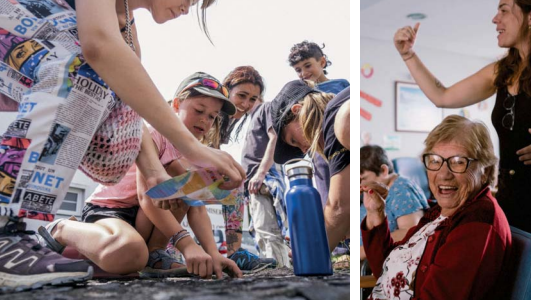
The community of newcomers to Flores was very approachable and open to cultural initiatives. They enthusiastically welcomed the project, with incredible families offering support and collaboration. Involving the local community was the most challenging part, which is perfectly understandable. After all, who wouldn’t be skeptical of a group of mostly foreigners arriving on the island to talk about cultural heritage? It’s a natural reaction. However, we made good progress through interviews with local residents and workshops held in partnership with ATL, Santa Casa da Misericórdia das Lajes das Flores, and the Flores Agrarian Development Service. These efforts highlighted the importance of representing cultural heritage and marked a big step towards involving the community more deeply.
I’d like to thank Gabriela Silva, who has been an incredible force in Flores. In addition to being a talented writer, she is a born networking expert with an amazing ability to bring people together and create strong bonds in the community. Her contributions to Flores’ cultural scene have been invaluable, and I can say that Gabriela is an essential figure in promoting cultural exchange and collaboration on the island.
While creating the trail, you interviewed several people from the island. What were the most striking stories for you? Can you share any?
One of my favorite parts was Gabriela Silva’s account of her childhood in Flores. In it, she shared vivid memories of how weddings, costumes, education, and infrastructure worked in her youth. Her story painted a fascinating picture of life on the island in the past.
That said, I think each team member has their own favorite stories, as each conversation with the locals gave us a unique perspective on Flores’ cultural heritage, and hearing such different points of view was very enriching for all of us.
For those interested, we recommend you follow our social networks to keep up with the interviews. Alternatively, you can visit Flores, where the interviews are integrated into the artistic journey.
What were the biggest challenges you faced during the project?
One of the biggest challenges of our project was approaching and involving the local community. Building trust takes time, and our biggest limitation was probably not being able to spend more consistent and prolonged periods on the island. We were in Flores for two weeks for the project, and I also made a one-week visit earlier in the year, but I didn’t feel it was enough.
Although we made every effort with what we could, you always feel that more time would have allowed us to establish a greater connection with people, demonstrate our seriousness, and better serve the community’s interests. Consistency is essential to fostering meaningful relationships, and with more time, this aspect would have been much easier to achieve.
Can you describe how the trail works for those who don’t know? How have the stories of Florentines been incorporated into this artistic trail?
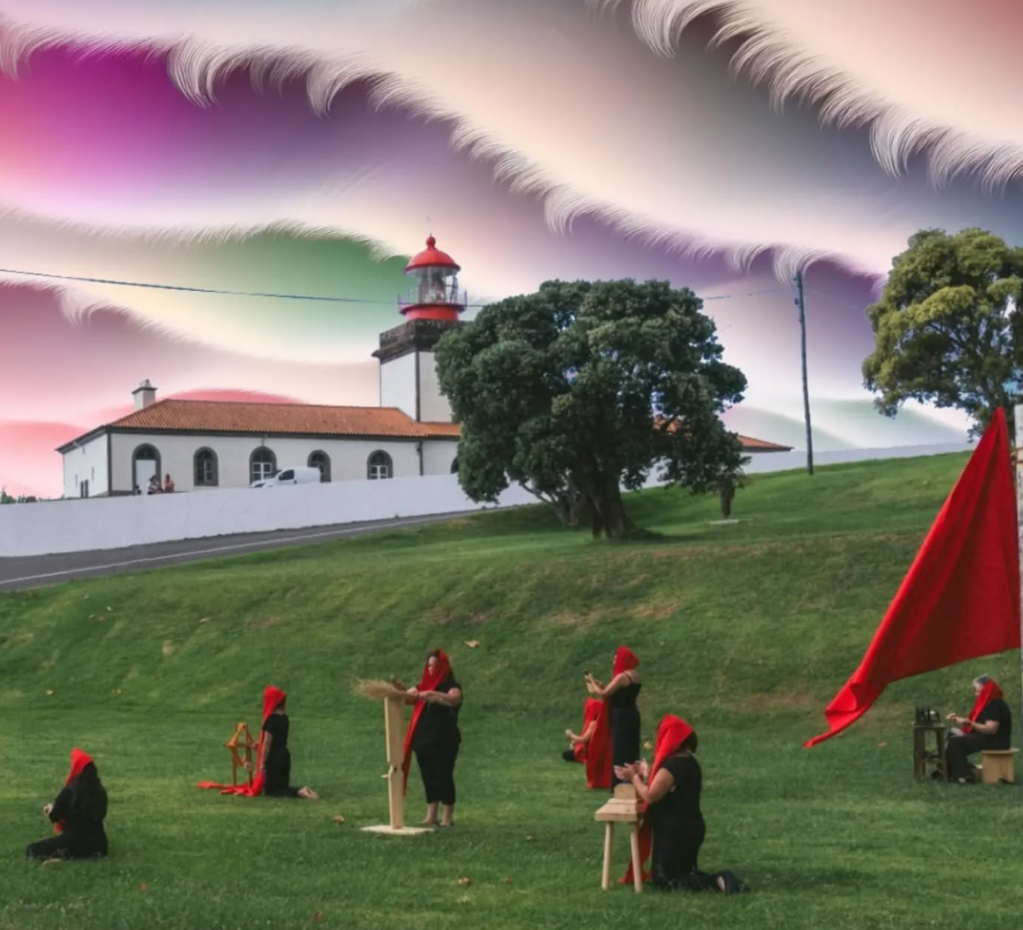
The trail is a 3 km art route around Lajes das Flores, which combines performances, art installations, and digital experiences in an interactive and multifaceted walk. Along the way, visitors will find “Art Treasure Boxes” with QR codes that lead to multimedia content, such as podcasts and visual stories. These digital elements are directly inspired by local stories collected in workshops and interviews – it’s above all a rich and personal connection to Flores’ cultural heritage.
On the exhibition day, the route came to life with guided tours, live performances, and art installations complementing the digital content and treasure hunts. This immersive and collaborative atmosphere allows visitors to experience the cultural narratives in real time, deepening their engagement with art and the environment.
Even after the day of the exhibition, the route remains accessible in a digital format. The QR codes on the “Art Treasure Boxes” preserve the local stories and artistic elements in a digital version, and visitors can explore the route independently at any time. This integrated design ensures that the road continues to connect to the culture of Flores, combining live interaction with the permanence of digital storytelling. In other words, it’s a permanent experience.
What was the most rewarding part of the project for you? Was there a moment or experience that particularly marked you?
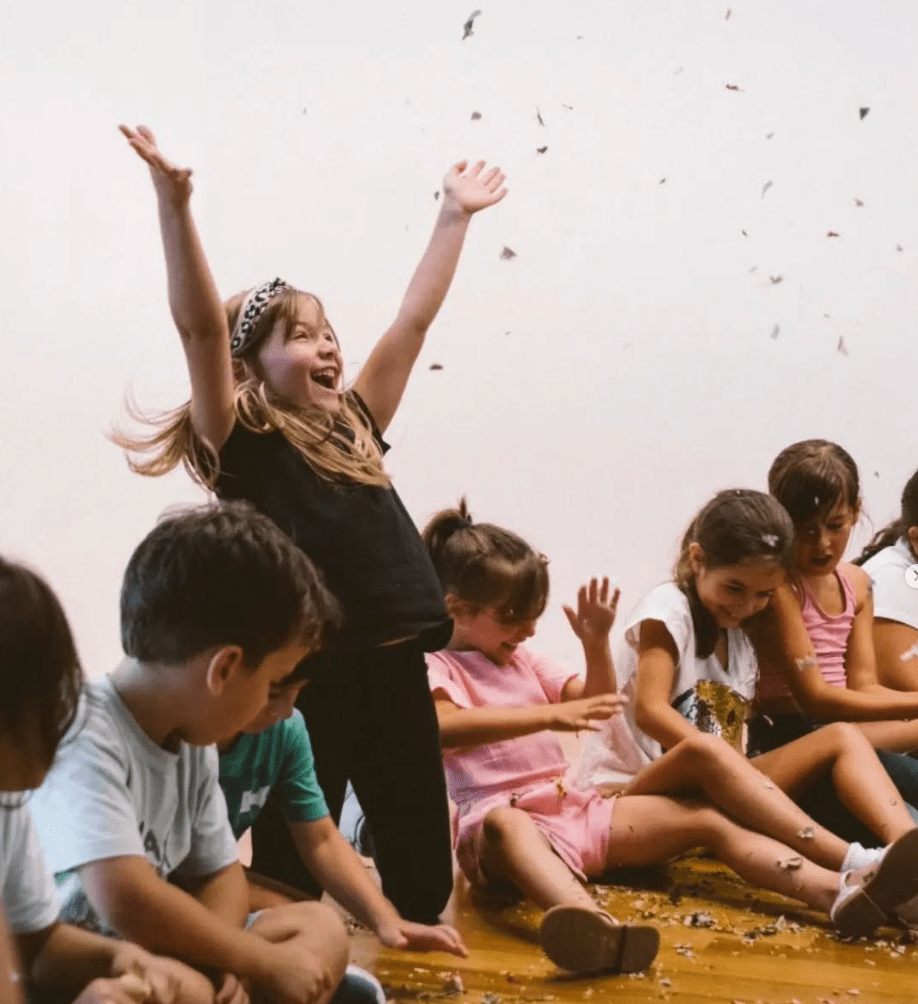
The most rewarding part was seeing the people who accompanied me genuinely happy – witnessing their work and effort come to life on the exhibition day. It was very special to provide work that was rewarding and enriching for them and had a significant impact. Seeing the pride they felt in their contributions and the community’s involvement with their creations was an unforgettable experience.
Do you plan to expand “Mapping” to other islands in the archipelago?
Yes, we’ve discussed it with the team and want to create a second edition. We’ve already started the first planning stages and are excited about the possibility of expanding the project to other islands.
How important are initiatives like this for the preservation of local cultural heritage? What kind of support have they received? How can “Mapping” influence cultural tourism on the island of Flores, and what do you hope visitors will take away from the experience?
Initiatives like this play an important role in preserving local cultural heritage because they celebrate and highlight a community’s voices, stories, and traditions that would otherwise go unnoticed. By integrating these elements into a creative and interactive format, projects like “Mapping” ensure that cultural heritage is preserved and actively shared in a way that captivates locals and visitors alike.
Tourists usually visit Flores to explore its breathtaking natural beauty, but it’s just as important to discover the incredible people who live here. In general, the Azores are not seen as a destination for cultural or social experiences, but I hope that “Mapping” will surprise some visitors and help change that perception.
I see the trail as more than a tourist attraction and would love it to become a resource for the local community. In this space, schools, ATL groups, and families can return to learn about their history and celebrate the members of their community who have created art by telling their stories.
We have received extraordinary support from several partners and organizations, without which this project would have been impossible. These include Lajes das Flores Town Hall, Gabriela Silva, the local ATL, Santa Casa da Misericórdia das Lajes das Flores, the Agrarian Development Service, Associação 37.25, Moot Movement Lab, A Costela de Lilith and DG Artes – Arte e Coesão Territorial. Their contributions – financial, logistical, artistic, or through community participation – have been essential in bringing this project to life.
What is the main lesson you draw from your experience in Flores, and how do you plan to apply it to future projects?
The main lesson we took away is the importance of building a project around people passionate about what they do, adjusting the concept to their skills rather than forcing them to follow a predefined model.
We also realized the value of spending more time with the community and showing consistency to gain their trust. In a place as remote as the island of Flores, people often carry their day-to-day roles and deep cultural wisdom. This shows the importance of working closely with the locals and letting their participation shape the project—a lesson we want to take into future initiatives.
As I’ve already mentioned, we’re planning a second edition of “Mapping,” we’re very happy to share what we’re doing. If you’re curious, you can follow all our ongoing projects on Facebook and Instagram at @premissa_acores.
Daniela Canha is a journalist for Correio dos Açores-Natalino Viveiros, director.
Translated to English as a community outreach program from the Portuguese Beyond Borders Institute (PBBI) and the Modern and Classical Languages and Literatures Department (MCLL) as part of Bruma Publication and ADMA (Azores-Diaspora Media Alliance) at California State University, Fresno, PBBI thanks Luso Financial for sponsoring NOVIDADES.


 Novidades - The Islands and the Diaspora