

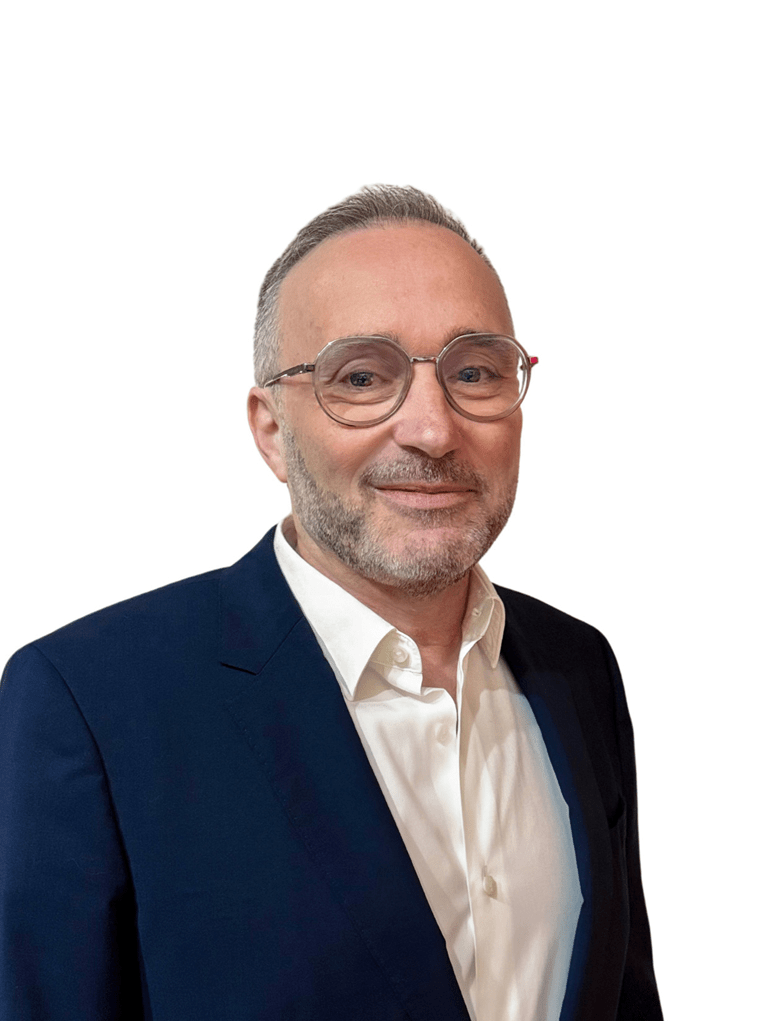
Correio dos Açores – How do you see the social and economic development of the region in 2024?
Vitor Fraga (President of SEDES Açores – Sociedade de Desenvolvimento Económico e Social) – This year was marked by progress in some economic and social indicators in the Azores. Still, structural weaknesses remain, which limit the positive impact of this progress on the lives of a significant part of the population.
The positive performance from an economic point of view, particularly in the tourism sector, has not translated directly into an improvement in living conditions for the population in general, first and foremost because this is a sector that continues to generate predominantly seasonal and low-paid jobs, a reality that is actually the industry’s and not a particularity of the region.
Significant inequalities in the distribution of wealth persist, with many families facing difficulties in accessing decent living conditions.
Thus, the Region is facing challenges that underline the need for a more robust and comprehensive political and social commitment, guided by principles of social justice, equity, and solidarity, central values for building a fairer and more supportive society, characterized by the promotion of equal opportunities, social cohesion, and the combination of democratic freedoms with policies that guarantee social protection, redistribution of wealth and collective well-being, respecting diversity and ensuring the fundamental rights of all.
What were the highlights of the year that just ended?
Several events have marked the year that is now coming to an end. First of all, in the international context, the election of Donald Trump, the growth of extremism and intolerance, and armed conflicts, particularly in Ukraine and Palestine.
This was a year marked by three elections, two due to political instability, with all the consequences that entails, which led to early legislative elections, both at the national and regional levels, and the third for the election of members of the European Parliament, which resulted in the election of three Azoreans, which is indeed good news.
On a regional level, I would also like to highlight the fire at HDES and all the consequences that have come to the attention of the general public as a result of this tragedy, particularly the constraints on access to healthcare for the population of all islands; on the other hand, the changes made to the accessibility model represent a gigantic step backward in terms of the mobility of the Azoreans, and this is a matter that requires an understanding between the two main parties so that a solution can be found that does not leave the Azoreans paying for the state’s inability to comply with and enforce the rules that it imposes. The fight against fraud must be carried out with those who promote it and not by harming those who are least to blame in this process. It should be added in this regard that even with the budgetary slippage of the Social Mobility Allowance (SSM), so demonized by some, the cost of the SSM represents around 0.05% of the State Budget, which leads us to ask the following questions:
Isn’t accessibility to the region and the mobility of all Azoreans worth that 0.05%? Is about 0.05% going to limit or even prevent the economic development of an island, archipelagic and outermost region?
On the other hand, the difficulties in accessing housing were one of the hallmarks of 2024, namely through the high costs families faced, whether renting or buying.
I would also like to highlight that this year, the region has continued to be known and recognized as a tourist destination of excellence, namely with the renewal of the title of “Best Adventure Tourist Destination in the World” for the second year running at the World Travel Awards.
What is your analysis of the evolution of the regional business fabric in 2024? And what are your prospects for 2025?
If there is one characteristic common to the entire regional business fabric, it is its entrepreneurial capacity and resilience.
The fact that we are part of a small, fragmented market, far from the major centers, poses permanent challenges, which have been faced so well by our entrepreneurs, namely through their commitment to developing high-quality products and their growing agility in innovating and adjusting their operating models to meet local needs and access foreign markets.
In 2025, I am deeply convinced that our entrepreneurs will continue to do their part, which must be complemented by developing and implementing a set of public policies that accompany business dynamics, namely those that promote the reduction of context costs and boost the diversification and sophistication of our economy.
Does the economic growth of the Azores depend on a new model of maritime transport to and within the region?
There is no economy without accessibility. This statement becomes even more pressing when discussing markets like ours in the outermost, island, and archipelagic regions.
Accessibility must be seen as an instrument at the service of the economic and social development of the territory, promoting true territorial continuity.
Any solution will have to involve the objective definition of service quality levels that meet the real needs of the population, particularly in terms of the development of the internal market, as well as imports and exports, at a cost that tends not to be significant in the respective supply chains.
On the other hand, we are an archipelago of 9 islands, connected by sea, land of fishermen, former whalers, shipbuilders, in short, men of the sea, so this connection, whether for the transport of containerized cargo, round cargo, passengers and vehicles, will always be a way of uniquely boosting the economic and social development of the region as a whole.
This will certainly be one of the areas in which the SEDES Azores Observatory for Innovation and Territorial Sustainability, which has Francisco Morais and Filipe Porteiro as members of the Coordinating Council, will focus on and contribute to the development and implementation of disruptive public policies, but above all those aimed at solving people’s real problems.
The Bishop of Angra said at the Christmas Mass that “it is a deep ‘pain in the soul’ to hear that there are no poor people in the Azores.” How big is poverty in the region, and, in your opinion, to whom was Bishop Armando Esteves Domingues referring? Armando Esteves Domingues?
The extent of poverty in the Azores is diagnosed in the most recent data released by the National Statistics Institute (INE). The Azores continue to be the poorest and most unequal region in the country despite a slight drop in poverty and inequality indicators compared to last year. The at-risk-of-poverty rate in the area is 24.2%, well above the national average of 16.6%, and social inequality, as measured by the Gini Coefficient, is the highest in the country (33.8%), reflecting the increase in income disparity in the Azores.
Furthermore, the region’s severe material deprivation rate, at 8.2%, is almost double the national average, which stands at 4.3%.
I don’t know who the Bishop of Angra was referring to. Still, I consider him to be an aware and well-informed person about the Azores and its communities, so I’m not surprised that not only does he have this knowledge about the extent of poverty in the Azores, but he’s also surprised that some say there isn’t any. Of course, there is, and the data clearly shows it.
SEDES Açores has created an Observatory on Poverty and Human Development in the Azores, a space for reflection, research, and action, as we have already announced, which will have the fight against poverty at the center of its action. This new instrument reflects the commitment to social justice, inclusion, and human development in the Azores, whose coordinators are the journalist and writer Joel Neto and Professor Maria Salomé Pavão.
The Observatory aims to identify the main challenges affecting the region, propose solutions, and work in areas covering poverty and social exclusion, education and educational inclusion, culture and youth, housing and access to basic services, quality of life and social well-being, the fight against addictions and violence against people, as well as the fight for human rights.
What expectations do you have regarding economic and social development for 2025?
I’m convinced that, despite all the constraints, particularly as a result of the political instability in two of Europe’s largest economies (Germany and France), existing war conflicts, and a more than foreseeable ultra-protectionist policy from the USA, we will continue to evolve positively from an economic point of view, but at a pace that won’t be enough to pull the region out of the spiral of poverty in which it finds itself.
We must take swift action to prevent and combat poverty in the Azores, which must be seen as a regional goal.
Doing so means looking at the precarious conditions in which many workers in the region live, who, despite working and earning a salary, continue to live in poverty and cannot live comfortably on what they earn and provide their families with the basics. For me, this is indisputable. On the other hand, we need to combat and prevent early school leaving; we need to avoid it, starting in the first years of school, including nursery schools, to prepare children for a successful school career.
We can’t accept; we can’t resign ourselves to the fact that, in a universe of around 30,000 pupils in schools in the Azores, we still have one of the highest early school leaving rates in Europe, 21.7%, according to the most recent figures. Education, as everyone knows, breaks cycles of poverty. A child who progresses at school, who follows a path that leads to the 12th grade, to vocational education, and even to university, has a much better chance of breaking the cycle of family poverty than a child who fails repeatedly, who doesn’t see any added value in school, who has no one at home who understands the added value of school and who, one day, leaves it in the 5th, 6th or 7th grade, for example.
At the same time, we must foster the development of a diversified and sophisticated economy that generates opportunities and supports expectations for the development of life and career projects on each of our nine islands.
So, more than my expectations for 2025, my wish is for a concerted effort to tackle this problem with a clear eye because when we do, everything will start to change. These things take a long time, it’s true, possibly a generation, but we need to move forward quickly. We propose to do this within the scope of SEDES Azores, namely through the work of the Observatory on Poverty and Human Development and the Observatory on Innovation and Territorial Sustainability.
Could the lack of manpower be a brake on fully implementing the European Union’s Recovery and Resilience Plan funds in the Azores? Are you apprehensive about this implementation, particularly in building new homes?
The lack of manpower is a problem that afflicts the region and beyond.
Certainly, many solutions to this situation involve defining appropriate public policies, but to do this, we need to understand what is causing the problem.
We believe it is important to carry out a serious diagnosis of this issue from the outset, and perhaps that is what is missing. We need answers to why there is a lack of manpower.
Often, the claim that there is a lack of manpower is immediately associated with the recurring criticism of the beneficiaries of the Social Integration Income (RSI), who “don’t want to work” or young people who “don’t want anything.” It’s important to know how many of them have emigrated elsewhere to work in the most deprived sectors in the region. It is equally important to understand why they are doing so. What wages are currently being paid in these regional sectors, and how do they compare with those in other countries? Are they offered a contract, and under what conditions? Are their social rights guaranteed?
The answers to these questions will help build a lasting solution to this problem.
The low implementation of the RRP funds is, I’m sure, a cause for concern for everyone and has also been expressed by the social partners. I hope that, in 2025, we can make up for lost time by carrying out all the relevant projects to the region and thus avoid losing the respective funding, in other words, having to return funds to Europe.
What was missing for Azores Airlines to become a profitable airline? What is your vision for the future of Azores Airlines in the context of the ongoing privatization?
As President of SEDES, I feel that this is a matter I shouldn’t comment on in any specific way, but I would just like to make a few comments and observations.
Azores Airlines and SATA Air Açores are strategic companies for the Azores and should be seen in that light.
The aviation business, particularly in terms of scheduled passenger traffic, the market in which Azores Airlines has its core business, is a business of volume in its entirety, in other words, of passengers and fleet size. It is no coincidence that, as far as I know, there are no airlines in the world with sustainable operations based exclusively on scheduled passenger traffic and with fleets of less than 10 aircraft of the type operated by Azores Airlines.
As I’ve already mentioned, accessibility is fundamental in any territory’s social and economic context, and most of all, it is in line with our characteristics.
It should also be noted that, as is public and notorious, the “Azores” market alone is far from having the necessary attractiveness to generate an offer that guarantees service quality, particularly in frequency and timetables, appropriate to our needs.
I hope that whatever solution is found for the future of Azores Airlines will be consensual. I will always take into account the strategic aspect of the company, namely that of ensuring accessibility and mobility for all Azoreans.
Is there anything else you would like to share in this interview?
I just wanted to tell you more about SEDES and what we propose to do over the next two years.
SEDES is associated with a remarkable history, which, for more than five decades, has promoted a space for dialog and reflection to address Portugal’s challenges, impacting the formulation of public policies and the country’s social and economic development.
SEDES in the Azores can play a central role as a dialogue, reflection, and action promoter for the region’s sustainable development.
With its 50-year history of commitment to development and its mission to promote collective well-being, SEDES will be the ideal space for us to build new bridges between civil society, the business sector, academic institutions, and political decision-makers, promoting a collaborative and inclusive vision to consolidate a forward-looking agenda.
We want to facilitate plural and inclusive dialog, helping society become more involved in decision-making and building the region’s future.
Our role is not to replace public or private entities but to complement them, presenting contributions based on rigorous analysis and concrete proposals. With initiatives like the thematic observatories, we want to identify the problems we face and their causes, propose solutions, and create cooperation platforms to benefit everyone who lives here.
SEDES will thus be an agent of change and innovation, capable of tackling the most complex problems and turning opportunities into concrete realities.
Our mandate is structured around four main strategic axes, which reflect an integrated vision for the development of the Azores, and the creation of thematic observatories will be central to achieving them:
a) Combating poverty and promoting human development:
- Combating poverty and social exclusion, reducing social inequalities with measures that improve access to education, housing and basic services.
- Promoting qualifications and vocational training adapted to the real needs of the region and enabling people to fulfill their dreams as drivers of social mobility and reducing inequalities.
- The mission of the Poverty and Human Development Observatory is to study these issues in depth and propose solutions that improve the population’s quality of life and foster intergenerational balance by formulating new public policies.
b) Diversification and economic sustainability:
- Developing strategic sectors include sustainable tourism, the blue economy, technology, and energy transition.
- Encourage entrepreneurship and the creation of skilled jobs, promoting an innovative, inclusive, and resilient economy.
- Establishing the Territorial Innovation and Sustainability Observatory will be fundamental for exploring opportunities and defining new public policies to guarantee a balance between development and environmental preservation.
c) Health and well-being of the population:
- Improving access to and the quality of healthcare on all the islands, with a special focus on mental health, active aging, and prevention.
- Ensure the sustainability of the regional health system, aligning it with the real needs of the population.
- Creating the Observatory for Health and Well-being will help identify challenges, monitor indicators, and propose concrete measures to improve public health.
d) Strengthening knowledge, autonomy, and civic participation:
- Promote deepening the region’s political and financial autonomy, adapting fiscal and administrative policies to its specificities.
- Encourage civic participation and strengthen external cooperation, particularly with the European Union and other relevant organizations.
- Launch the Observatory of Autonomy, Citizenship, and Strategic Relations with a focus on strengthening democracy and regional autonomy, deepening the role of the diaspora, and consolidating the role of the Azores in international contexts.
In addition to these axes, one of our priority objectives is to increase the number of SEDES members in the Azores. This growth will guarantee our actions’ representativeness, diversity of ideas, and strength. Finally, we reinforce our commitment to being a strategic partner for public authorities, contributing with studies and proposals that support the formulation of effective and sustainable public policies.
João Paz is a veteran and distinguished journalist with the newspaper Correio dos Açores – Natalino Viveiros, director.
- Translated to English as a community outreach program from the Portuguese Beyond Borders Institute (PBBI) and the Modern and Classical Languages and Literatures Department (MCLL) as part of Bruma Publication and ADMA (Azores-Diaspora Media Alliance) at California State University, Fresno, PBBI thanks Luso Financial for sponsoring NOVIDADES.
 Novidades - The Islands and the Diaspora