

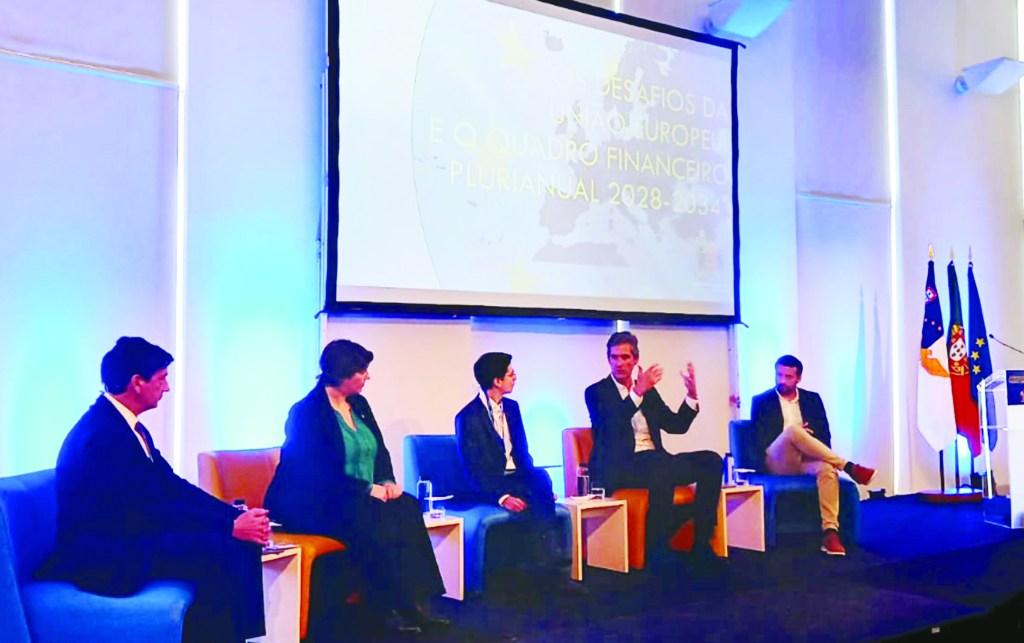
Azorean businessman Romão Braz said yesterday afternoon in Ponta Delgada that EU funds “have done a lot for us, the country and the region.” This “is undeniable” for both the public and private sectors. “We’ve evolved a lot, but we could have evolved more.”
Romão Braz spoke at the Conference “The Challenges of the European Union and the Financial Framework 2028-2034” in the II panel “Strategies for the Azores in the next Community Support Framework,” which took place at the Teatro Micaelense.
The conference began with an opening session and focused on three panels, one of which concentrated on private initiative. In addition to businessman Romão Braz, Helga Barcelos, Camilo Moniz, President of the Regional Delegation of the Order of Economists, and Duarte Pimentel, Executive Director of Terinov, spoke. Correio dos Açores’ report focused on this panel. And it was businessman Romão Brás who began.
“Somehow,” said Romão Braz, CEO of the Finançor group, ”I feel that we sometimes lack ambition. I think we’re often settled into routines, programs and ways of working that, deep down, once made sense. We now have to rethink the way we do things,” he said.
“The notion I have,” he continued, ”is that resources are always few and we have to be much more aware of how we apply resources.”
Romão Bráz focused his speech on the challenges of the European Union and the 2028-2034 annual financial framework, trying to give suggestions” on how ”we can better apply our resources.”
The businessman outlined an international perspective. He returned to the idea that Europe “has never been energy self-sufficient. It depended a lot on Russia. We’re not self-sufficient in defense, we’ve always relied on the United States to defend us and in technological terms, we’re behind the United States and China.”
“And where we really have some cards,” he pointed out, ”is in the agri-food sector. That’s where we’re a world power because of the way we do food production more efficiently.”
He criticized Europe’s actions in recent years in this area: “It has attempted to ‘seize and destroy’ the agricultural sector ”with exacerbated and exaggerated environmental rules that have led to the relocation of this option.
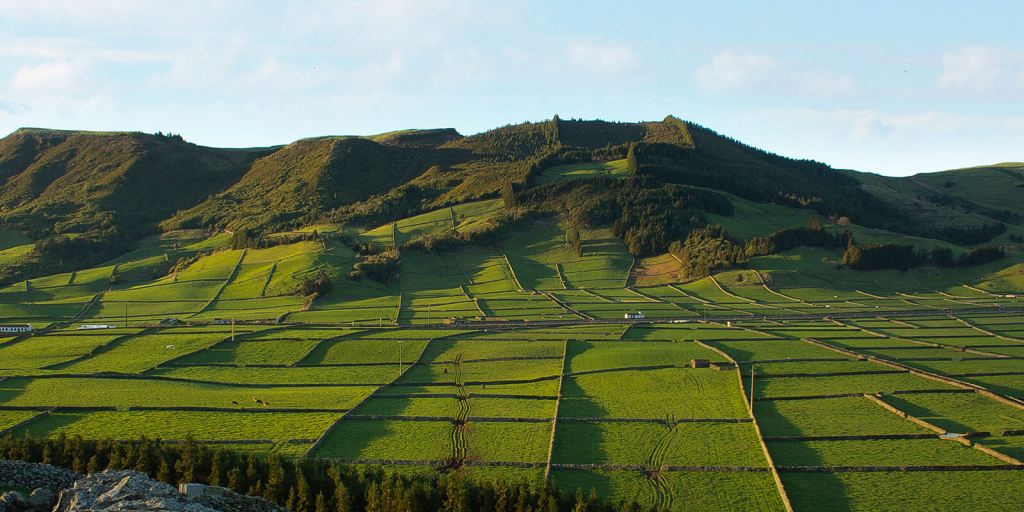
Agriculture “is our great strength”
He said that “more recently, Europe has woken up – and rightly so – because with crises come opportunities. Fortunately, we feel a different position from the European Commission and the various countries that accompany the European Union in the sense of reducing bureaucracy, in the sense of giving companies more agility.”
In this context, he pointed to agri-food as the sector in which it makes sense to invest in the Azores. “What we represent in this sector is really our great strength,” he emphasized.
“We should also invest in tourism, which is a new sector that is already a very important part of our GDP. And in the blue economy, (…) which is clearly an economy that is under-exploited and has a lot more to offer.”
After discussing cross-cutting issues, such as the digital, ecological, and energy areas, he stressed that the focus is on the three main sectors (agri-food, agriculture, and tourism) and the blue economy. “It is in these sectors that we must continue to invest, in order to be more prosperous and wealthier, to be better socially, environmentally, and economically.”
Romão Braz looked at the current Community Support Framework and what is happening, in his opinion, “is a disappointment.”
“Even if they tell me they’re using all the money, we need to know how they’re using it and what’s happening. I’ll quickly give you two or three practical examples to see if we can do better in the next Community framework,” he said. This community framework is supposed to end on December 31, 2027, and “one of the major Community components in the Azores is agriculture. And the new framework, which used to be called ProAural, then ProAural+, is now called PEPAC.”

PEPAC “hasn’t opened yet.”
And, he continued, PEPAC in the Azores “hasn’t opened yet. Today (yesterday) is April 4, 2025 and no PEPAC notice has been opened. How is that possible? Two years and a few months before the end of the framework, we still don’t know what the terms of these applications are, how things are going to be done. This doesn’t make sense,” said Romão Braz.
As he said, when the PEPAC notice appears, they will say: “Now you have 6 weeks to deliver your project, with the architectural project approved. It doesn’t work like that,” he stressed.
“If we want to apply for funds, we have to have time to prepare the projects properly, get our authorizations, do our consultations. Things have to work differently. At the moment, what’s happening in agriculture in terms of support is the worst I’ve seen since I’ve been working professionally,” said the businessman.
Romão Braz then spoke about the PRR and ‘Construir 2030’, which he considered ‘the community fund’ currently managed by the Regional Directorate for Entrepreneurship, which “historically has always managed community funds better. Because they are more investor-friendly, they welcome the investor, they manage to process other applications in time, they end up flowing in a completely different way. They have a different attitude towards investment.”
On this subject, the businessman concludes: “I can’t understand how we have these two opposite extremes in the way we deal with the investor and with EU funds within the same government organization.”
On the subject of the PRR, he recalls the years when people used to say, “This is it, this is how it’s going to be. Portugal is going to have a unique opportunity. We’re going to have the PRR together with the Community Framework. We’re going to transform everything.”
The “disappointment” called PRR
In the Azores and other Community support frameworks, (…) despite the noise, many funds have reached companies, and our region has developed. That’s not to say it’s a success, because I’m naturally dissatisfied. The fact that it was a success doesn’t mean it couldn’t be even more so.”
However, in the case of the PRR, it was a disappointment because most of the money went into public spending. They might as well say that they will hire private contractors afterward. Things aren’t happening. And we, at the private level, have few opportunities to compete for the PRR,” he said.
He spoke of the opportunities of the “famous mobilizing agendas, which have been a taboo subject, which we don’t talk about, but in which we have thrown away 117 million euros. We threw away companies, innovative projects and very interesting projects. What happened?” he asked.
“At a national level, we took advantage of it. Here in the Azores we’ve been preoccupied with politics (…),” he said.
“I hear politicians saying that they want the European Union so that we can implement the PRR funds and we can’t even do it,” he insisted.
And so,” he concluded, ”I’m left feeling that we can do better. I don’t want to convey a negative image. And once again I’ll save it: I understand that EU funds have done wonders for us, but we have to be more ambitious, we can’t resign ourselves to the current state of affairs and we have to look at what’s happening now in 2025, in the PRR, so that we can do much better next year.”
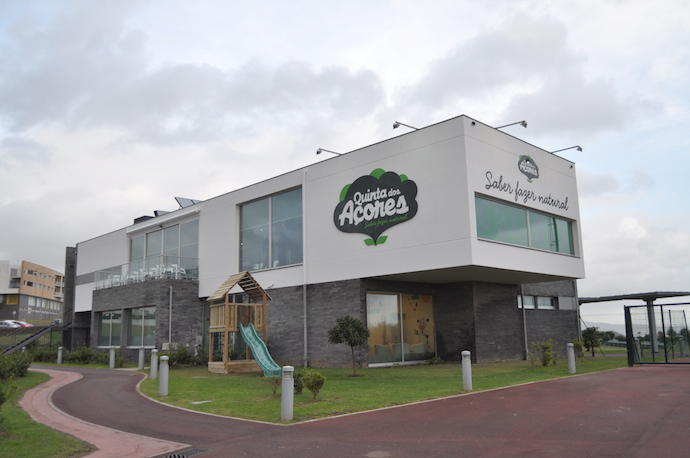
Helga Barcelos emphasizes the internal market.
Helga Barcelos, Managing Partner of the Barcelos group, also believes that the Azores today “are completely different” from 10 years ago but that the Region “should have optimized” EU funds more.
According to the businesswoman, “as there were incentives from the European community, we took ‘bigger steps’ than we had legs and then created obstacles and difficulties for companies” and, in this area, “we had an excessive weight on the public side.”
According to Helga Barcelos, “We live in a world that is completely different from what we knew six or seven years ago. We’ve already been called into question since 2020 (…) and we can’t be stuck with what was the policy two or three years ago, when the world is constantly changing.”
The businesswoman clarified that “our ways of creating defense have to do with agriculture, have to do with food, have to do with the fact that we manage, in a region as small as ours, to represent 53% of the milk production of mainland Portugal.”
“…There is tourism and there will continue to be tourism as long as there is agriculture, as long as there is somewhere to eat, as long as tourists can taste our typical flavors, as long as they can take the gift of what the Azores are.”
“If we stop encouraging what is our production, what is our identity, we will also lose value in terms of tourism,” he said.
Addressing what he considered to be the strategic investments of the 2028 – 2034 community framework, he considered transportation to be “something fundamental. Because we live on nine islands that are not properly connected. We still have some positions, some parochialism…”
“And transport is fundamental. We can’t look at the 15,000 inhabitants of one island, we have to look at the 200,000 inhabitants of the Azores. We’ve all seen the impact of the reduction in fares, we all understand what this has generated in terms of movement capacity. When we travel between islands, the respect we gain for each other is much greater, the understanding of each other’s difficulties and the willingness of each to act or take revenge is also completely different. We all gain from this,” she emphasized.
In her opinion, the notion of an archipelago “has changed with the issue of tariffs. But at the same time, it doesn’t make any sense to me that I have to come to Ponta Delgada every time to go to Pico and Faial. We have to reduce costs, we have to create conditions for all connections, both in terms of people, people traffic and freight.”
“People don’t realize how difficult it is to move cargo between the islands of the Azores. (…) We have to think about economic ships that reduce the price, that are fast, that can perhaps do the central group route in two days a week. (…) For example, in the meat market, the islands that produce the most meat are Pico, Faial and São Jorge, and we don’t have a connection, for example, from these islands to Terceira.”
“So this has to be rethought. The whole internal business has to be reviewed because we can and should create completely different partnerships between these nine islands. Sometimes it’s easier to bring the mainland here than to create this business strategy between the islands. This has to be reviewed,” insisted Helga Barcelos.

The importance of agriculture
The businesswoman stressed the importance of supporting the agricultural sector, livestock, and vegetable production. “I see so much imported, and we have the capacity to produce it. And, sadly, there is still so much to develop.”
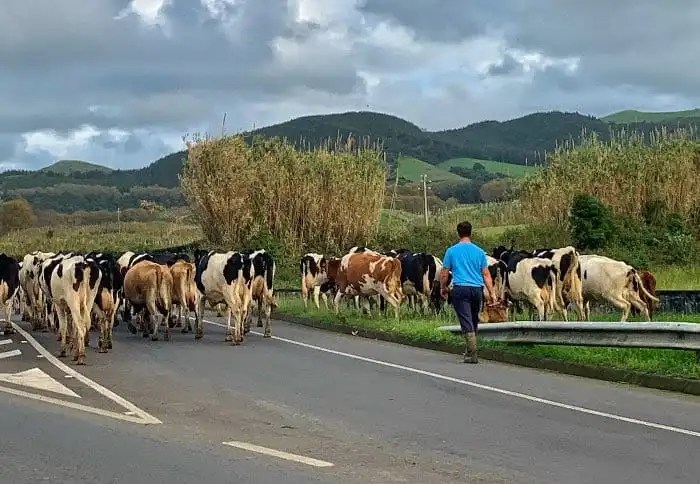
In his opinion, the agricultural sector “is an area where people have to be paid, they have to feel appreciated for their work. Because there’s no Saturday, there’s no Sunday, there’s no midnight. If the cow is really going to have her calf at two in the morning, we have to go. And people have to feel that this work is properly remunerated,” he said.
In his opinion, tourism “will increase the value of what is produced in the Azores. People say that what they really want is local. They don’t want to come here and eat what is produced outside. And so we have to support agriculture, livestock farming, the blue economy and the food industry.”
“We then have to know how to work these products, because we can’t just have lettuce in a given month. We have to have lettuce all year round. And that, in fact, requires innovation. It also requires, which is another issue that this framework has to support a lot, the issue of robotics, the more mechanical part, there will always have to be labor to pick the strawberries, to pick the blueberries. (…) And labor is becoming increasingly scarce.”
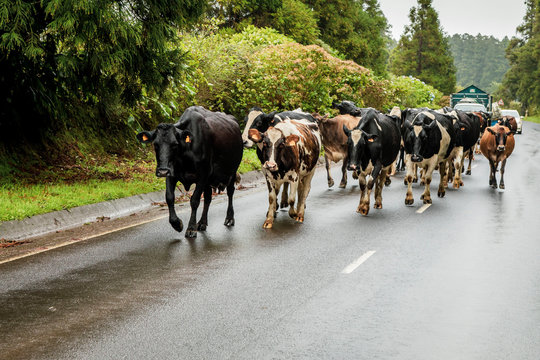
PEPAC “is a disgrace.”
Concerning EU funds, Helga Barcelos said, “In fact, it’s shameful, everyone says there’s going to be a PEPAC, that PEPAC brings much better conditions than Pró-Rural, but there’s still no PEPAC.”
Pró-Rural opened again for industries on August 1st and closed on August 30th. We had to come up with three budgets. Who can come up with three budgets in August? Okay, first question. During the month, we had to think about everything we would do. In our company, we had two investments of around 900,000 euros each, so we’re talking about 1.8 million, and we only received approval for one last Friday. It’s April, and I must complete the project by June 31st. Well, two months to execute a project with machines that take 150 days, that’s counterproductive.”
“We end up saying yes, because we have the will and the energy, but then we know we won’t make it to June 30, because no one will deliver the equipment (…) and then it’s really the fault of the companies that didn’t do it, that didn’t invest, and the execution rate wasn’t successfully achieved.”
The panel also featured Camilo Moniz, President of the Regional Delegation of the Order of Economists, and Duarte Pimentel, Executive Director of Terinov, who will be mentioned in tomorrow’s edition.
Frederico Figueiredo is a journalist for the newspaper Correio dos Açores – Natalino Viveiros, director.
Translated to English as a community outreach program from the Portuguese Beyond Borders Institute (PBBI) and the Modern and Classical Languages and Literatures Department (MCLL) as part of Bruma Publication and ADMA (Azores-Diaspora Media Alliance) at California State University, Fresno, PBBI thanks Luso Financial for sponsoring NOVIDADES.

 Novidades - The Islands and the Diaspora