

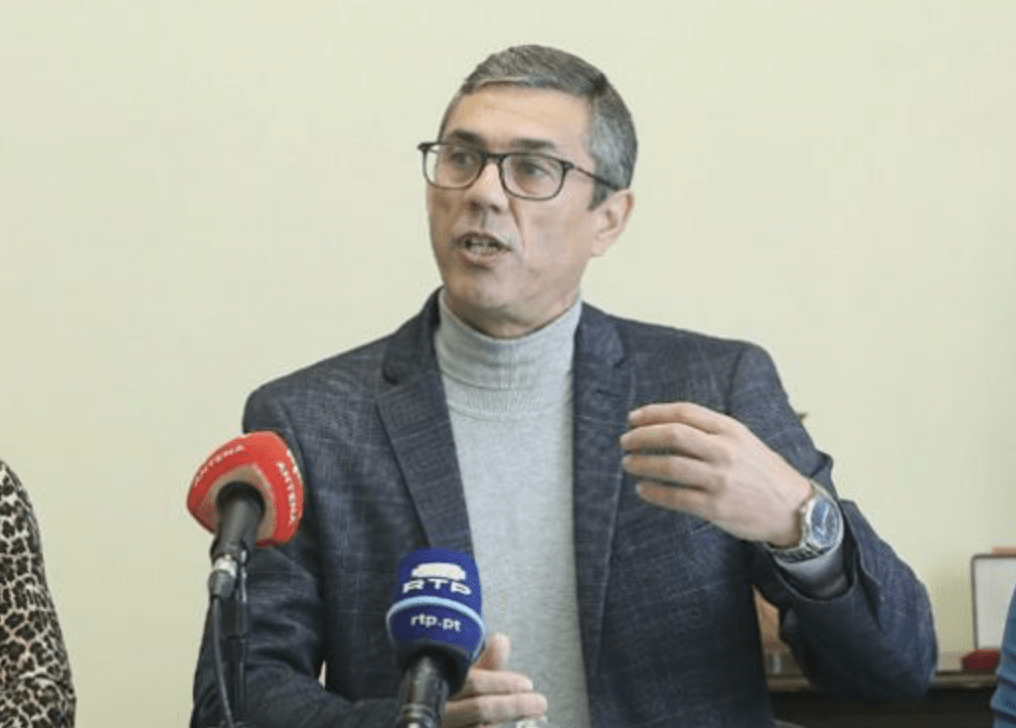
Vítor Silva, vice-coordenador da CGTP-IN/Açores
In July, the Government of the Republic presented the preliminary draft “Work XXI,” a reform that proposes more than 100 amendments to the Labor Code. What is your assessment of this priority of Luís Montenegro’s executive?
A negative assessment. I could not agree with measures that undermine workers’ rights and increase the imbalance in the relationship between workers and employers. In a country where challenges such as purchasing power, the housing crisis, pressure on the National Health Service (SNS), and problems in education and justice require an urgent response, promoting a setback in labor rights will further worsen living conditions.
There are changes to the limits on fixed-term contracts. How do you view these changes?
With great concern. These changes will increase job insecurity. The increase in the maximum duration of these contracts, from two to four years, will encourage companies to keep employees in a situation of uncertainty, hindering their long-term financial and professional stability. This instability has a direct impact on workers’ personal lives, making it more difficult to plan life projects such as buying a home, starting a family, or making long-term investments. The absence of a permanent contract, which offers greater security and prospects for the future, is a significant obstacle to personal and professional development. Workers fear that this measure could lead to lower wages and a deterioration in working conditions. We all know that fixed-term contracts are often used to prevent career progression and salary increases associated with seniority. With this proposal, the government is allowing companies to circumvent the responsibilities related to permanent contracts, such as the payment of severance pay, which may discourage permanent hiring. The solution requires that each permanent job be filled by a worker with a permanent contract. To combat precariousness, it is essential to combat its causes. It is therefore necessary to restrict as much as possible the conclusion of precarious contracts, i.e., the opposite of what the government is proposing.
The issue of parental leave and breastfeeding breaks limited to two years has been controversial. Do you think this controversy is justified? In addition, parents with children under 12 or with disabilities or chronic illnesses will no longer be able to refuse flexible working hours, i.e., evenings, weekends, or holidays.
These changes deepen the imbalance between work and family life, penalizing workers who seek to reconcile these two aspects. This reconciliation is crucial for the health and well-being of workers and for family, social, and mental well-being, and is an important factor in promoting birth rates. The reduction and bureaucratization of breastfeeding/nursing leave aims to make it more difficult to continue breastfeeding. The requirement to adapt flexible working hours to the interests of companies subordinates the rights of workers and their children to business interests. The repeal of maternity leave removes an important support. All these measures are linked to the increasing deregulation of working hours, in particular the introduction and extension of flexitime, adaptability, and shift work. It is urgent to re-regulate working hours by repealing provisions in labor legislation that make the organization of working time unpredictable. Also important in this regard is the reduction of the normal working week to 35 hours for all, without loss of pay.
Changes are also proposed in the area of strikes, with minimum services extended to nurseries, schools, nursing homes, and support for the elderly/disabled. Do you believe that the right to strike should be limited in these areas, or is this going too far?
The government is seeking to significantly restrict a fundamental right of workers, the right to strike, by extending minimum services and making their imposition automatic, thereby weakening the power of workers in the labor relationship.
On the other hand, it is proposed to strengthen the role of trade unions and collective bargaining and reduce the need for extension orders. Is collective bargaining something that can really be strengthened in the current scenario?
Collective bargaining has been deteriorating, and with these government proposals, the trend will worsen. Collective bargaining is improved by concrete measures, such as the repeal of the collective bargaining expiry regime; the reinstatement of the principle of more favorable treatment for workers; the strengthening of workers’ rights in night and shift work; the reduction of the maximum weekly working hours for all workers to 35 hours; enshrining the right to meal allowances and seniority bonuses in the Labor Code; and increasing the minimum vacation period to 25 working days. The measures announced by the Government of the Republic, if approved, will harm the whole country, and the Azores are no exception to the rule.
In Diário Insular – José Lourenço, director.
Translated to English as a community outreach program from the Portuguese Beyond Borders Institute (PBBI) and the Modern and Classical Languages and Literatures Department (MCLL) as part of Bruma Publication and ADMA (Azores-Diaspora Media Alliance) at California State University, Fresno, PBBI thanks Luso Financial for sponsoring NOVIDADES.

 Novidades - The Islands and the Diaspora