

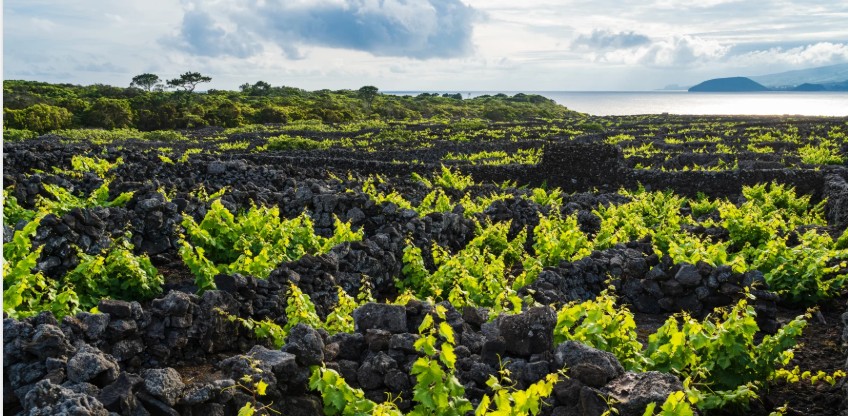
Grape production in the Azores grew in 2025 to 816,977.90 kg (final forecast of 904,860 kilograms), compared to 269,205.99 kg in the previous year (2024) – according to data from the Regional Secretariat for Agriculture and Food, to which our newspaper had access.
This figure represents more than triple the production recorded in the previous year and is the highest production forecast since records began at the Regional Wine Commission (CVR) in 1995, i.e., the highest production in the last 20 years, according to the same source.
Alongside the increase in production, there has also been “continuous growth” in the number of brands and commercial references, which, according to Secretary António Ventura, highlights “the vitality and diversification of the sector.”
In 2004, there were only three brands and three commercial references; in 2019, the numbers had grown to 31 brands and 48 references; by 2025, the Azores had reached 93 commercial brands and 159 references. “This has consolidated the presence of Azorean wines in regional, national, and international markets,” said the regional secretary.
“This growth demonstrates the ability of Azorean viticulture to assert itself and increase its value, not only in terms of production volume, but also in terms of quality, innovation, and diversity of supply,” according to Ventura.
In 2025, however, 11 new applications for vineyard planting were approved by the IVV (Wine and Vine Institute), corresponding to a total area of 5.67 hectares, “an unequivocal sign of the confidence of producers and the government’s determination to create conditions for the modernization and sustainable expansion of the sector,” said the secretary.

PUBLIC POLICIES
This “unprecedented growth in the sector,” Ventura told DI, is “a reflection of the favorable climatic conditions that have occurred, but is also supported by the Regional Government’s public policies, in particular the end of apportionment of vineyard subsidies, namely in the Posei Vineyard Maintenance Aid and the Conservation of Vineyard Curraletas and Lajidos, under the PEPAC.”
“This measure to end apportionment of support to this sector, taken by this Regional Government, has brought stability, confidence, and predictability to winegrowers,” said the secretary.
Translated into English as a community outreach program by the Portuguese Beyond Borders Institute (PBBI) and the Modern and Classical Languages and Literatures Department (MCLL), in collaboration with Bruma Publication and ADMA (Azores-Diaspora Media Alliance) at California State University, Fresno. PBBI thanks Luso Financial for sponsoring NOVIDADES.

 Novidades - The Islands and the Diaspora