

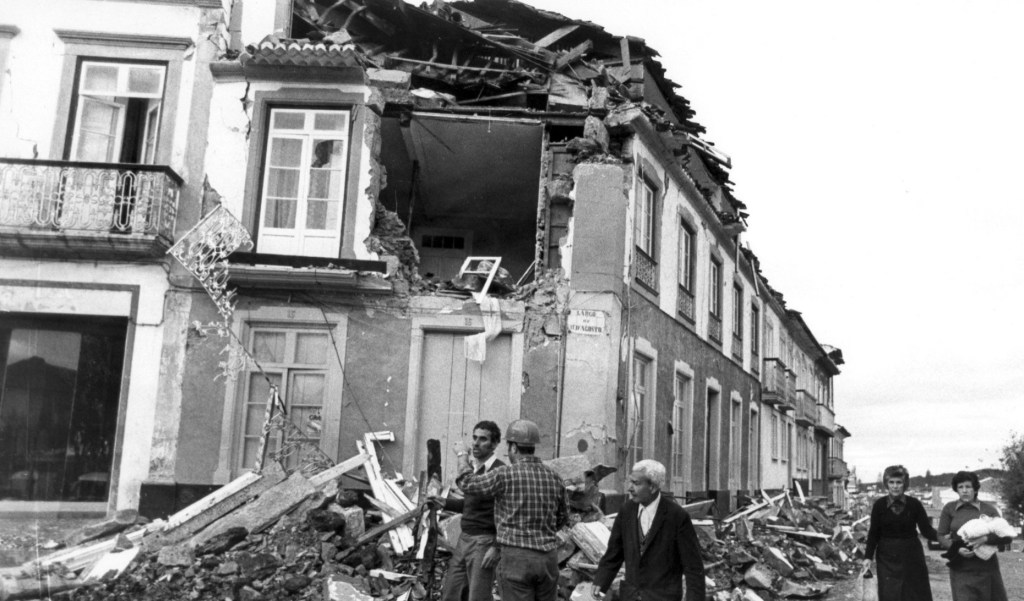
In the early hours of January 1, 1980, as the Azores welcomed a new decade, a powerful earthquake tore through the central group of the archipelago, forever marking the collective memory of the islands. Striking shortly after midnight, the seismic event primarily affected Terceira Island, São Jorge Island, and Graciosa Island, with its epicenter near Terceira. Measuring approximately 7.2 on the Richter scale, it was one of the most destructive earthquakes in modern Azorean history.
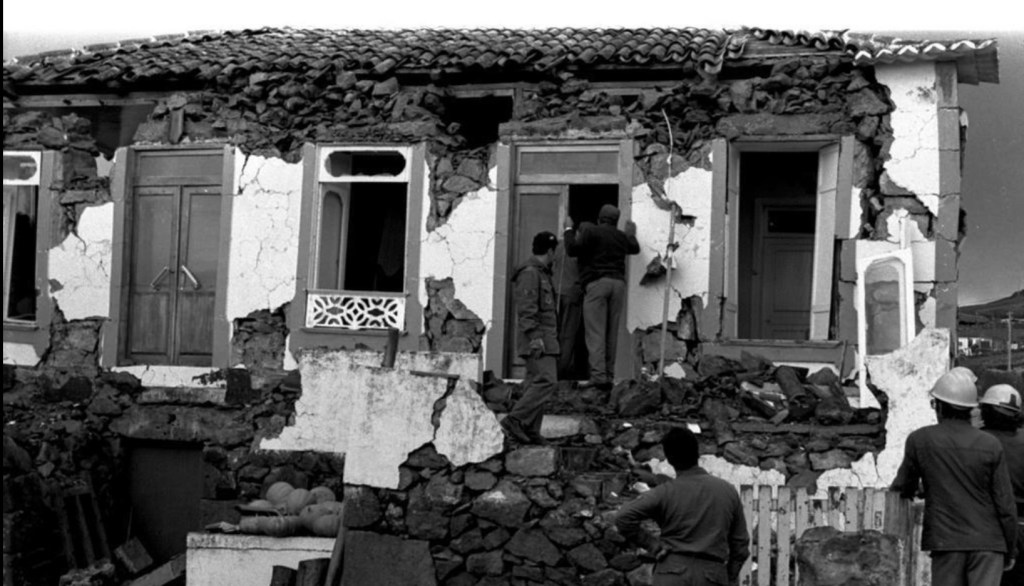
The tremor struck at a moment of profound symbolic vulnerability. Families were gathered at home after New Year celebrations; churches had only hours before hosting midnight Mass. Without warning, the ground convulsed violently. Stone houses cracked open, centuries-old churches collapsed, and entire neighborhoods were reduced to rubble within seconds. On Terceira—particularly in and around Angra do Heroísmo and the municipality of Praia da Vitória—the destruction was devastating. Historic buildings, some dating back to the islands’ early settlement, could not withstand the force unleashed beneath them.
The earthquake claimed more than 60 lives and left thousands injured. Tens of thousands were displaced, forced to spend weeks and months in makeshift shelters, tents, or with relatives. Beyond the physical toll, the emotional impact was profound. The Azores, long accustomed to living atop tectonic fault lines, were once again reminded of the fragile pact between human settlement and volcanic land.
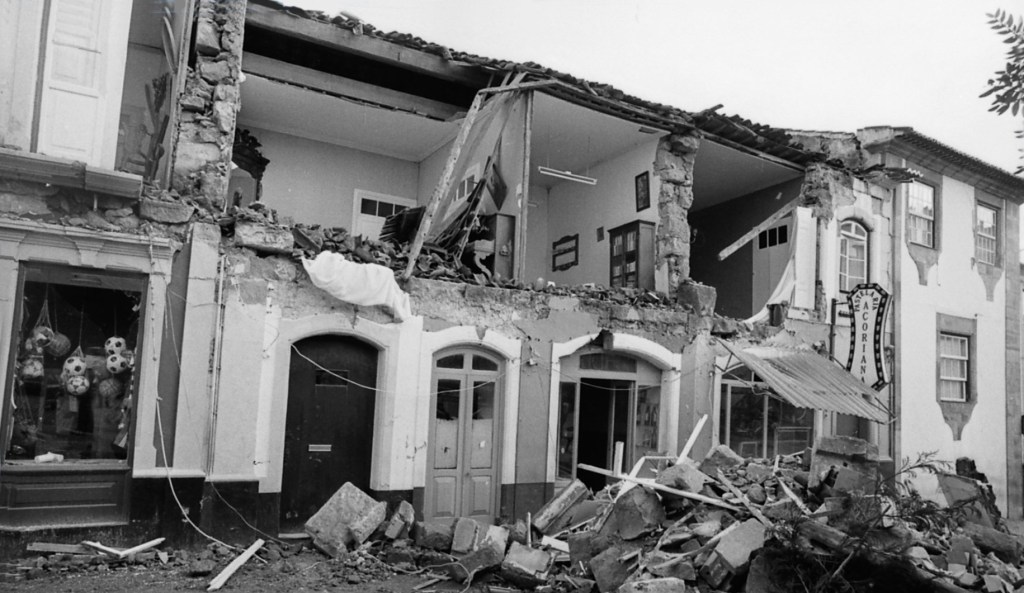
São Jorge and Graciosa, though less densely populated, suffered extensive damage to homes, parishes, and local infrastructure. In many rural areas, isolation compounded the tragedy, as landslides and damaged roads delayed assistance. Communication with the mainland was difficult in the immediate aftermath, deepening the sense of abandonment and fear.
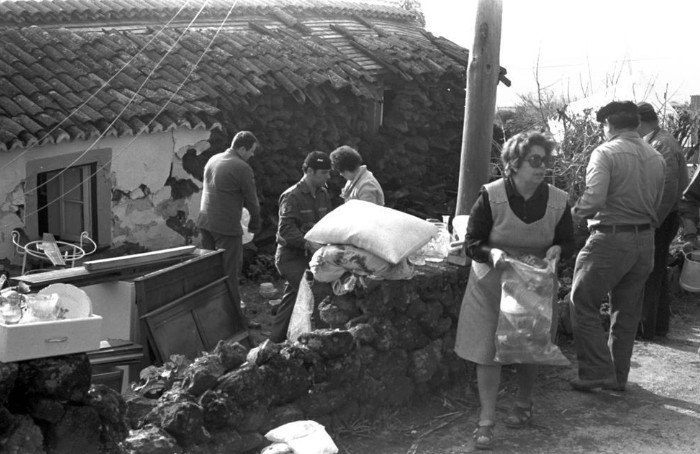
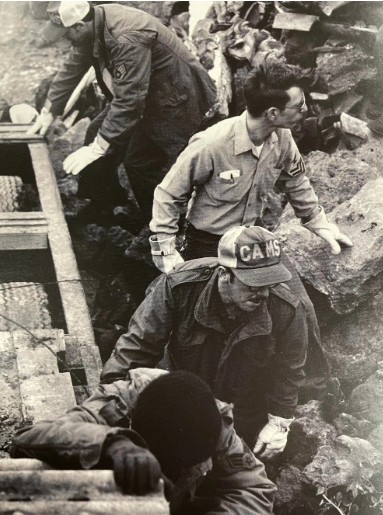
Yet, as so often in Azorean history, catastrophe gave rise to solidarity. Emergency response efforts mobilized swiftly. The Portuguese government, civil defense forces, and the military coordinated rescue and relief operations. Crucially, the Azorean diaspora—especially communities in the United States and Canada—responded with remarkable generosity. Fundraising campaigns, supply shipments, and political advocacy underscored the transatlantic bonds linking the islands to their emigrant communities.
This wave of support was not merely charitable; it was existential. For many Azoreans, the response from abroad reaffirmed that the islands were not alone, that distance did not sever belonging.
The reconstruction that followed reshaped the physical and social landscape of the affected islands. New building codes were introduced, emphasizing seismic resistance. Urban planning in parts of Terceira was rethought, blending the preservation of heritage with modern safety standards. While some historical losses were irreversible, the rebuilding process aimed to ensure that such devastation would never again reach the same scale.
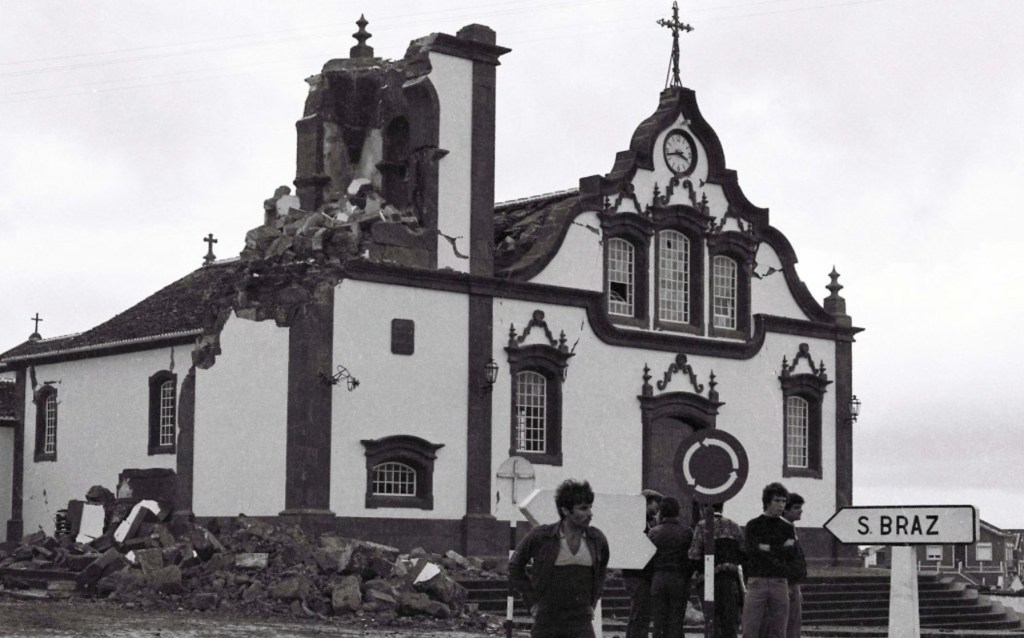
The earthquake also prompted deeper scientific study of Azorean seismic activity, reinforcing the archipelago’s role as a living laboratory at the intersection of tectonic plates.
More than four decades later, the January 1, 1980, earthquake remains a defining moment in Azorean history. It is remembered not only for its destruction, but for the resilience it revealed—of communities who rebuilt, of families who endured loss, and of a diaspora that answered the call of its islands.
Each New Year’s Day, especially in Terceira, São Jorge, and Graciosa, memory surfaces quietly. It serves as a reminder that life in the Azores is shaped by forces both beautiful and brutal—and that endurance, solidarity, and care are as much a part of the islands’ geology as basalt and lava.
Photos from-IVAR/Centro Europeu de Riscos Urbanos e Carlos Alberto Noronha (Arquivo da Memória)
A new story from a few years ago…

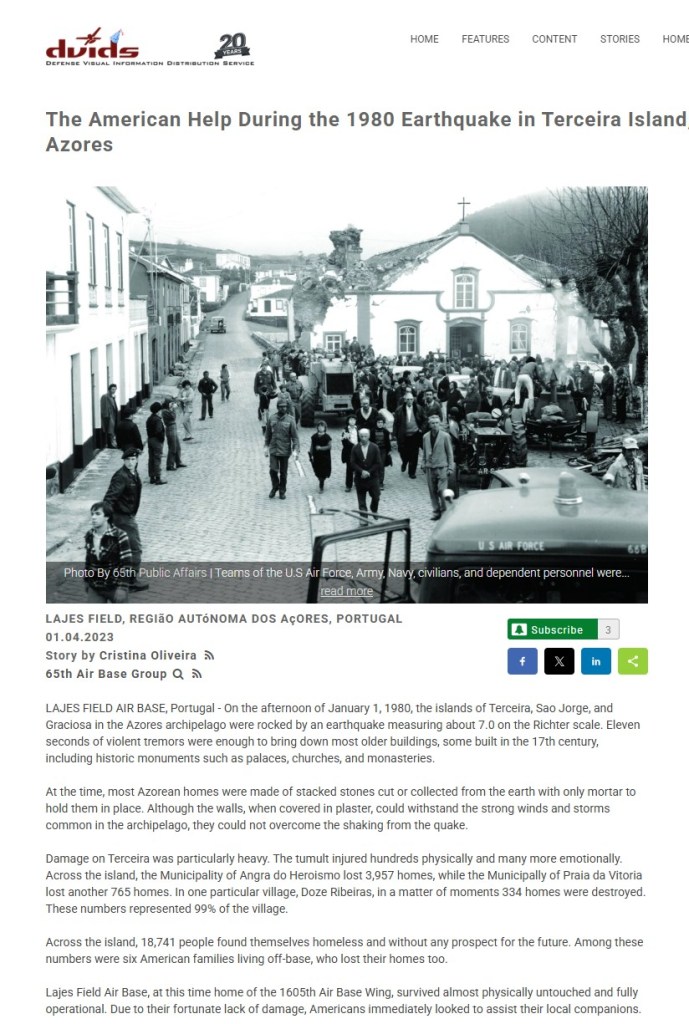
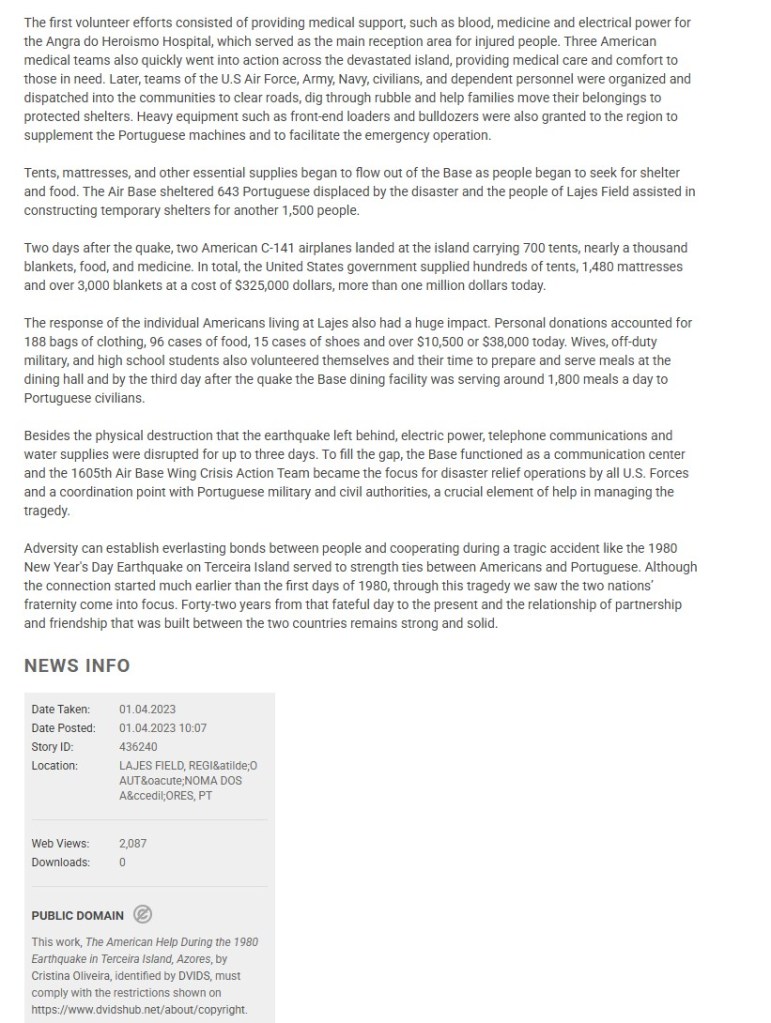
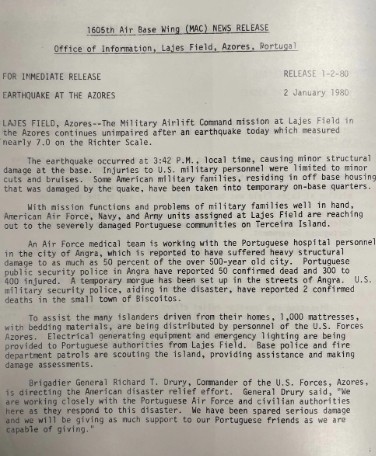

Photos below from DVIDS
 Novidades - The Islands and the Diaspora