


A growing debate over the future of healthcare in the Azores is raising concerns about territorial equity, regional cohesion, and the long-term sustainability of the archipelago’s public health system.
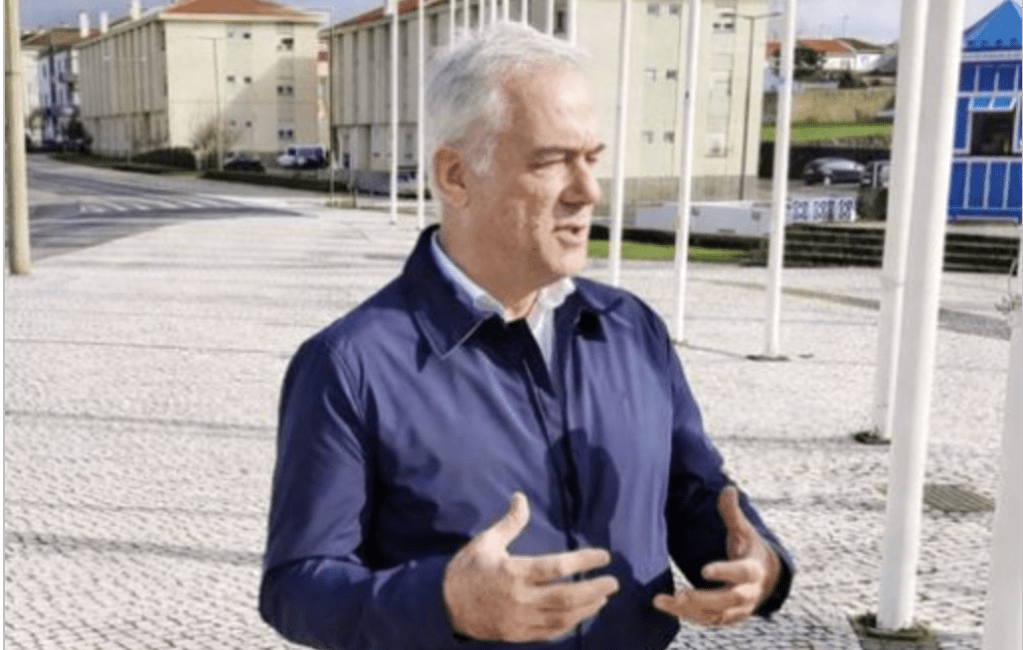
João Enes, a nurse specialized in medical-surgical care with a master’s degree in Public Administration and extensive experience in hospital system management, is warning that transforming the Hospital do Divino Espírito Santo in Ponta Delgada into a “central and university hospital” could destabilize the entire Regional Health Service of the Azores.
In an interview focused on the future of healthcare governance in the islands, Enes argued that excessive concentration of medical specialties, investments, and decision-making in São Miguel would represent not modernization, but “recentralization.”
“The Azores do not need a super-hospital,” he said. “What the region needs is an integrated Regional Health Service with strong leadership, clear rules, and a culture of collaboration that places patients first.”
According to Enes, the Azorean healthcare system was built over decades as a complementary network of three hospitals — in São Miguel, Terceira, and Faial — connected to primary care services throughout the islands. That decentralized structure, he argues, has been essential for guaranteeing proximity, redundancy in critical services, and territorial balance across the archipelago.
“The future of the HDES only makes sense when understood within the ecosystem of healthcare that the Region has constructed over decades,” he explained.
Enes fears that centralizing advanced healthcare services in São Miguel would weaken the hospitals in Terceira Island and Faial Island while creating what he described as “a single point of failure” in a geographically fragmented archipelago.
“In an island region, dependence on one dominant center is politically reckless and clinically dangerous,” he warned.
The debate has intensified following discussions surrounding the possibility of giving the Ponta Delgada hospital “central” and “university” status, accompanied by proposals for major expansion in size and scope.
But Enes insists the real issue is not institutional designation.
“The essential debate is not about creating a ‘super-hospital,’ but about strengthening the Regional Health Service as a whole, ensuring balance between units, long-term sustainability, and healthcare that remains close to populations,” he said.
He argues that healthcare in the Azores should function as a coordinated network rather than a hierarchy dominated by one institution. Under that model, the hospital in São Miguel would continue to provide highly specialized services without absorbing all resources, while the hospital in Angra do Heroísmo would reinforce its strategic intermediary role and the hospital in Horta would remain essential for the so-called Triangle Islands.
Enes also stressed the importance of telemedicine, integrated patient referrals, shared clinical information systems, and unified governance capable of managing the health service as a single ecosystem rather than as competing institutions.
“Healthcare access in the Azores should begin in primary care, not in hospital emergency rooms,” he said.
The healthcare administrator also questioned the feasibility of establishing a complete medical degree program entirely within the Azores. While acknowledging the progress already achieved through partnerships with medical schools, he argued that the islands currently lack the patient volume, specialization depth, research infrastructure, and critical mass required for a fully autonomous medical school with international standards.
Still, some of his strongest criticism focused on what recent crises revealed about institutional fragmentation inside the Regional Health Service itself.
Enes cited two controversial episodes: the refusal to transfer São Miguel patients to Terceira for lithotripsy treatment — opting instead to send patients outside the region — and the difficulties encountered during the 2024 fire at the HDES, when patients were transferred to mainland Portugal and Madeira despite existing capacity in other Azorean hospitals.
For Enes, those situations exposed “fragilities in leadership, coordination, and organizational culture,” revealing a healthcare system that too often functions as three isolated institutions rather than a fully integrated regional network.
“In critical moments, the system stopped functioning as an integrated service and instead behaved like three separate units,” he said.
He warned that further concentration of power and resources in one hospital could deepen those tensions rather than resolve them.
“If there are already failures with three hospitals, a hyper-centralized model would only intensify the problem,” he concluded.
Translated and adapted from an interview published by Diário Insular, José Lourenço-director.

 Novidades - The Islands and the Diaspora