


The President of the Azorean Fisheries Federation, Gualberto Rita, told Correio dos Açores yesterday that the deadline for the implementation of marine protected areas in 30% of the region’s sea “as it stands, could be the end of the fishing sector in the Azores.”
“Let it be clear that I’m not against marine protected areas. We think it’s exaggerated and too ambitious to go from 15 to 30% of marine protected areas in such a short space of time, which is not the case in the rest of the country. This means bringing forward the implementation of marine protected areas in the region from 2030 to 2023. This hasty way of implementing marine protected areas will undoubtedly jeopardize the whole process,” he stressed.
Gualberto Rita was outraged yesterday afternoon by how researchers defend the implementation of marine protected areas. He reaffirmed that 0.8% of the region’s one million square kilometers of sea is fished in the Azores. So there’s a lot of sea, but very little fishing space. “Now, if they close the space for fishing, we’ll be constrained to the rest. And so, if there aren’t many areas left to fish, we will obviously have very limited catches.”
“I don’t accept people saying we are squandering the Azorean sea…”
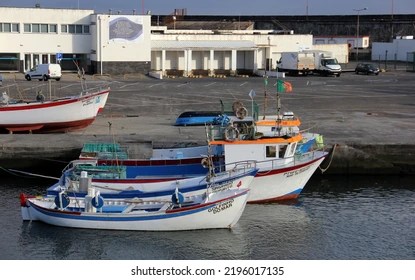
The President of the Fisheries Federation listened yesterday to Antena 1 Açores’ unique program on marine protected areas and expressed his displeasure at the statements made by Ana Calado, a specialist in maritime spatial planning. “I don’t accept it being said that we are being exploited and that the sea is being squandered by us,” said Gualberto Rita.
Speaking to Antena 1 Açores’ unique program, researcher Ana Calado, an expert in maritime spatial planning, said that “there is, in a way, an instrumentalization of the Azorean fishermen concerning marine protected areas” and went on to ask: “So, are we only going to protect it when it’s been squandered? My first question is, if an area is completely degraded, isn’t it worth protecting? It’s worth protecting it as long as it’s not at the point of no return…” statements that Gualberto Rita disputes.
He also disagrees with the claim that creating marine protected areas will impact fishing by around 27%, when studies indicate that the impact will be around 45%.
The President of the Azorean Fisheries Federation doesn’t take kindly to the fact that it is scientists who “are behind the studies. Who are these scientists? Where are the studies that can prove what they are advocating?” Gualberto Rita told Correio dos Açores that since the beginning of this marine protected area process (three to four years ago), he has raised the issue of restructuring the fisheries sector, but that this has never been done because it means paying compensation to fishermen, “just as milk producers were told to reduce production,” and that funds are needed for this purpose.
He adds that it is not feasible to restructure the fisheries sector in one year when it is known that the European Union will not provide financial means for this objective, nor does the Region’s budget have sufficient funds for this purpose.
Gualterberto Rita also pointed out to ‘Correio dos Açores’ how monitoring marine protected areas in 30% of the region’s sea will be carried out. Because, he said, “it’s not enough to just have marine protected areas if they aren’t monitored, which ends up coming to nothing.”
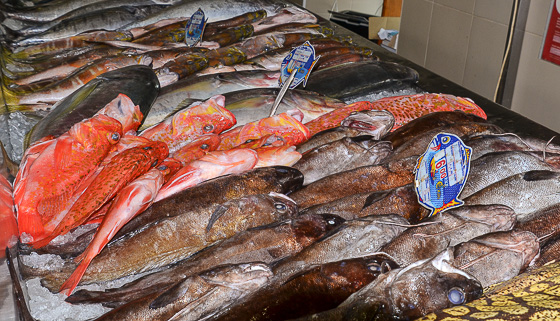
And there’s also the question of monitoring. “We’re going to have marine protected areas, but we need to monitor them to find out what impact preservation has had and what has happened since implementation.”
One issue that Rita particularly emphasizes is the need for a balance, “which there must be”, between the preservation that results from the creation of the marine protected area and the social impact that the elimination of this space for fishing and the 30% of the Azorean sea represented for the approximately 11,000 fishermen in the region who fish from half a thousand boats. In the overwhelming majority of situations, a fisherman represents the sole income of a household, and a reduction in his income has a violent impact on the family’s resources.
The Secretary for the Sea and Fisheries, Manuel São João, has been admitting compensation, but with a speech that is not as affirmative as the fishermen would like.
And when fisheries in the Azores are reduced, there will obviously be an increase in frozen and deep-frozen fish imports to feed the Azoreans. However, this is already happening to a lesser extent due to the rise in the price of fish to the consumer, much defended by the Regional Secretariat for the Sea and Fisheries under the supervision of Manuel São João.
The President of the Fisheries Federation is heading a petition with over 1,700 signatures to postpone the implementation of the new configuration of the network of marine protected areas.
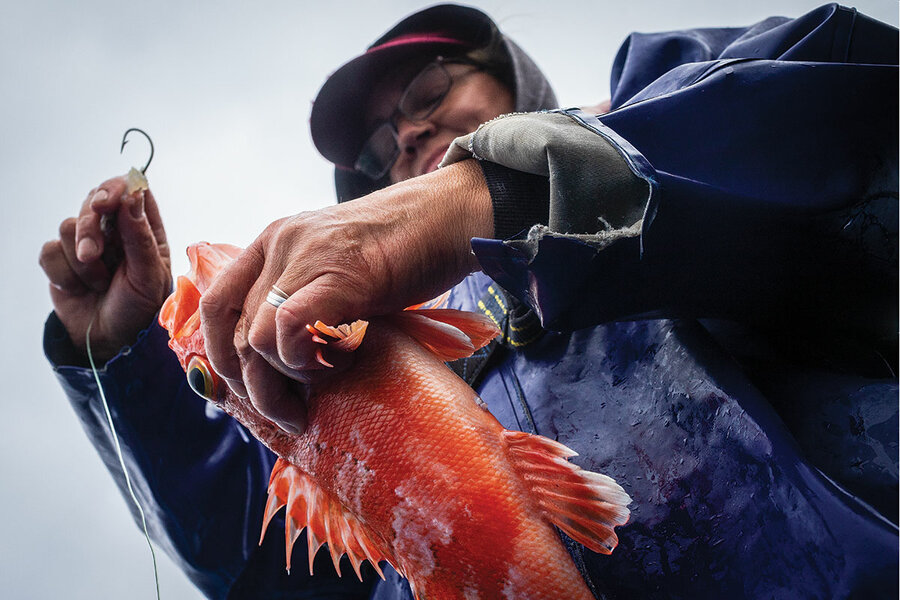
A researcher from the Okeanos Research Institute spoke on the ‘Antena 1 Açores’ special program, showing common sense in this whole process. In Lindo Afonso’s opinion, these are “complex decisions that can’t be rushed because they are processes that require a great deal of involvement from all these stakeholders until we reach the point where everyone agrees on a solution that, while not leaving everyone fully satisfied, is a consensual solution,” he said. He added to Antena 1 Açores: “If that doesn’t happen, what will we end up with? We will fall into a situation where decisions don’t get off the drawing board and are unlikely to be successfully implemented. There are a lot of people who disagree and won’t comply with the regulations unless we suddenly become a maritime police state, which I doubt will happen.”
For the researcher, success “depends on an inclusive discussion and consensus-based solutions. “I think the areas should be seen more as contributing directly to the sustainability of fisheries. The fisheries sector has to be the first to demand this. But for that to happen, the sector has to be well-equipped and “educated.” In other words, fishermen must understand the advantages and disadvantages of using marine protected areas. And they must understand that Rome and Pavia didn’t happen in a single day”.
29 oceanic marine protected areas will be created, 25 within the Azores’ Exclusive Economic Zone, protecting 30% of the Azorean Sea. 16% will have total protection, i.e., with a ban on activities, and 14% will have high protection, where only low-impact extractive activities are allowed.
in Correio dos Açores, Natalino Viveiros, director
Translated to English as a community outreach program from the Portuguese Beyond Borders Institute (PBBI) and the Modern and Classical Languages and Cultures Department (MCLL) as part of Bruma Publication and ADMA (Azores-Diaspora Media Alliance) at California State University, Fresno.
 Novidades - The Islands and the Diaspora