

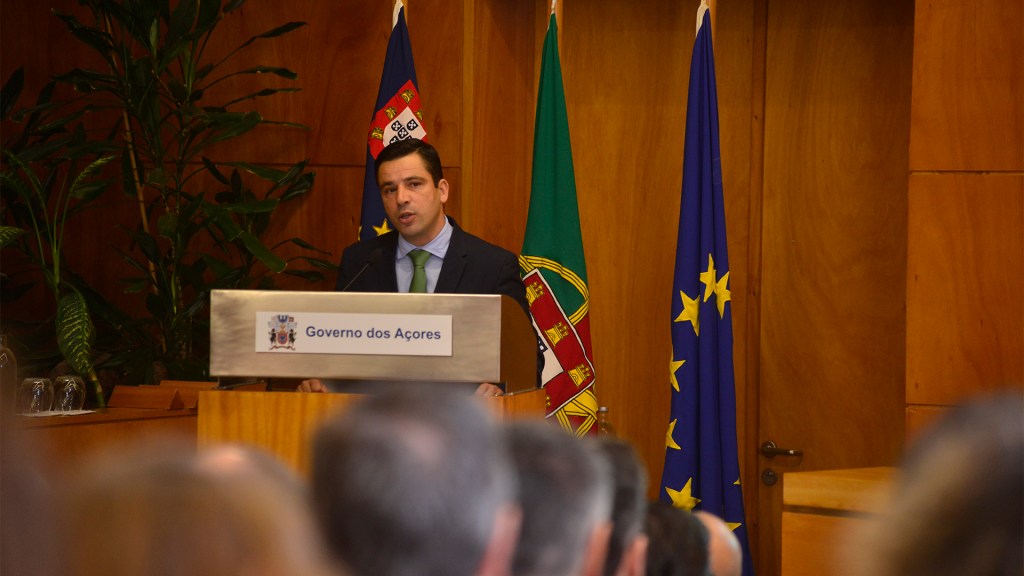
Today, the Regional Secretary for the Environment and Climate Change, Alonso Miguel, chaired the final Roadmap for Carbon Neutrality conference in the Azores in the auditorium of the Regional Civil Engineering Laboratory in Ponta Delgada.
According to Alonso Miguel, this Roadmap, the preliminary version of which was presented today, based on the definition of narratives and socio-economic development scenarios for the Region, “aimed to establish a clear strategic vision and explore cost-effective, technologically feasible and economically viable trajectories in various economic and demographic growth scenarios, in order to achieve carbon neutrality by 2050”.
“In practice, this instrument is a key element in creating more accurate metrics for net greenhouse gas emissions and, based on this information, defining the strategy, mitigation measures and efforts needed to decarbonize each of the most relevant sectors, so that the Azores can follow a successful path towards carbon neutrality,” he explained.
The Regional Secretary pointed out that this planning process included various moments of involvement and interaction with the different stakeholders, such as an online survey on companies’ attitudes towards carbon neutrality, participatory workshops to discuss cross-sector decarbonization options, and public sessions to debate sustainable financing options, in a systematic approach aimed at ensuring that the Autonomous Region of the Azores achieves its climate goals effectively and collaboratively.”
The different scenarios outlined in this roadmap were based on data made available by IRERPA in 2022, concerning 2020, according to which “the Azores are characterized by four main sectors responsible for the majority of emissions, and on which decarbonization efforts should be made namely the “Energy,” “Mobility and Transport,” “Waste and Wastewater” and “Agriculture, Forestry and Other Land Uses” sectors,” he said.
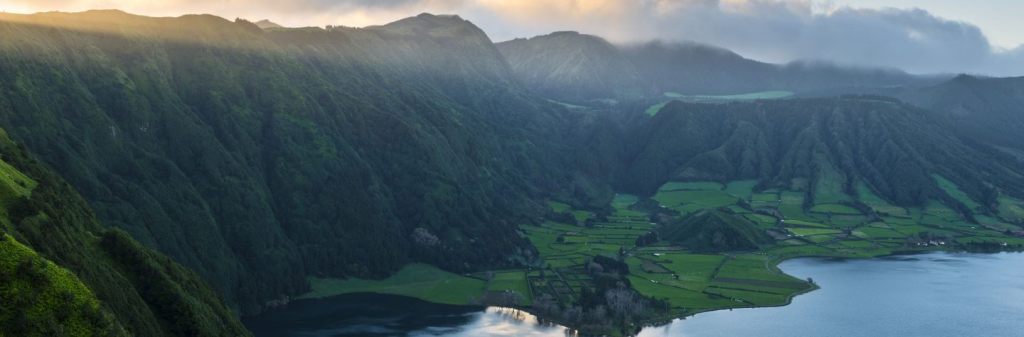
According to the minister, total greenhouse gas (GHG) emissions in the Azores in 2020 reached 1.72 Mt CO2eq, in which the “Energy” sector, which includes “Mobility and Transport,” represents 49.2% of emissions, “Waste and Wastewater” 6.6% of the total, while Agriculture, Forestry and Other Land Uses accounted for 41.7% of the region’s total emissions.
“In this context, based on the work carried out under this roadmap, in a carbon neutrality scenario, it was possible to ascertain that the most cost-effective bet is to concentrate around 50% of the effort needed to reduce greenhouse gas emissions on the transport sector,” he said.
Alonso Miguel explained that “the Agriculture and Forestry sector will have to comprise around 36% of the total effort needed to reduce emissions, while the energy sector will have to concentrate around 12.5% of the reduction effort, with the waste and residual water sector accounting for around 1.5% of this effort”.
“In order to achieve the decarbonization envisaged for each of the sectors, a wide range of proposed measures will be analysed, presented as a result of the work carried out, relating, for example, to a substantial increase in the production and use of renewable energies, an increase in energy efficiency, the electrification of transport and the use of biofuels, changes in livestock farming, especially the reduction in the number of dairy cows, and an increase in carbon sinks through reforestation,” he explained.
According to the Regional Secretary, “in addition to the Roadmap itself, this project also includes the study for the creation of new competitiveness clusters for carbon neutrality; the development of sectoral and territorial good practice guides for carbon neutrality and the study of fiscal instruments for carbon neutrality.”
The Roadmap for Carbon Neutrality in the Azores will be completed by the end of 2023. It will be subject to a public consultation process, followed by consideration and approval by the Council of Government.
From a news release by the Azorean Government
Translated to English as a community outreach program from the Portuguese Beyond Borders Institute (PBBI) and the Modern and Classical Languages and Cultures Department (MCLL) as part of Bruma Publication and ADMA (Azores-Diaspora Media Alliance) at California State University, Fresno.
 Novidades - The Islands and the Diaspora