

“As is well known, the experience of the festive cult of the Holy Spirit in the Azores archipelago, since its settlement, is based on an informal organization founded on an almost intuitive agreement.”
Democracy, before becoming a political rule, is a personal rule. This is because the individual, before becoming social, is first an individual in his own right. Every child, born among individuals, is first and foremost an individual; only later does he or she become a political individual when he or she realizes that to live in society, he or she must obey an impulse of solidarity among the parts of the whole so that this whole, which is society, can function safely and stably, or rather, so that it can function in such a way as to provide the minimum conditions for living together. Ultimately, like all matter, the human being is subject to a path that is constantly being constructed according to universal rules, which transports biological man to the moment of his conscious birth.
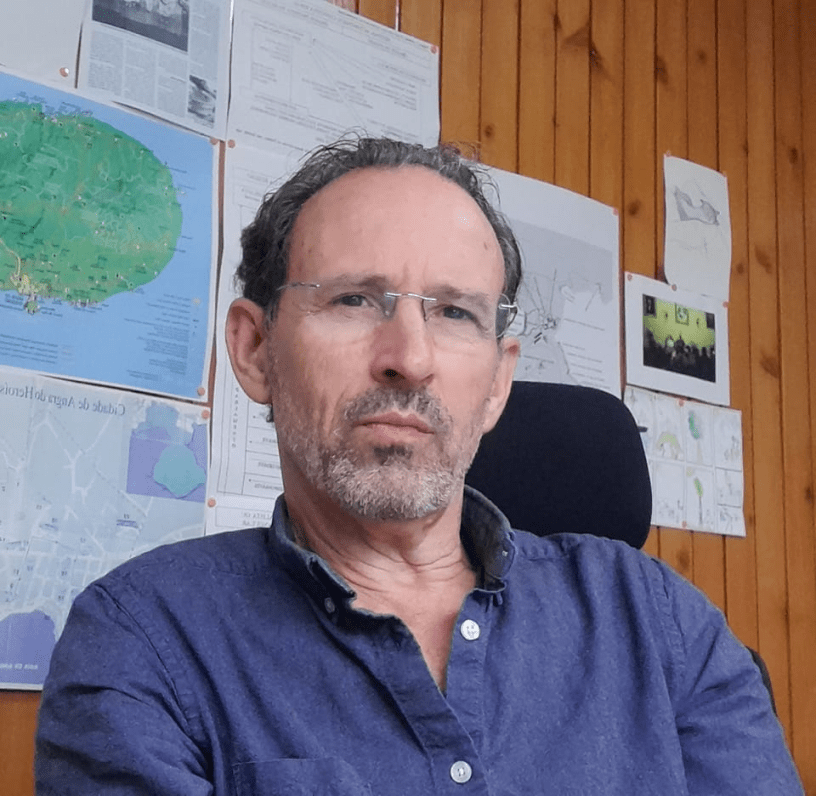
As is well known, the experience of the festive cult of the Holy Spirit in the Azores archipelago, since its settlement, is based on an informal organization founded on an almost intuitive agreement. Every year, individuals organize themselves outside the religious and political spectrum, exercising their most fundamental autonomy, which is personal and combines with others in a simple way, without leadership or hierarchies. My friend Dr. Antonieta Costa, in her 1999 doctoral thesis, first revealed this reality, and, in fact, it remains the only study in this scientific area to date. Her thesis is that this experience and ancient traditions should be leveraged and applied to political citizenship. We have already demonstrated in a study that we both wrote and published recently, available on Amazon, that this transfer is not possible automatically: 1. because the roots and ways of doing things are very specific, especially the fundamental rules; 2. and above all, because in politics, the need for contradiction and process is structural. See the recent photo, June 26, 2025, both in dialogue on the subject, moderated by Joel Neto, at the Lar Doce Livro bookstore in Angra.
The idea of taking advantage of this fertile cultural productivity is original and deserves to be studied; that is easy. It would also be important to study it, to capture the motivation behind the symbolism and translate it into formulas for political citizenship; that is, however, much more difficult. In any case, since the ideal is not possible, let us do what we can. In the diagram below, we can see what is at stake, which is not so much how it works, but how this historical and social force of the people could be harnessed for equal participation in civic and political life. That is, harnessing this social force and transforming it into a political force.
It is well known, in the words of Francis Fukuyama, that “political institutions develop over time, usually slowly and painfully… There is something like a law of conservation of institutions.” In a society that has been relatively neglected for half a millennium and removed from the canons of political expression, it is natural that the population is not highly involved in political action, often limited to the mere act of voting.
But suppose Azorean democracy has the means to meet the most varied needs of the population, including investments and policies, particularly in culture and religion, agriculture, and a thousand other areas. Why can’t we invest in the quality of political citizenship? In fact, a better-educated and prepared citizenry always has a multiplier effect on the economy of resources. In contrast, ignorance, ineptitude, and disinterest in public causes are systemic indicators of wasteful policies and the maintenance of weak politicians, and therefore, of a weakened democracy.
The natural and urgent solution for improving democracy is to reform the system of government to quickly establish a sense that the people are heard and listened to, which in turn will encourage intervention and interest. In addition, given our structural backwardness, various programs should be implemented to promote the verbalization of political knowledge.
In Diário dos Açores, Paulo Viveiros-director.
Arnaldo Ourique is a specialist in the Portuguese Constitution and the Azorean Autonomy.
NOVIDADES will feature occasional opinion pieces from various leading thinkers and writers in the Azores, providing the diaspora and those interested in the current state of the Azores with insight into the diverse opinions on some of the archipelago’s key issues.
 Novidades - The Islands and the Diaspora