

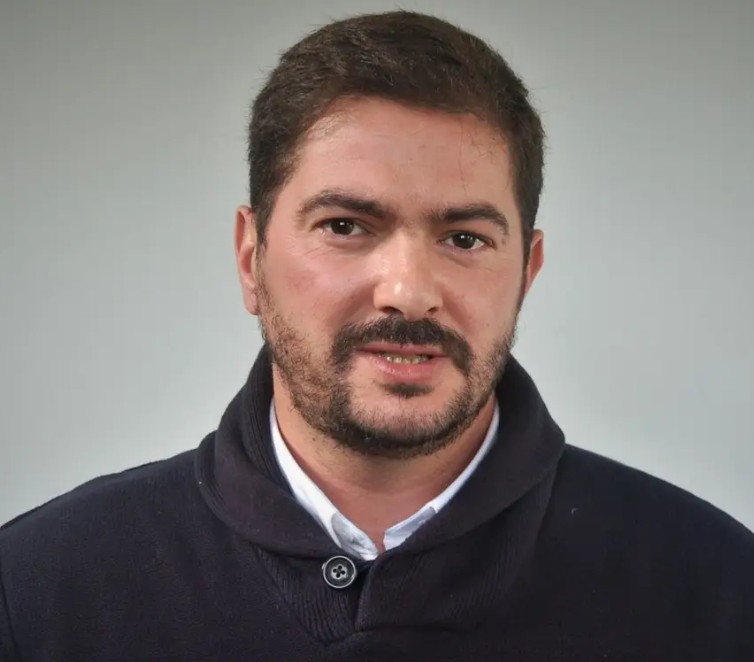
Pedro Ferreira, deputy for the Iniciativa Liberal in the Azorean Parliament, has sharply criticized the rehabilitation works carried out at the Escola Secundária Jerónimo Emiliano de Andrade, describing the project as “the pinnacle of incompetence” on the part of the Regional Government.
At the center of the controversy is an investment of approximately €2.3 million in renovations that, according to the liberal parliamentarian, were accepted and declared complete despite serious failures in safety, functionality, and construction quality.
Following a visit to the school and meetings with its Executive Council, Ferreira publicly denounced what he characterized as a deeply degraded state of the facilities. Among the most serious issues identified, he highlighted the absence of grounding wires in the electrical system — a deficiency that has reportedly forced the closure of physics and chemistry laboratories due to safety risks for both students and teachers.
Additional problems cited by the deputy included newly installed parapets that have already collapsed, water infiltration, bathrooms closed because of humidity, and windows with damaged fittings and broken glass.
Ferreira directed strong criticism toward both the Regional Secretary for Education and the Regional Secretary for Public Works, challenging them to personally visit the school and inspect conditions that, he argued, their departments had officially approved.
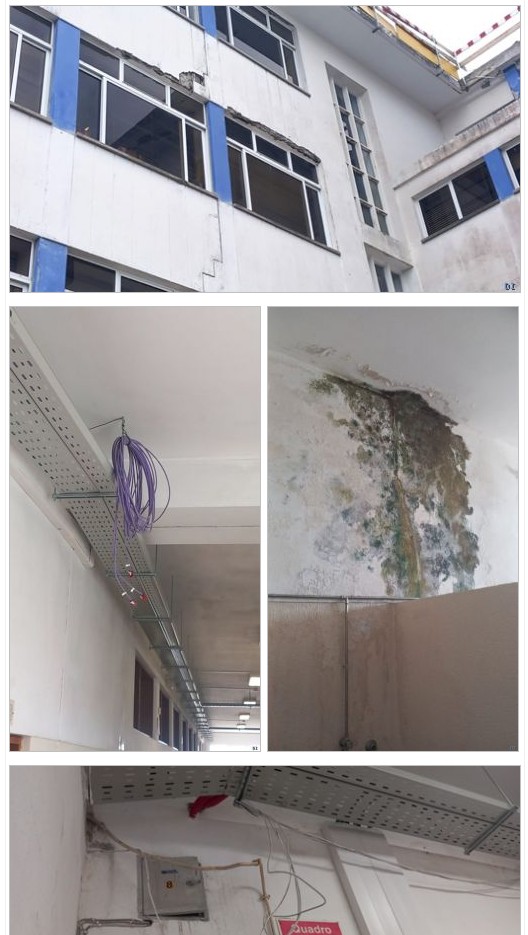
According to the Iniciativa Liberal deputy, the root of the problem lies in the centralized management of public tenders through the public works department. He argued that project specifications are often prepared remotely, without adequate analysis of the actual needs of individual schools. Ferreira claimed that the contractor has justified unfinished aspects of the project — including the removal of old gutters and the painting of parts of the building — by stating that those tasks were never included in the original contract documents.
The school’s sports pavilion also became a focus of criticism. Ferreira contradicted statements previously made by the Regional Director for Education, asserting that, contrary to public claims, the facility continues to be used for physical education classes despite allegedly representing what he described as “a danger to public health,” with vegetation reportedly growing over lighting fixtures inside the structure.
For the liberal deputy, the government’s reliance on “additional works” contracts to correct what he called basic construction failures is unacceptable and constitutes a misuse of public funds.
Ferreira announced that he intends to bring the issue before the Assembleia Legislativa da Região Autónoma dos Açores, where he will demand access to the project’s original specifications and contract documentation.
He also criticized deputies from the governing PSD/CDS/PPM coalition, accusing them of using social media to praise the investment while failing to confront the reality of the school’s current condition.
The controversy surrounding the rehabilitation project has reignited broader concerns in the Azores regarding public infrastructure oversight, transparency in government contracting, and the long-term condition of educational facilities across the region.
Translated and adapted from Diário Insular-José Lourenço-director

 Novidades - The Islands and the Diaspora